Showing posts with label presidential election. Show all posts

Wednesday, January 23, 2013

There is No Hope for Change

Four More Years of "It Could Have Been Worse"
by DEAN BAKER


There have been two momentous events in the last week. Of course President Obama’s swearing in for a second term is a big deal, even if somewhat less historic than his inauguration back in 2009. The other big event was the release of the Federal Reserve Board’s transcripts from the 2007 meetings of the Fed’s Open Market Committee (FOMC).

If the FOMC sounds like a nerdy and irrelevant concern that is a big problem. It is the Fed’s job to prevent disasters like the one we are now living through as a result of the collapse of an $8 trillion housing bubble. We already knew from previous years’ transcripts that the Fed was almost entirely oblivious to the growth of the housing bubble. It took little notice as house prices grew ever more out of line with fundamentals and mortgage financing became ever more sketchy.

Alan Greenspan, Ben Bernanke (he was governor during most of the run-up), and the rest also seemed oblivious to the extent to which the housing market was driving the economy. There was little appreciation of the fact that an unsustainable building boom and surge in consumption driven by ephemeral housing wealth were the major factors driving the economy in the years 2002-2007.

The 2007 transcripts show that this crew was still oblivious even as the economy was beginning to collapse all around them. This is the captain and crew of the Titanic planning their stay in New York after the ship had already hit the iceberg.

Somehow no one ever raises the issue of how the economy will replace the demand created by the collapse of the bubble. If housing construction just fell back to its normal share of GDP, it would have created a hole in demand of more than 2 percentage points of GDP (at $320 billion annually in today’s economy). If the evaporation of bubble-generated housing equity led saving rates to return to more normal levels, it would imply a hit to annual demand of another 4 percentage points of GDP (at $640 billion annually in today’s economy).

This $960 billion in lost annual demand doesn’t even capture the secondary hit to state and local governments due to lost tax revenue or the fact that non-residential real estate was also experiencing a bubble. But the massive loss of demand associated with a collapse of the bubble did not seem to be on the mind of anyone at the FOMC even as the collapse of the bubble was picking up steam and the economy entered the recession at the end of the year.

With President Obama beginning his second term, it is a good time to take stock of where the economy stands. In spite of having dropped 2.2 percentage points from its peak, at 7.8 percent the unemployment rate is still as high as the peak in the 1990-1991 recession and more than a full percentage point above the peak of the 2001 recession. We are down almost 4 million jobs from the pre-recession peak in 2007 and more than 9 million jobs below where we would be if the economy had continued its trend growth path.

The collapse of the bubble wiped out a large portion of the wealth of the baby boom cohorts that are now reaching retirement age. The typical household among the 55-64 cohort has just $170,000 in wealth. This means that if they took all their assets they would have almost enough money to pay off the mortgage on a typical home, which now sells for $180,000. After this they would be entirely dependent on Social Security to support them in retirement. The typical younger baby boomer, ages 45-54, has around $80,000 in wealth. And both groups have to worry about politicians in Washington who want to pare back their Social Security and cut their Medicare.

The cumulative loss in GDP to date compared with what the Congressional Budget Office projected back in January of 2008, before it recognized the recession, is $6.2 trillion. That comes to $80,000 in lost output for an average family of four. This is money that was just thrown in the garbage because the economy was operating below its potential.

The worst part of this story is that there is little prospect that things will get much better. At the current rate at which the economy is adding jobs, we won’t make up our jobs deficit until the middle of the next decade. And as long as the labor market is so weak, there is little likelihood that workers will be in a position to get their share of wage gains.

But the weak state of the economy is not even on the agenda in Washington. The national debate is focused like a laser beam on how to reduce the deficit caused by the collapse of the economy. It would be funny if there were not so many people seeing their lives ruined.

In 2008, President Obama ran on a platform of hope and change. After four years, the biggest change is that there is no hope.

Saturday, November 17, 2012

God May Have to Cause "A Complete Economic Collapse" to Save Nation From Obama~Franklin Graham

OK, Republicans...for the real reason you've lost two presidential elections in a row, look no further than this guy and those like him who say similar bullshit. Who votes for obvious insanity? We like our insanity safely suppressed so that when it forces its way out later, the damage will be more extensive. --jef


franklin graham 
 
Some conservatives are having a tough time with President Barack Obama's reelection. Take social conservative leader Franklin Graham. In an interview with Newsmax.com, the Rev. Graham, a prominent evangelist and son of top-dog evangelist Billy Graham, maintained that Obama's victory will put the country further along a "path of destruction." And he suggested it would take a "complete economic collapse" to place the United States on a better course and return it to godliness.

Graham equated the Obama years with a national rejection of God. "In the last four years, we have begun to turn our backs on God," he said. "We have taken God out of our education system. We have taken him out of government. You have lawyers that sue you every time you mention the name of Jesus Christ in any kind of a public forum." Oddly, Graham ignored the fact that he and other shepherds of the Christian right have griped about such matters for much longer than four years. It didn't start with Obama.
As Graham denounced the Obama years, Newsmax's Kathleen Walter asked, "So we've become too secular a nation? How do we bring God back into government?" Graham replied:
Maybe God will have to bring our nation down to our knees—to where you just have a complete economic collapse. And maybe at that point, maybe people will again begin to call upon the name of almighty God.
Economic calamity was the one option Graham mentioned—as if only such a disaster could move the United States in the right direction.

Graham has been no stranger to controversy. Earlier this year, he had to apologize after questioning Obama's faith and saying on MSNBC that the president "seems more concerned about [Muslims] than the Christians that are being murdered in the Muslim countries." He has often decried the entire religion of Islam, at one point calling it "a very evil and wicked religion." Two years ago, he was disinvited from the Pentagon's National Day of Prayer event when a fuss developed over his anti-Muslim comments.

In his Newsmax interview, Graham wasn't quite advocating that God wreak total economic havoc upon the United States. But he did come close. He also noted that his father "likes the president personally." The problem, Graham explained, is that "the radical left" has "taken over the White House."

Despite his harsh feelings concerning Obama's leadership, Graham said God commands him and Christians to "pray for those in authority." Consequently, he said, "I would encourage everyone to pray for the president…We need to bathe him prayer"—presumably, before the final (economic) days come.

Wednesday, November 14, 2012

Post Election Commentary: Winners and Losers

Some of us don't see the 2012 election as being so much for Obama but rather so much against Romney. I voted for a 3rd (or 4th or 5th) party candidate because I do not live in a battle ground state (which is about to change soon...yay!). But this election wasn't a rubber-stamp of approval for Obama's schizophrenic policies, most of which he campaigned against in 2008. It was a complete rejection of whatever Mitt Romney threw against the wall and hoped would stick which seemed to change on a daily basis. The man stood for one thing and one thing only: He really wanted to be president. His reasons are every bit as suspect as the policies he championed one day and reversed his opinion on the next. Mitt Romney stood for "Mitt Romney for President." And the electorate, for once, saw right through him.- The Republicans underestimated that visible aspect of an obviously pandering campaign. What doesn't change is the fact that the two major parties are not ruled by conscience or ideology, but something more sinister and dangerous: corporate money. So, we are not out of the woods yet...-jef

Weekly Funnies (Post Election Edition)


Friday, November 9, 2012

America didn’t vote for a “grand bargain” (2 articles)

Just a few short days after the election, and Obama is already going against the wishes of 60% of the elctorate who in exit polls want him to raise taxes on the wealthy and corporations. 60% of voters all over the country. And what is he going to do? Forget about raising taxes, he's going to lower taxes for corporations, against the views of 60% of the people who voted in 2012. Enter the bane of us all: the Grand Bargain.--jef


Thursday, Nov 8, 2012
Listen up, Democrats: Obama didn't win by promising a compromise on entitlement reform. He won despite it
By Rick Perlstein


By 10 p.m. on Tuesday, it was all over but the shouting — the shouting of Karl Rove, incredulous that Fox News’ “decision desk” would dare deploy the best statistical evidence at its disposal to call Ohio for the president; the shouting of wingnuts everywhere that — no fair! — Obama only won because of superstorm Sandy (because demonstrated competence in running the government is no reason to choose someone to … run your government); the shouting of the joyous throngs at McCormick Place waiting to receive their new second-term president. In my Hyde Park apartment just five blocks from the president’s home, soon all around me was jubilation. A second Barack Obama term! I alone seemed to feel the disquiet.

This reelection troubles me. It troubles me because of the signal it may send to some of the people running the Democratic Party, and to Barack Obama, a signal that may threaten the long-term health of the Democratic Party itself.

I heard Dick Durbin, the Illinois senator who is close to Obama, on the radio the next morning boasting that he was one of the Democrats on the Simpson-Bowles Commission to vote for its recommendations — recommendations that included, in addition to changes in the tax code meant to increase revenue (while also cutting tax rates), diminishing eligibility and benefits for Medicare and Social Security. Though the commission failed to reach consensus, making its proposals moot, it was aiming at just the sort of “grand bargain” that Obama has consistently and quietly spoken about as his sort of beau ideal for what a successful presidency would look like. Durbin went on to say he hoped a grand bargain might be wrapped up in the next calendar year, before congressmen and senators became preoccupied with reelection. And maybe it will. As the blogger Lambert Strether impishly put it on Election Day: “I’m betting the Ds, who wouldn’t abolish the filibuster for health care or the stimulus, will abolish it if that’s what it takes to kick the hippies and gut Social Security.”

Fellow Democrats, let’s hope not. Please, please, please, let’s hope not.

The goal, with or without a filibuster reform, would be to “correct” a supposed structural budget crisis that liberal economists like Paul Krugman and Dean Baker convincingly point out doesn’t actually exist. In fact, the increase in the deficit was caused directly by the financial crisis and the housing bubble, and had nothing to do with the middle-class entitlement programs a grand bargain would cut. What’s more, the deficit is perfectly sustainable in any event. As for the record national debt, in fact the rest of the world’s eagerness to lend to America at next to no cost is in fact a glorious opportunity to increase American well-being, something not to be feared but welcomed. (America’s debt to GDP ratio is about 70 percent. Japan’s is over 225 percent — and that island, with the world’s third-largest economy, has not sunk into the sea. In fact, from 2001 to 2010 its economic growth has generally surpassed ours.)

America’s government is not too big. It is not “out of control.” Measured by the number of public sector employees compared to the overall population, in fact, it is at its smallest size since 1968. The Democratic compulsion to take the lead in making it smaller, to “control” it, is in itself a serious historic problem —and a perverse one at that. For it doesn’t work. Bill Clinton tried it in the 1990s, working with Republicans in Congress both to obliterate the deficit caused by Republican budgetary mismanagement, and “end welfare as we know it.”

What happened to the resulting budgetary surplus they created? Republican mismanagement and ideological extremism obliterated it, and the public acted like no miracle save for drastic cuts in middle-class entitlements could ever bring it back; media gatekeepers immediately forgot that Democrats had been “responsible” fiscal stewards, just like much of the populace simply forgot what Clinton did with welfare. After Hurricane Katrina, the story was that black residents of New Orleans had become so enervated by their reliance on welfare checks they were too dumb to get out of the rain. It was as if America’s newly stripped-bare welfare system’s time limits, work requirements and block grants had been thrown down a memory hole — even as, seven years later in our current unemployment crisis, according to the nonpartisan Center for Budget and Policy Priorities, welfare reform now greatly contributes to increased rates of poverty.

A simple historical fact: There is no political payoff for Democrats in presiding over governmental austerity. The evidence goes far back to long before Bill Clinton. In the mid-1970s, the first superstar of the Democratic austerity movement, William Proxmire, a budgetary obsessive whose campaign bumper stickers read “Waste Will Bury Us,” began awarding a monthly “Golden Fleece Award” to the government expenditure he judged the most wasteful — a clown show that frequently had no more effect than making things difficult for scientists doing basic research that frequently led to revolutionary breakthroughs. Austerity was the ideology of Gov. Jerry Brown in California, too — and also the man who beat Brown for the Democratic presidential nominee in 1976, Jimmy Carter, who announced, in his 1978 State of the Union address that “Government cannot eliminate poverty or provide a bountiful economy or reduce inflation or save our cities or provide energy.”

What Carter said wasn’t even true; for instance, he did deploy the power of government to reduce inflation, by appointing a Federal Reserve chairman, Paul Volcker, with a mandate to squeeze the money supply, an act of deliberate austerity that induced the recession that defeated him. Like I said, there was no political payoff: Ronald Reagan, depicting Carter on the campaign trail as just another Democratic spendthrift, defeated him, reappointed Volcker, then harvested the political credit when Volcker’s governmental policies did slay inflation. And then came the amnesia: When, 18 years later, Bill Clinton gave much the same State of the Union address — “The era of big government is over” — people acted like no Democrat had ever said anything like that before.

Now Barack Obama, oblivious, may be barreling into a yet more dangerous austerity dare, perhaps squeezing the two most effective and popular government programs in existence — Social Security and Medicare. Credibly pledging not just to preserve them but to extend them has been how generations of Democratic politicians have turned millions into habitual Democratic voters.

Barack Obama didn’t win by promising a grand bargain to rein them in. He won despite it. Democrats won’t win in the future by “reforming” entitlements. If they do it, they will lose, precisely because of it, and possibly for generations. If he believes things to be otherwise, God help the party of Jefferson and Jackson.

++++++++++++++++++++++


Thursday, November 8, 2012 by Campaign for America's Future
Voters Didn't Ask for Bi-Partisanship,
They Demanded Good Policies

After the Election, a New Mandate -- and New 'Fiscal Cliff' Math
by Richard Eskow
 
 
President Obama was reportedly planning to reach out to House Majority Leader John Boehner today to begin negotiating a deal to avoid the so-called "fiscal cliff," a series of spending cuts and tax hikes scheduled take effect unless Congress rescinds the law that created it.

That overture is both appropriate and statesmanlike. The public expects its leaders to work together on important issues.

The question is, what kind of deal? Boehner's been acting as intransigent as ever, telling Reuters that Congressional Republicans will have "a mandate to not raise taxes."

Now Boehner's saying he's willing to raise "tax revenue," as long as tax rates are lowered even more. That's a coded way of saying he wants even more tax breaks for millionaires and billionaires, and that Democrats should expect to get that "revenue" by eliminating tax deductions for struggling middle-class Americans. That's likely to mean losing deductions for dependent children and mortgages, and tax changes that will lead to even less health coverage for working Americans. He says he'll also demand cuts to Social Security and Medicare as part of any deal.

But Boehner isn't holding the cards in this situation. The president is. All the numbers say so -- in the election results, the polling data, and even in the stock market, if you read it correctly.

The New Math
As the Democrats were fond of saying this year: It's not politics, it's math. Here's some math that Congressional Republicans -- and austerity-minded Democrats -- are going to have to deal with:

A headline in the New York Times read, "Question for the Victor: How Far Do You Push?" The answer: As far as the voters have asked you to push.

2 to 1: Voters have given Democrats two of three branches of elected government. Two out of three aint' bad. In fact, it's a mandate to govern. Memo to John Boehner from the voters: When you've only got one out of three branches, you may be a partner in the political process -- but you're the junior partner.

12,744,844: Democratic Senatorial candidates got 12,744,844 more votes than Republicans this year. According to my rough calculations, Democratic candidates got 57.44 percent of the popular vote. Republicans only got 41.57 percent.

Harry Reid's been saying all along that he doesn't want to cut Social Security. The voters agree with him. Deal with it, Republicans.

Zero: That's the approximate number of candidates whose embrace for the "Simpson Bowles" austerity plan was a pathway to victory. That plan would cut Social Security and Medicare benefits, and sharply cut into all forms of government spending, while lowering taxes even more for millionaires and corporations. It would almost certainly raise taxes sharply, however, for the middle class.

As Zaid Jilani notes, three highly-visible candidates who openly endorsed the Simpson Bowles plan -- or who were endorsed by one or both gentlemen themselves -- unanimously went down to defeat this week.

On the other hand, Virginia Senate candidate Tim Kaine of Virginia openly rejected the Simpson Bowles plan. He pulled off an upset victory.

303: That's the number of electoral votes President Obama received. He won a decisive victory around the country -- and he won the popular vote, too. You lost, Republicans, fair and square.

And about that whole "fair and square" thing: As the New York Times noted today, the reelection of House Republicans had a lot more to do with gerrymandering, incumbency and big-money corporate campaign financing than it did with any mandate not to cut taxes.
A headline in the New York Times read, "Question for the Victor: How Far Do You Push?" The answer: As far as the voters have asked you to push.

Inside Job
But that process seems to disturb a lot of pundits, press and political insiders. They'd rather things worked out behind closed doors -- "just send your man around to see my man," as J. P. Morgan suggested to Teddy Roosevelt. The president's going to be under a lot of pressure to preemptively surrender on his stated principles.The voters have asked President Obama and his fellow Democrats not to "shirk a fight" over economic issues. 

Americans for Tax Fairness compiled polling data which showed that 60 percent of voters wanted the Bush tax cuts ended for incomes of $250,000 and above. Voters said they wanted to see their Social Security and Medicare benefits protected, and the deficit addressed by increasing the rich instead, and they did so by the overwhelming margin of 64 percent to 17 percent. And 62 percent of those polled said that "the message [they] were trying to send to the next president and Congress with [their] votes this year" was: "We should make sure the wealthy start paying their fair share of taxes."

And yet election-night commentary was filled with talk about the president's need to find "common ground," something we never heard about George W. Bush's two victories -- one of which came without either a popular-vote majority or an unequivocal electoral college win. Expect a lot more of this talk from insiders in the days and weeks to come.

These insiders don't seem to know or care that voters elected the president and his fellow Democrats because of those principles.

Rated X
The morally-compromised "ratings agencies" -- actually for-profit corporations that abused their obligations for years, directly contributing to the financial crisis of 2008 -- wasted no time getting into the act once the votes were counted. Fitch Ratings immediately warned the president that there would be "no fiscal honeymoon," saying that a failure to avoid the "fiscal cliff" would cost the U.S. government its "AAA" rating.

But international investors still love our government. They're essentially paying our Treasury to borrow money. And despite what the fearmongers are saying, the stock market didn't plunge because they're afraid we won't cut spending. While it's true that markets dislike uncertainty, what they really hate are austerity measures that shrink the economy.

Despite the mythology, the stock market didn't fall the last time credit agencies frowned on the the government's credit. It was the deal itself that dealt it a blow:


2012-11-08-DJAfterDeficitDealandSPDowngrade.jpg

 You can see that the market began to fall in anticipation of a deficit deal, and fell even further when the deal was done. But it shrugged off a downgrade by S&P, another ratings agency and even climbed slightly. Why? Because investors know that spending cuts in this economic climate are recipe for disaster.

And after all those "agencies" gave all worthless mortgage securities a "AAA" rating -- apparently investors don't rate them very highly.

Stepping Up
At times during his first term, the president appeared to show disdain for ideology, for advocacy for the conflicts that are part of the political process. He sometimes spoke of emulating the compromises reached between Ronald Reagan and House Majority Leader Tip O'Neill, but without offering the fierce advocacy each of those leaders first gave for his own viewpoint.

But it was a newly energized president who addressed supporters on election night, saying "We will disagree, sometimes fiercely, about how to get there."

"I'm not talking about blind optimism," President Obama told the cheering Chicago crowd. "I'm not talking about the wishful idealism that allows us to just sit on the sidelines or shirk from a fight."

That's the process the public needs to see -- the disagreement, the debate, and the conflict, as well as the compromise and the forging of consensus. Voters need to know why they're getting the policies that affect them, and which politicians are pulling for (or against) them.

That's a promising sign. The absence of disagreement and ferocity has sometimes robbed the public of the opportunity to make informed choices in the voting booth. Would voters have given the reins of power back to Boehner and Congressional Republicans if they'd been able to see just how extreme their positions have been for the last two years?

The voters have asked President Obama and his fellow Democrats not to "shirk a fight" over economic issues. We look forward to seeing the democratic process unfold over the coming weeks, months and years, as a much-needed fight against economic injustice is played out in the public arena.

That's not partisanship. It's math.

Monday, November 5, 2012

Last-Minute Ohio Directive Could Trash Legal Votes And Swing The Election

By Judd Legum on Nov 3, 2012
 Think-Progress

A last-minute directive issued by Ohio Secretary of State Jon Husted (R) could invalidate legal provisional ballots. Ohio is widely viewed as the most critical state for both presidential campaigns and — with some polls showing a close race — the 11th-hour move could swing the entire election.

The directive, issued Friday, lays out the requirements for submitting a provisional ballot. The directive includes a form which puts the burden on the voter to correctly record the form of ID provided to election officials. Husted also instructed election officials that if the form is not filled out correctly by a voter, the ballot should not be counted.


According to a lawsuit filed by voting rights advocates, this is “contrary to a court decision on provisional ballots a week ago and contrary to statements made by attorneys for Husted at an Oct. 24 court hearing.”

Indeed, it also appears directly contrary to Ohio law. From the lawsuit:
Ohio Rev. Code § 3505.181(B)(6) provides that, once a voter casting a provisional ballot proffers identification, “the appropriate local election official shall record the type of identification provided, the social security number information, the fact that the affirmation was executed, or the fact that the individual declined to execute such an affirmation and include that information with the transmission of the ballot . . . .” (Emphasis added.)
The law “ensures that any questions regarding a voter’s identification are resolved on the spot or, consistent with due process, the voter is informed that he or she needs to provide additional information to the board of elections. This protects the integrity of the voting process, and provides a reasonable opportunity to resolve deficiencies.”

The last-minute directive changes this and switches the burden to the voter, greatly increasing the chances that legal provisional ballots will be discarded.

The court gave Husted until Monday to respond to the lawsuit and indicated it will resolve the dispute before provisional ballots are counted on November 17.

Husted has also tried to limit voting in Ohio by reducing early voting hours.

Thursday, November 1, 2012

Mitt Romney reveals a bit too much about his Mormon faith

The more people who see this, the bigger the bullet to the head of Romney's campaign. He has been actively denying some of the things he says he believes in on this video.  It's very damning in that it's more proof that Romney WILL say ANYTHING to get elected. Even the major players of the GOP can't stand him--one of the FOX News spinners even says Romney seems like he was built in a lab by German scientists. Even though there are stacks of proof (like the following videos) showing him outright LYING, he still denies it, over and over. Is he being told to do that? Or is it his own idea to just deny everything he says if it contradicts what he's saying today? In one case, he says the opposite of what he had just said 2 minutes prior. It's unreal that this is all the Republicans could come up with. It's a joke!

The Simpsons' Mr Burns Endorses Romney

Kinda funny...

Wednesday, October 31, 2012

The Corporate Mad Dogs of Citizens United


by Jim Hightower
 
As feared, our people's democratic authority has been dogged nearly to death by the hounds of money in this election go 'round, thanks to the Supreme Court's reckless decree in the now-infamous Citizens United case. 

That rank political power play by five black-robed judicial partisans unleashed the Big Dogs of corporate money to bite democracy right in the butt this year, poisoning our elections with the venom of unlimited special-interest cash. But there's also been another, little-reported consequence of the malevolent Citizens United decision: It has unleashed mad-dog corporate bosses to tell employees how to vote.

Prior to that 2010 Court ruling, top executives were barred by federal law from using corporate funds to instruct, induce, intimidate or otherwise push workers to support particular candidates. No more, thanks to the five Supremes. Having been given a legal pass, bosses have openly and aggressively conscripted employees to be political troopers for corporate-backed candidates.

For example, CEO David Siegel of Westgate Resorts, a major peddler of time-share schemes, warned his 7,000-strong workforce against voting for Obama. To do so, he wrote in a letter to each of them, would "threaten your job." Obama, Siegel declared, planned to raise taxes on multimillionaires like him, which would give him "no choice but to reduce the size of this company."

Likewise, Dave Robertson, president of the Koch brothers' industrial empire, notified 30,000 workers that they would suffer assorted "ills" if they helped re-elect Obama. In case that message was too subtle, Robertson helpfully included a slate-card of Koch-approved candidates for them to take into the polling booth.

Of course, corporate chieftains say they're not making threats — just suggestions. As Boss Siegel disingenuously put it: "There's no way I can pressure anybody. I'm not in the voting booth with them."

But, of course, he can see (or be told by watchful managers) if any employee dares to sport an Obama campaign button, bumper sticker or lawn sign. And he can find out if any rebellious worker has gone to a Democratic Party event, volunteered in the wrong campaign or made a donation to Obama (now there's a chilling irony — under Citizens United, Siegel can secretly shovel a million bucks or more straight out of the corporate treasury into an anti-Obama campaign group, but a regular person's $200 donation has to be disclosed for all to see, including the boss).

So, sure, this is America, where we're all equal as citizens — you, me and the Fortune 500. And don't forget that you're perfectly free to defy the guy who can fire you for whatever reason he makes up — or for no reason at all. Good luck with that.

For a rich example of unbridled boss power in today's political process, harken back to August, when Mitt Romney appeared on a stage with a group of Ohio coal miners arrayed behind him. "I tell ya," the clueless candidate cheerfully exclaimed, "you've got a great boss."

That would be Robert Murray, CEO of Murray Energy, who'd previously held a $1.7 million fundraiser for Romney. But if Mitt had just turned around and seen the scowls on the soot-smeared faces of the Murray miners, he would've had a clue that they didn't quite share his enthusiasm for their "great boss."

One reason for their grumpiness is that they hadn't volunteered to be there, but had been directed by Bossman Bob to attend. Also, Bob was docking them a day's pay for "taking the day off" to serve as stage props for Mitt's campaign. In effect, they were compelled to donate to the Republican. That'll make you grouchy.

As uncovered in an investigative report by The New Republic, such involuntary support is routinely demanded from the salaried employees of Murray Energy. They get hit up again and again for donations to Romney and such other designated candidates as Sens. Rand Paul, Scott Brown, Jim DeMint, and David Vitter.

Murray himself sends dunning letters to employees' homes, specifying to each one how much to give and instructing them to send their checks directly to corporate headquarters. Staffers there maintain a list of those who did as told — and those who didn't. "If you don't contribute, your job's at stake," one employee bluntly explained. "There's a lot of coercion," he adds, "They will give you a call if you're not giving."

Indeed, Murray deploys his lieutenants to squeeze the laggards — as the boss put it in one letter to them last year: "Please see that our salaried employees 'step up,' for their own sakes." And, in another letter this March, he pointedly named names: "I do not recall ever seeing the attached list of employees ... at one of our fundraisers."

After Romney's "great boss" statement, he added that Murray "runs a great operation here."

Yeah — a political shakedown operation by the 2012, court-sanctioned, corporate version of political bossism. If you needed another reason to support a constitutional amendment overturning Citizens United, there it is.

When Corporations Bankroll Politics, We All Pay the Price


Letting taxpayers fund parties directly could revive our rotten system – and at $1 per elector, it would be cheaper too

by George Monbiot


‘Despite attempts to reform it, US campaign finance is more corrupt and corrupting than it has been for decades.' It's a revolting spectacle: the two presidential candidates engaged in a frantic and demeaning scramble for money. By 6 November, Barack Obama and Mitt Romney will each have raised more than $1bn. Other groups have already spent a further billion. Every election costs more than the one before; every election, as a result, drags the United States deeper into cronyism and corruption. Whichever candidate takes the most votes, it's the money that wins.

Is it conceivable, for instance, that Romney, whose top five donors are all Wall Street banks, would put the financial sector back in its cage? Or that Obama, who has received $700,000 from both Microsoft and Google, would challenge their monopolistic powers? Or, in the Senate, that the leading climate change denier James Inhofe, whose biggest donors are fossil fuel companies, could change his views, even when confronted by an overwhelming weight of evidence? The US feeding frenzy shows how the safeguards and structures of a nominal democracy can remain in place while the system they define mutates into plutocracy.

Despite perpetual attempts to reform it, US campaign finance is now more corrupt and corrupting than it has been for decades. It is hard to see how it can be redeemed. If the corporate cronies and billionaires' bootlickers who currently hold office were to vote to change the system, they'd commit political suicide. What else, apart from the money they spend, would recommend them to the American people?

But we should see this system as a ghastly warning of what happens if a nation fails to purge the big money from politics. The British system, by comparison to the US one, looks almost cute. Total campaign spending in the last general election – by the parties, the candidates and independent groups – was £58m: about one sixtieth of the cost of the current presidential race. There's a cap on overall spending and tough restrictions on political advertising.

But it's still rotten. There is no limit on individual donations. In a system with low total budgets, this grants tremendous leverage to the richest donors. The political parties know that if they do anything that offends the interests of corporate power they jeopardise their prospects.

The solutions proposed by parliament would make our system a little less rotten. At the end of last year, the committee on standards in public life proposed that donations should be capped at an annual £10,000, the limits on campaign spending should be reduced, and public funding for political parties should be raised. Parties, it says, should receive a state subsidy based on the size of their vote at the last election.

The political process would still be dominated by people with plenty of disposable income. In the course of a five-year election cycle, a husband and wife would be allowed to donate, from the same bank account, £100,000. State funding pegged to votes at the last election favours the incumbent parties. It means that even when public support for a party has collapsed (think of the Liberal Democrats), it still receives a popularity bonus.

Even so, and despite their manifesto pledges, the three major parties have refused to accept the committee's findings. The excuse all of them use is that the state cannot afford more funding for political parties. This is a ridiculous objection. The money required is scarcely a rounding error in national accounts. It probably represents less than we pay every day for the crony capitalism the present system encourages: the unnecessary spending on private finance initiative projects, on roads to nowhere, on the Trident programme and all the rest, whose primary purpose is to keep the 1% sweet. The overall cost of our suborned political process is incalculable: a corrupt and inefficient economy, and a political system engineered to meet not the needs of the electorate, but the demands of big business and billionaires.

I would go much further than the parliamentary committee. This, I think, is what a democratic funding system would look like: each party would be able to charge the same, modest fee for membership (perhaps £50). It would then receive matching funding from the state, as a multiple of its membership receipts. There would be no other sources of income. (This formula would make brokerage by trade unions redundant.)

This system, I believe, would not only clean up politics, it would also force parties to re-engage with the public. It would oblige them to be more entrepreneurial in raising their membership, and therefore their democratic legitimacy. It creates an incentive for voters to join a party and to begin, once more, to participate in politics.

The cost to the public would be perhaps £50m a year, or a little more than £1 per elector: three times the price of a telephone vote on The X Factor. This, on the scale of state expenditure, is microscopic.

Politicians and the tabloid press would complain bitterly about this system, claiming, as they already do, that taxpayers cannot afford to fund politics. But when you look at how the appeasement of the banking sector has ruined the economy, at how corporate muscle prevents action from being taken on climate change, at the economic and political distortions caused by the system of crony capitalism, and at the hideous example on the other side of the Atlantic, you discover that we can't afford not to.

Friday, October 26, 2012

Obama Uncensored: Rightwing Centrist Tax Cut Plan?


I get a right chuckle whenever I hear someone say Obama is a socialist. He's barely a democrat, more conservative than Saint Ronny ever was, and the real truth about this election? Obama and Romney are the same.  They play up their supposed differences in these "debates" but when it comes down to policy and which group they'll fuck the hardest, it will always be the group that has historically been fucked the hardest: the poor. Both parties do the bidding of their corporate masters, neither is progressive, it's all about the great big sellout. You'll be ok as long as you remain silent...or until you have something or do something that calls their attention to you. Regardless, you don't get a say in your future. You are a statistical subroutine.

Friday, October 12, 2012

On Wasting Your Vote

by M. G. PIETY
 
A disturbing number of Americans are going to end up wasting their votes in this next election. They’re unhappy with the status quo, but instead of changing it, they’re only going to reinforce it. I’m not talking about democrats who are so unhappy with Obama that they’re planning to vote third-party. I’m talking about democrats who are unhappy with Obama, but who are so afraid of Romney that they’re going to vote for Obama anyway and justify that vote by invoking “the lesser of the two evils” argument. It’s about time someone pointed out that it’s the invocation of that argument to defend otherwise indefensible political choices that has driven us relentlessly into our current position between a rock and a hard place.

Albert Einstein is reputed to have said that the greatest invention in human history was compound interest. I beg to differ. I think it’s the “lesser of two evils” argument. It’s brilliant.
Give people two options, neither of which they find appealing, convince them that a third option, a genuinely attractive one, is just not practicable and that they must thus choose between the bad and the worse, and you’ll be able to get them to choose something they would never otherwise choose.

You can get people to do anything that way. You start by offering them a choice between something that is just marginally unpleasant and something that is really repellent. Once you’ve gotten them to choose the marginally unpleasant, you raise the bar (just a little mind you, you don’t want them to catch on to what you’re doing). Now you offer them a choice between something to which they have really strong objections and something that is deeply offensive. Most people, of course, will choose the former, if they think it’s either that or the latter. Now you offer people who’ve become inured to living under objectionable conditions a choice between even worse conditions and something that is truly unthinkable. It’s not mystery what they will choose.

There’s been a lot of angry posturing from Americans who think of themselves as progressive about how the purported political center in this country has been moving inexorably to the right, yet it’s these very people who are directly responsible for the shift. If you vote for a candidate whose farther right than you would prefer, well, then you’re shifting the political “center” to the right. Republicans aren’t responsible for the increasingly conservative face of the democratic party. Democrats are responsible for it. Democrats keep racing to the polls like lemmings being chased by the boogeyman.

“This is not the election to vote for real change” runs the democratic refrain. We’re in a crisis! We must do whatever it takes to ensure that the republicans don’t get in office even if that means voting for a democrat whose policies we don’t really like and which are only marginally distinguishable from those of the republican candidate. That “margin” is important, we’re reminded again and again. That little difference is going to make all the difference.

Even if that were true, which it ought to be clear by now it is not (see Bart Gruzalski’s “Jill Stein and the 99 Percent”), it would still offer a very poor justification for voting for a candidate one doesn’t really like. Why? Because it is an expression of short-term thinking. Thomas Hobbes argued that privileging short-term over long-term goals was irrational, and yet that’s what we’ve been doing in this country for as long as I can remember. Americans are notoriously short-term oriented. As Luc Sante noted in a piece in the New York Review of Books, America is “the country of the perpetual present tense.” Perhaps that’s part of the anti-intellectualism that Richard Hofstadter wrote about. “Just keep the republicans out of office for this election!” we’re always commanded. “We can worry about real change later!”

Of course anyone who stopped to think about it ought to realize that that mythical “later” is never going to come. Our choices are getting worse not better, and if we keep invoking the “lesser of the two evils” to justify them, we are in effect, digging our own graves.

God is not going to deliver to us from the clouds the candidate of our dreams, the candidate who despite his (or perhaps her) wildly populist views somehow manages to win over the corporate powers we have allowed, through our own incorrigible stupidity, to control the political process in this country. If we are ever going to see real political change of the sort progressives purport to want, then we are going to have to be brave enough to risk losing an election. Which shouldn’t require all that much bravery when one thinks about it, because real progressives have been losing elections for as long as anyone can remember in that the democrats haven’t been genuinely progressive for as long as anyone can remember.

If you vote for a democrat because you think of yourself as progressive you are wasting your vote because what you are actually saying is that you are willing to support a candidate who is not really progressive, that the democrats can continue their relentless march to the right and that you will back them all the way. That is, if you vote for a democrat because you say you are progressive, you are saying one thing and doing another. But actions, as everyone knows, speak louder than words. You can go on posturing about how progressive you are, but if you vote for a democrat that posturing is empty.

If we are ever going to see real progressive political change in this country we have to brave enough to openly risk defeat, and we have to have faith that our fellow progressives will be similarly brave. William James makes this point very eloquently in his essay “The Will to Believe.” “A social organism,” he wrote, of any sort whatever, large or small, is what it is because each member proceeds to his own duty with a trust that the other members will simultaneously do theirs. Wherever a desired result is achieved by the co-operation of many independent persons, its existence as a fact is a pure consequence of the precursive faith in one another of those immediately concerned. A government, an army, a commercial system, a ship, a college, an athletic team, all exist on this condition, without which not only is nothing achieved, but nothing is even attempted. A whole train of passengers (individually brave enough) will be looted by a few highwaymen, simply because the latter can count on one another, while each passenger fears that if he makes a movement of resistance, he will be shot before any one else backs him up. If we believed that the whole car-full would rise at once with us, we should each severally rise, and train-robbing would never even be attempted. There are, then, cases where a fact cannot come at all unless a preliminary faith exists in its coming.

Progressive political change will never be a fact unless we have faith in its coming, unless we have faith that others will back us up when we refuse to be forced to vote yet again for a candidate we do not like.

I, for one, abhor cowardice. I’m not going to be intimidated into voting for a candidate I don’t like by threats of the “greater evil.” I do not expect that my candidate will win the election. I expect, however, that my vote will count for something and not merely in the sense that it will allow me to preserve my self respect. I’m not afraid of being condemned as naively optimistic.

Without such optimism we’d never have had democracy in the first place. Democracy, one of the crowning achievements of human history, is precisely the product of the courage to act on one’s conscience and that faith that others will do so as well. If we’ve lost those things, then we will get the president we deserve.

Wednesday, October 10, 2012

Why Romney’s Mormonism Matters

Secrecy, Deception and Bigotry
by RENATO WARDLE

It came as no surprise that Mitt Romney secured the GOP nomination for the 2012 elections. The current Republican Party is dominated by right-wing extremists hell-bent on galvanizing the United States into a militant Christian hegemony. Because of this fanatical atmosphere, it is completely natural that a Mormon would not only be running for president, but would also win the GOP nomination.

The Church of Jesus Christ of Latter-day Saints (aka the Mormons), with its history of religious severity, appears to be a perfect fit for the über-orthodoxy of the Tea Party-controlled GOP. Despite misgivings that many non-Mormon Republicans may have (most Christian groups don’t consider the Mormons to be Christians), the history and doctrine of the Mormon faith seem to go hand in hand with the kind of derelict bigotry and racism that the current GOP espouses.

Mitt Romney is a lifetime member of the Mormon Church, with deep roots that stretch back to the earliest days of Mormonism. Romney’s great grandfather practiced polygamy in Mexico in Colonia Juarez, Chihuahua, where many Mormon polygamists fled to evade the Edmunds Act of 1882. Romney has served in leadership positions in the church throughout his life, including being a bishop (the pastor of a church) as well as spending 30 months proselytizing in France as missionary from 1966-1969. These are all well-known facts that can be found through a variety sources, as well as from statements made by Romney himself. However, many facets of his involvement with the notoriously enigmatic sect remain completely unknown not only to most Americans but to many Mormons as well.

Mormonism has an extensive history of secretiveness, deception, and malfeasance. The clandestine nature of this religion is as prevalent as ever, as much with its extra-religious business affairs, as with its secretive religious practices. The Mormons have two distinctly different buildings that they use in the observance of their religious practices, namely, chapels and temples. Chapels are open to all members of the congregation plus visitors, and are the location of normal Sunday services such as “sacrament meeting” (Sunday mass) as well as Sunday school. Temples are only open to those members who adhere completely to the strict standards of Mormonism, including unwavering loyalty to the president of the church, regular church attendance, and, of course, paying full tithes (10 per cent of gross income, as well as monthly donations known as “fast offerings”).

Within the temples, various liturgies known as “temple ordinances” are carried out. These rites derive from Masonic rituals (Mormon founder Joseph Smith was a Mason) and include “baptism for the dead,” the so-called endowment (for living and dead), and “temple sealings” (temple marriages for living and dead). The level of secretiveness surrounding the temples is extraordinary, so much so that members of the Mormon Church who have not been to the temple have virtually no idea as to what they entail. Several details regarding these ordinances not only make Mitt Romney incapable of upholding the First Amendment, but also call into question where his true allegiances really are.

Before Mormons are allowed to enter a temple (there are well over 130 temples in operation today, and more being built), they must be interviewed by two separate tiers of ecclesiastical leadership to determine their worthiness to enter these edifices. These temple recommend interviews are the first issue of concern regarding Mitt Romney. Among the various questions asked of a member, one particular question goes as follows: “Do you support, affiliate with, or agree with any group or individual whose teachings or practices are contrary to or oppose those accepted by the Church of Jesus Christ of Latter-day Saints?” The very nature of this question, coupled with several others regarding complete obedience to the president of the church (or “prophet”), put into question the overall allegiance of Mitt Romney (and, indeed, all Mormons).

If members are found to be in violation of this question (or any other from the list of questions), they will not be allowed to enter the temple. Being blocked from entering the temple is tantamount to being blocked from Heaven, albeit temporarily (they can always repent). The divisive nature of that particular question, coupled with its inherent ambiguity, provides the ecclesiastical leaders with carte blanche to blackmail members into complete obedience. The church leadership has proven to be quite draconian in the enforcement of member fealty (just put this question to Mormons in California relative to Prop 8).

Among the various ordinances performed in the temples, none are more divisive than the Law of Consecration. This rite requires members to pledge all their time, money, and abilities to the establishment of the kingdom of heaven on earth (the Mormon kingdom). Couple this with the demand to sustain the president of the church as the only prophet seer and revelator on earth and a particularly troubling form of absolute obedience emerges. Mormons are devoted to their faith on an extraordinary level. Shackled with the spiritual tyranny espoused by the Mormon faith, members literally must do what they are told by the prophet, and dissent only results in excommunication.

Another interesting facet of Mormonism that has seen some light recently is the White Horse Prophecy. The basis of this prophecy comes from a diary entry made by John Roberts who related that Joseph Smith had prophesied in 1840 regarding the uncertain future of the United States and that, at a certain point, the Constitution would “hang by a thread” and the leaders of the LDS Church would come forth to protect and restore the Constitution. Despite the continued controversy regarding the authenticity of this account, the White Horse Prophecy has been embraced by Mormon culture. Mitt Romney has denied that it is part of his own beliefs, despite his father’s own stance on the subject (he felt that Mormons would, in fact, save the Constitution). Glenn Beck has referred to this in his own crazed rants over and over. The White Horse prophecy is embedded into the very fabric of Mormonism.

Mitt Romney has said that he feels that voters do not need be concerned as to where he goes to church on Sunday. This is an incredible statement, given the secretive nature of Mormonism. With this secretiveness, it is impossible for voters to recognize the deception inherent in Romney’s statement. Voters may not be concerned if the church in question doesn’t demand absolute fealty, or employ various coercive means to control its members, or even place loyalty to the leaders of that church above allegiance to the United States. Unfortunately for Romney and for the U.S. Constitution, if he becomes the president, the Mormon faith is all those things and more.

Saturday, September 29, 2012

Who you side with by issue...


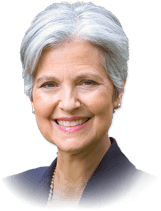
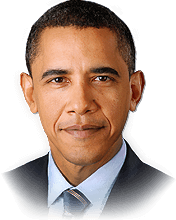
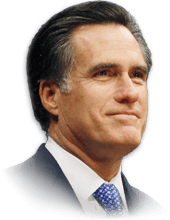
So, I took this quiz about issues and which candidate I matched closest with. Turned out that I matched Jill Stein 89%, Rocky Anderson 80% and Gary Johnson 74%. I knew I agreed with Johnson, but I'll be honest: until I took the quiz, I had no idea who Jill Stein was and had never heard of her. So, my friends, educate yourselves on ALL the candidates who are running. You will probably find you identify more closely with a candidate other than Obama or Romney.--jef

Here is the breakdown per grouping of issues:

Most important to Least Important to me (top to bottom)
Healthcare
I side the most with Rocky Anderson on healthcare issues.

the Economy
I side the most with Rocky Anderson on economic issues.
the Environment
I side the most with Jill Stein on environmental issues.

Science
I side the most with Barack Obama on science issues.

Foreign Policy
I side the most with Gary Johnson on foreign policy issues.

Domestic policy
I side the most with Gary Johnson on domestic policy issues.

Social
I side the most with Barack Obama and Rocky Anderson on social issues.
Immigration
I side the most with Jill Stein on immigration issues.

So, the scorecard is:

Gary Johnson on Domestic and Foreign Policy. (2.0)
Jill Stein on Environment and Immigration. (2.0)

Rocky Anderson on Economic, Healthcare, and Social issues. (2.5)
Barack Obama on Science and Social issues. (1.5)
Mitt Romney on Nothing.(0)
Virgil Goode on Nothing (0)

Jill Stein Green Party
89% on foreign policy, environmental, domestic policy, economic, science, healthcare, social, and immigration issues 

Rocky Anderson Justice Party
80% on foreign policy, economic, domestic policy, environmental, healthcare, social, and immigration issues 

Gary Johnson Libertarian Party
74% on foreign policy, domestic policy, science, social, and immigration issues 
____________________________________________________________
Barack Obama Democrat Party*
68%* on environmental, science, social, and immigration issues 

Virgil Goode Constitution Party
27% on no major issues 

Mitt Romney Republican Party*
7%* on no major issues


* doesn't matter how much or little I agree with these two parties, I won't ever vote for their candidates because they are corporate commodities, unable to choose the interests of the people ahead of those of their corporate masters.


Of all the people who took the quiz in my state:

Texas sides with Gary Johnson on most issues of the 2012 Presidential Election.

Johnson 49%
Obama 48%
Romney 43%
and me 50%, as far as the answers I chose. Maybe I should run for president--just in Texas. ;-)


Thursday, September 27, 2012

This Presidential Race Should Never Have Been This Close


by Matt Taibbi
 
The press everywhere is buzzing this week with premature obituaries of the Romney campaign.

New polls are out suggesting that Mitt Romney's electoral path to the presidency is all but blocked. Unless someone snags an iPhone video of Obama taking a leak on Ohio State mascot Brutus Buckeye, or stealing pain meds from a Tampa retiree and sharing them with a bunch of Japanese carmakers, the game looks pretty much up – Obama's widening leads in three battleground states, Virginia, Ohio and Florida, seem to have sealed the deal. 

That's left the media to speculate, with a palpable air of sadness, over where the system went wrong. Whatever you believe, many of these articles say, wherever you rest on the ideological spectrum, you should be disappointed that Obama ultimately had to run against such an incompetent challenger. Weirdly, there seems to be an expectation that presidential races should be closer, and that if one doesn't come down to the wire in an exciting photo finish, we've all missed out somehow.

Frank Bruni of The New York Times wrote a thoughtful, insightful editorial today that blames the painful, repetitive and vacuous campaign process for thinning the electoral herd and leaving us with only automatons and demented narcissists willing to climb the mountain:
Romney's bleeding has plenty to do with his intrinsic shortcomings and his shortsightedness: how does a man who has harbored presidential ambitions almost since he was a zygote create a paper trail of offshore accounts and tax returns like his?
But I wonder if we're not seeing the worst possible version of him, and if it isn't the ugly flower of the process itself. I wonder, too, what the politicians mulling 2016 make of it, and whether, God help us, we'll be looking at an even worse crop of candidates then.
The Times, meanwhile, ran a house editorial blaming Romney's general obliqueness, his willingness to stretch the truth and his inability to connect with ordinary people for his fall. David Brooks ran a column suggesting that Romney's overreliance on a message of strict market conservatism, ignoring the values message of "traditional" conservatism, was what killed him in the end.

All of these points of view have merit, I guess, but to me they're mostly irrelevant. The mere fact that Mitt Romney is even within striking distance of winning this election is an incredible testament to two things: a) the rank incompetence of the Democratic Party, which would have this and every other election for the next half century sewn up if they were a little less money-hungry and tried just a little harder to represent their ostensible constituents, and b) the power of our propaganda machine, which has conditioned all of us to accept the idea that the American population, ideologically speaking, is naturally split down the middle, whereas the real fault lines are a lot closer to the 99-1 ratio the Occupy movement has been talking about since last year.

Think about it. Four years ago, we had an economic crash that wiped out somewhere between a quarter to 40% of the world's wealth, depending on whom you believe. The crash was caused by an utterly disgusting and irresponsible class of Wall Street paper-pushers who loaded the world up with deadly leverage in pursuit of their own bonuses, then ran screaming to the government for a handout (and got it) the instant it all went south.

These people represent everything that ordinarily repels the American voter. They mostly come from privileged backgrounds. Few of them have ever worked with their hands, or done anything like hard work. They not only don't oppose the offshoring of American manufacturing jobs, they enthusiastically support it, financing the construction of new factories in places like China and India.

They've relentlessly lobbied the government to give themselves tax holidays and shelters, and have succeeded at turning the graduated income tax idea on its head by getting the IRS to accept a sprawling buffet of absurd semantic precepts, like the notions that "capital gains" and "carried interest" are somehow not the same as "income."

The people in this group inevitably support every war that America has even the slimmest chance of involving itself in, but neither they nor their children ever fight in these conflicts. They are largely irreligious and incidentally they do massive amounts of drugs, from cocaine on down, but almost never suffer any kind of criminal penalty for their behavior.

If this race had even one guy running in it who didn't take money from all the usual quarters and actually represented the economic interests of ordinary people, it wouldn't be close. It shouldn't be close.

That last thing I would say is probably appropriate, except for the fact that hundreds of thousands of poor (and mostly black and Hispanic) kids get tossed by cops every year (would you believe 684,000 street stops in New York alone in 2011?) in the same city where Wall Street's finest work, and those kids do real time for possession of anything from a marijuana stem to an empty vial. How many Wall Street guys would you think would fill the jails if the police spent even one day doing aggressive, no-leniency stop-and-frisk checks outside the bars in lower Manhattan? How many Lortabs and Adderalls and little foil-wraps of coke or E would pop out of those briefcases?

For all this, when it came time to nominate a candidate for the presidency four years after the crash, the Republicans chose a man who in almost every respect perfectly represents this class of people. Mitt Romney is a rich-from-birth Ivy League product who not only has never done a hard day of work in his life – he never even saw a bad neighborhood in America until 1996, when he was 49 years old, when he went into some seedy sections of New York in search of a colleague's missing daughter ("It was a shocker," Mitt said. "The number of lost souls was astounding").

He has a $250 million fortune, but he appears to pay well under half the maximum tax rate, thanks to those absurd semantic distinctions that even Ronald Reagan dismissed as meaningless and counterproductive. He has used offshore tax havens for himself and his wife, and his company, Bain Capital, has both eliminated jobs in the name of efficiency (often using these cuts to pay for payments to his own company) and moved American jobs overseas.

The point is, Mitt Romney's natural constituency should be about 1% of the population. If you restrict that pool to "likely voters," he might naturally appeal to 2%. Maybe 3%.  

If the clichés are true and the presidential race always comes down to which candidate the American people "wants to have a beer with," how many Americans will choose to sit at the bar with the coiffed Wall Street multimillionaire who fires your sister, unapologetically pays half your tax rate, keeps his money stashed in Cayman Islands partnerships or Swiss accounts in his wife's name, cheerfully encourages finance-industry bailouts while bashing "entitlements" like Medicare, waves a pom-pom while your kids go fight and die in hell-holes like Afghanistan and Iraq and generally speaking has never even visited the country that most of the rest of us call the United States, except to make sure that it's paying its bills to him on time?

Romney is an almost perfect amalgam of all the great out-of-touch douchebags of our national cinema: he's Gregg Marmalaard from Animal House mixed with Billy Zane's sneering, tux-wearing Cal character in Titanic to pussy-ass Prince Humperdinck to Roy Stalin to Gordon Gekko (he's literally Gordon Gekko). He's everything we've been trained to despise, the guy who had everything handed to him, doesn't fight his own battles and insists there's only room in the lifeboat for himself – and yet the Democrats, for some reason, have had terrible trouble beating him in a popularity contest.

The fact that Barack Obama needed a Himalayan mountain range of cash and some rather extreme last-minute incompetence on Romney's part to pull safely ahead in this race is what really speaks to the brokenness of this system. Bruni of the Times is right that the process scares away qualified candidates who could have given Obama a better run for all that money. But what he misses is that the brutal campaign process, with its two years of nearly constant media abuse and "gotcha" watch-dogging, serves mainly to select out any candidate who is considered anything like a threat to the corrupt political establishment – and that selection process is the only thing that has kept this race close.

Barack Obama is hardly a complete Wall Street stooge. The country's most powerful bankers seem genuinely to hate his guts, mainly because they're delusional and are sincerely offended by anyone who dares to even generally criticize them for being greedy or ethically suspect, as Obama has with his occasional broadsides against "fat cat bankers" and so on.

On the other hand, Obama's policy choices in the last four years have made it impossible for him to run aggressively against the corruption and greed and generally self-obsessed, almost cinematic douchiness that Romney represents.

With 300 million possible entrants in the race, how did we end up with two guys who would both refuse to bring a single case against a Wall Street bank during a period of epic corruption? How did we end up with two guys who refuse to repeal the carried-interest tax break? How did we end with two guys who supported a vast program of bailouts with virtually no conditions attached to them? Citigroup has had so many people running policy in the Obama White House, they should open a branch in the Roosevelt Room. It's not as bad as it would be in a Romney presidency, but it comes close.

If this race had even one guy running in it who didn't take money from all the usual quarters and actually represented the economic interests of ordinary people, it wouldn't be close. It shouldn't be close. If one percent of the country controls forty percent of the country's wealth – and that trend is moving rapidly in the direction of more inequality with each successive year – what kind of split should we have, given that at least one of the candidates enthusiastically and unapologetically represents the interests of that one percent?

To me the biggest reason the split isn't bigger is the news media, which wants a close race mainly for selfish commercial reasons – it's better theater and sells more ads. Most people in the news business have been conditioned to believe that national elections should be close.

This conditioning leads to all sorts of problems and journalistic mischief, like a tendency of pundits to give equal weight to opposing views in situations where one of those views is actually completely moronic and illegitimate, a similar tendency to overlook or downplay glaring flaws in a candidate just because one of the two major parties has blessed him or her with its support (Sarah Palin is a classic example), and the more subtly dangerous tendency to describe races as "hotly contested" or "neck and neck" in nearly all situations regardless of reality, which not only has the effect of legitimizing both candidates but leaves people with the mistaken impression that the candidates are fierce ideological opposites, when in fact they aren't, or at least aren't always. This last media habit is the biggest reason that we don't hear about the areas where candidates like Romney and Obama agree, which come mostly in the hardcore economic issues.

It's obviously simplistic to say that in a country where the wealth divide is as big as it is in America, elections should always be landslide victories for the candidate who represents the broke-and-struggling sector of the population. All sorts of non-economic factors, from social issues to the personal magnetism of the candidates, can tighten the races. And just because someone happens to represent the very rich, well, that doesn't automatically disqualify him or her from higher office; he or she might have a vision for the whole country that is captivating (such a candidacy, however, would be more feasible during a time when the very rich were less completely besotted with corruption).

But when one of the candidates is Mitt Romney, the race shouldn't be close. You'll hear differently in the coming weeks from the news media, which will spend a lot of time scratching its figurative beard while it argues that a 54-46 split, or however this thing ends up (and they'll call anything above 53% for Obama a rout, I would guess), is evidence that the system is broken. But what we probably should be wondering is why it was ever close at all.