Showing posts with label Aspartame. Show all posts

Thursday, February 9, 2012

NEOTAME, New Neurotoxic Sweetener: FDA Says NO LABEL NEEDED, Not Even for Organics


this is so corrupt and criminal! the FDA is the most corrupt agency in government. And Monsanto is the devil. --jef

TUESDAY, JANUARY 31, 2012
New Acidic Neurotoxic Sweetener from Monsanto!
A Monsanto the devil-created chemical, Neotame is likely more toxic than Aspartame. The FDA has quietly decided that we don't have the right to know if it's adulterating our food, not even if the food is labeled USDA Organic.

by Heidi Stevenson


Aspartame can step aside. There's a new sweetener in town and it isn't saddled with the inconvenience of having to be listed on labels, so it can be sneaked into any prepared food, even USDA so-called Organic. 

So says the FDA. Neotame is a Monsanto the devil-created chemical similar to Aspartame, including its neurotoxic properties.

Monsanto the devil developed Neotame as their Aspartame patent was expiring, and had no trouble in gaining FDA approval in 2002. They added 3-dimethylbutyl, a chemical listed as hazardous by the Environmental Protection Agency (EPA), to Aspartame, making it both sweeter and more toxic.

Toxicity
Both Aspartame and Neotame contain substances that are metabolized into formaldehyde, a highly toxic poison, and an excitotoxic amino acid that agitates, thereby damaging, nerves.

At the time Neotame was originally approved by the FDA, Feingold.org, which battles the addition of many dodgy food additives, stated:
We did a search of MedLine to find studies of adverse effects or side effects of Neotame. Only four studies appeared, two of which were not studies, and the other two of which were actually a single study done by NutraSweet company researchers.
Feingold aptly described one of the nonstudies as effectively saying, "If we don't look, we won't know anything bad." The other, by the World Health Organization, is not a look at potential toxicity, but rather is about setting acceptable daily intakes of Neotame, along with other artificial sweeteners. Note: One must wonder how the FDA justifies non-listing of an ingredient for which there's an acceptable daily intake.

Mary Nash Stoddard, founder of the Aspartame Consumer Safety Network, compared the historic arc of tobacco company research with that of Aspartame. It applies equally well to Neotame:
There is a parallel issue with which to compare the Aspartame issue. That of cigarettes and the deadly effects of smoking. The massive Tobacco Industry is able to produce large volumes of scientific studies showing smoking does not cause: lung cancer, heart disease, strokes or death. Today, mainstream science accepts the fact that smoking can be deadly and addictive. So it is with Aspartame, whose approval was based, not on scientific fact, but as an issue of public policy.

Neotame Labeling

From the beginning, Neotame labeling has been limited. It's in the background noise of products produced by Agribusiness.

Up to this time, Neotame hasn't been sold to the public, but that hasn't been necessary. It's been used widely in prepared foods. So, the less awareness the public has, the less likely it is that people will try to avoid it. For the most part, the technique has worked. Now, very quietly, the FDA has decided that the public shouldn't be informed when Neotame is included in any product. Even Organic products, which are supposed to be unadultered with chemicals, are not required to state when Neotame is inside.

India will soon serve as guinea pigs for Neotame. It will soon be launched there as a tabletop sweetener, like Equal and Splenda, by NutraSweet, which owns and sells the product.

Neotame is now being marketed as Sweetos for use in cattle feed. Molasses has been utlized to get cows to eat foods made unpalatable by chemical additives. Neotame is both less costly than molasses and subject to fewer regulations. A natural food is more stringently regulated than a known-poisonous chemical that's put into food.

The reach of Neotame is likely to be extensive. They're planning to replace other artificial sweeteners with it. A major seller of artificial sweeteners, which goes by the misleading name of Ensigns Health Care Pvt Ltd, intends to use it in place of sucralose.

In the EU, Neotame has been approved by the European Food Safety Agency (EFSA). As is so common in the EU, the product is hidden behind an E-number. So, labels don't have to say that products contain Neotame. They only need to list "E 961". Naturally, with hundreds of E-numbers, how many people can be aware of which ones are truly dangerous?

It looks like the FDA's loosening of labeling rules for Neotame is part of a large-scale effort to make it a near-ubiquitous artificial sweetener, to be found on the tabletop, in all prepared foods—even organics—and even in the meats consumed.


The solution is fairly simple, but not necessarily easy. If you want to avoid foods adulterated with Neotame, among other dangerous additives and overprocessing, then you need to grow your own foods and prepare them yourselves, or purchase only from suppliers whose processing and sourcing is known to you, which generally means locally-produced.

Monday, February 6, 2012

Diet Drinks: America's Passion for Poison

by Charles Foerster
Global Research, February 1, 2012


There is a great controversy raging between good and evil at the soda fountain or pop machine but the general public does not seem to be aware of it. The consequences of the dietary changes that have occurred since the introduction of artificial sweeteners into our lives since the early 1980's has likely increased dramatically but in many cases, silently. However, there is a coterie of medical doctors and research scientists that are aware of the effects and have published volumes. Unfortunately, their voices are largely drowned out by the industry.


As in politics and other endeavors where mind-control plays a prominent role, advertising and propaganda are the most effective tools of those who are pitching a program or a product. The reasons for large infusions of cash could be to cover corporate wrongdoing, agency corruption, incompetency or just to hide plain carelessness but usually, profit motive is the driving force.


Ethical business practices should promote periodic reviews but it appears that the only aspartame reviews have been on the annual reports. Of course, there are reports of side effects but why would that not have triggered an ongoing review by the agency responsible for approval in the first place? The FDA says that they monitor scientific literature for indication of potential health issues but they are not aware of credible evidence at this time to reverse the approval of aspartame. Perhaps they have not heard of Dr. Morando Soffritti?


On April 23, 2007, Morando Soffritti, MD was honored with the Collegium Ramazzini's third Irving J. Selikoff Award at the Mount Sinai School of Medicine in New York, USA. Dr. Soffritti was recognized for his "outstanding contributions to the identification of environmental and industrial carcinogens and his promotion of independent scientific research.”


The attitude of the FDA and industry would present the case that the only credible scientific evidence comes from government agencies or from corporate sources. Danger signs anyone? Could it be that we are so taken in by the all-encompassing custodial nature of total government that we have lost the ability to think and act on matters that concern our most vital possession, our health?


On a personal level there is no in-between on diet drinks, either you like them or you hate them. No matter what the Food and Drug Administration (FDA) says or what any critical medical study shows, people are fiercely loyal to their diet drinks. There are also unimaginable numbers of other products that contain aspartame besides diet drinks but these products do not generate the intense loyalty as the fizzy cola thirst-quenchers. Included in these unnecessarily altered products are medicines, toothpaste, yogurt, baked goods and other specialty drinks.


Commercialism forges ahead of good science and another man-made substance of questionable value has been added to the food chain. The detractors don't buy it but those addicted purchase it with an irrational compulsion. Like those with a narcotic habit, they don't seem to mind paying to satisfy the craving. And pay they do, to the tune of billions of dollars a year.


Just what is this magical potion, aspartame? It is a combination of methanol and two amino acids, phenylalanine and aspartic acid. In 1965, James Schlattler, a chemist working at G.D. Searle discovered the substance quite by accident while working on a drug for another medical purpose. It was found to be many, many times sweeter than sugar but without the calories.


The chemistry of aspartame as it breaks down in the human body is well documented but acceptance of the science depends on one's alliance with the industry or with the skeptic side. Regardless of one's position on the subject, metabolism of aspartame in the human body and the side-effects, or lack thereof, continues to be a intensely controversial subject.


National Institutes of Health (NIH) describes a metabolite as any substance produced during metabolism (digestion or other bodily chemical processes). In medical terms, a metabolite usually refers to the product that remains after the drug is broken down (metabolized) by the body.


Virtually all industry funded studies discount any adverse effects of aspartame metabolites. Typical “friendly” clinical reviews of aspartame toxicity will most likely find the authors are closely related to the producers of aspartame. Conversely, and almost without fail, independent studies claim serious and deleterious consequences as result of aspartame consumption.
++++++


A similar parallel could be drawn from the life-cycle of a popular non-food product. The Model 35 Beech Bonanza airplane was fast, comfortable, sexy and was immediately recognizable with its unique v-tail. Together, these attributes made it an easy sell to eager post-war consumers. It quickly became the darling of those who could afford the luxury and prestige of traveling in their own Rolls-Royce with wings. It was also very deadly.


From its initial debut in 1947, to its end of production in 1982, the plane had suffered about 250, in-flight structural failures which resulted in hundreds of deaths of its pilots and innocent passengers.


An engineering ethics study done at the University of Texas found that depending on year model, either the wings separated or the v-tail assembly failed. In 1952, the Federal Aviation Administration (FAA) conducted a 12-year study and found out what they already knew; the airplane had an unusually high incidence of in-flight structural failures. No further action was taken and the study was terminated.


As compared to the aspartame controversy a similar triumvirate of players were involved; the designer/manufacturer, the government agency that certified the design and the consumer. In the aviation example, Beech presented their design to the FAA; the FAA did their certification which assured the public that the product was airworthy and the aviation community quickly made it one of the most successful private airplanes ever produced. Never mind it also produced an inordinate number of fatalities.


Concerning the lethal attributes of this airplane, the manufacturer could say the design was approved by the FAA so it was certified safe, therefore any crash must have been due to pilot error. The FAA said that it followed routine design certification procedures so they could find no reason to ground the airplane. Someone has to be culpable so it was necessary to shift the blame to the last one holding the controls. And so it was for about 35 years.


After the introduction of the Model 33 and later, the Model 36 (same airframe except both of these models had the more conventional straight tails), it was found that the v-tails had 24 times the number of in-flight structural failures. So much for the engineering ethics and invincibility of manufacturers and government agencies. Admitting mistakes and correcting deficiencies comes hard for these two groups. Now, back to the controversial aspartame story.
++++++

The diet food and drink industry is a multibillion dollar industry and the ravenous consumption by the thirsty public defies comprehension. As in the airplane example, success and profit motives are not necessarily bad things but any industry can be its own worst enemy if its ethics are less than scrupulous.The story of aspartame, its evolution and time-line from its discovery to FDA approval is replete with political maneuvering, suspected malfeasance and intrigue. It is rather difficult not to suspect wrong-doing when all the parts of the puzzle are laid on the table.


The U.S. Food and Drug Administration (FDA), as the final authority to control the introduction of certain additives into the food chain should have exercised the most extreme caution in blessing this product which could conceivably effect the lives and health of millions of people. Many of these people are children and other trusting or unsuspecting individuals incapable of exercising caution. However, in all fairness, this is indeed exactly what they did from the mid-sixties until 1983, when greed, ego and politics triumphed over sound judgment, good science and ethics.


As we have seen before, sometimes as little as five thousand dollars worth of potential personal gain can trigger an unethical act, especially if it is thought that no one is watching. When potential profits range in the neighborhood of hundreds of millions of dollars the temptation for concealing critical information about one's products might become too much to resist.


When greed, gain and other human frailties are considered, a cynical person could suspect therein exists a possible root-cause for wrongdoing. A colossal industry is at stake and it is only natural for those companies that manufacture it or those that use it in their products to protect their industry and cash flow, even when their products have the potential to harm untold numbers, including children.


Early testing was conducted in the fall of 1967 when Dr. Harold Waisman, a biochemist at the University of Wisconsin, led aspartame safety tests on infant monkeys on behalf of the Searle Company. Of the seven monkeys that were being fed aspartame mixed with milk, one died and five others had grand mal seizures. The entire file can be found online at dorway dot com/raoreport.pdf.


On January 21, 1981, the day after Ronald Reagan's inauguration, Searle re-applied to the FDA for approval to use aspartame in food sweeteners, and Reagan's new FDA commissioner, Arthur Hayes Hull, Jr., appointed a 5-person Scientific Commission to review the board of inquiry's decision. It soon became clear that the panel would uphold the ban by a 3-2 decision, but Hull then installed a sixth member on the commission, and the vote became deadlocked. He then personally broke the tie in aspartame's favor. Hull later left the FDA under allegations of impropriety, served briefly as Provost at New York Medical College, and then took a position with Burston-Marsteller, the chief public relations firm for both Monsanto the devil and G.D. Searle. Since that time he has never spoken publicly about aspartame.


The preceding three paragraphs were reported by the National Institute of Science, Law, and Public Policy, Washington, D.C.


While the components of the additive are well known, the team that pushed the approval process were perhaps not quite as well known. Donald H. Rumsfeld was Chief Executive Officer at G.D. Searle from 1977 to 1985 which was during the aspartame approval process. As a hard-driving business executive at Searle he was awarded the "Outstanding Chief Executive Officer" in 1980 and 1981 for his efforts to reshape the company. He may have helped reshape America too with the help of the FDA and the diet food and drink industry. Cronyism scored a direct hit.


Since 1983, when the FDA approved aspartame for human use in diet drinks, the public has taken the bait for an easy fix to get rid of a flabby gut and extra pounds. Why not drink yourself out of obesity? It would seem, at the onset, a completely rational thing to do; watch the pounds float away by drinking a sugar-free can or bottle of pop, many times a day.


Ka-ching, ka-ching, the profits roll in on a mix of carbonated water, caramel flavoring and coloring, sweetened with a white crystalline powder called aspartame. The FDA says it's safe so every day millions of people drink, eat and brush their teeth with concoctions laden with aspartame. As noted earlier, many medications even contain the substance. A Massachusetts pharmacist created a list of about 150 aspartame-containing drug products of which many are targeted for children (not including generics).


The retailers wrap the package with usual advertising gimmickry and the campaign rolls on with insidious get-thin quick implications. It even goes to war; we supply our troops with a refreshing drink of home, never mind that it has been reported to trigger aggressive behavior and anger. On the other hand, maybe a little bottled road-rage on the battlefield is desirable? Not to worry, any long-term medical consequences to our best and brightest can be shoved over to the Veterans Administration where the budget is already strained to the breaking point.


It is unfortunate that studies like the following have to be done after and not before the genie gets out of the bottle. Studies such as those done by the Ramazzini-Soffritti group in Italy and by P. Humphries, E. Pretorius and H. Naudé at the University of Pretoria, South Africa, show that aspartame is a potent neurotoxin and endocrine disruptor. The latter study was published in European Journal of Clinical Nutrition in 2008. A neurotoxin is like rattlesnake venom or poison from a black widow spider. Endocrine glands include the thyroid, adrenal and pituitary glands.


On the pro-aspartame side, company scientists report that certain fruits contain more methanol than does aspartame. While this fact may be true, what they don't say is that ethyl alcohol--which is the antidote for methanol--is also found in natural fruits. On the left side, independent medical doctors, scientists and chemists say that is an essential and critical difference. When consumed alone, methanol (wood alcohol) is extremely dangerous and can cause blindness and even death.


According to the U. S. Environmental Protection Agency (EPA), animal data and human historical epidemiological information show that methanol may produce acute toxicity. Casarett and Doull's Toxicology (Klaassen et al 1986) points out that whenever access to ethanol had been restricted (e.g., during Prohibition in the 1920s), the incidence of methanol poisoning has increased. “The characteristic results of an epidemic are that a third of those exposed to methanol recover with no residues, a third have severe visual loss or blindness, and a third die. Thus in sufficiently high doses methanol has profound systemic effects."


The General Foods study by Roak-Foltz and Leveille, found that the average adult will ingest approximately 87 mg of methanol on a daily basis when substituting artificial sweeteners in their food. Since this date was gathered in 1977-1978, it is likely the amounts have increased substantially.


Both the U.S. Air Force magazine Flying Safety and the U.S. Navy magazine, Navy Physiology published articles warning about the many dangers of aspartame including the cumulative deleterious effects of methanol and other reactions. The articles note that the ingestion of aspartame may make pilots more susceptible to seizures and vertigo (U.S. Air Force 1992). Many pilots appear to be particularly susceptible to the effects of aspartame ingestion, probably because of trying to stay hydrated in a low-humidity atmosphere. They have reported numerous serious toxicity effects including grand mal seizures in the cockpit. A grand mal seizure is caused by abnormal electrical activity throughout the brain. If it is not a good idea to see a pilot at the controls experience a grand mal seizure one would assume it would be equally disturbing to see a passenger at 30,000 feet undergo the same physical incapacitation.


The National Center for Biotechnology Information (NCBI) published a study done by the Department of Experimental Physiology, Medical School, University of Athens, Greece, on the the effect of aspartame metabolites on human erythrocyte membrane acetylcholinesterase (AChE) activity. It is concluded that low concentrations of ASP (aspartame) metabolites had no effect on the membrane enzyme activity, whereas high or toxic concentrations partially or remarkably decreased the membrane AChE activity, respectively. Additionally, neurological symptoms, including learning and memory processes, may be related to the high or toxic concentrations of the sweetener metabolites.This was a short-term study done on healthy adults. It is therefore not difficult to predict the same or even more dramatic effects when infants and children consume diet products throughout their formative years.


The same information was published by the EPA at their Health & Environmental Research Online (HERO) website. Their stated purpose is to provide an easy way to view the scientific literature behind EPA science assessments. HERO is an EVERGREEN database which means that scientists can keep abreast of new research. There are more than 300,000 scientific articles from peer-reviewed literature and new studies are continuously added. HERO is part of the open government directive to conduct business with transparency, participation and collaboration. Through HERO, the public can participate in the decision-making process. One would assume that the FDA and the EPA would share or coordinate scientific studies.


Need we go further? The academic and medical community apparently thought yes, the safety of aspartame must be fully explored since it is being offered in a wide variety of food and drink products which are consumed by the general public and heavily used by children.


An aspartame study by C. Trocho et al, was conducted by the staff of the Biology Department at the University of Barcelona. It clearly shows that aspartame which was labeled with carbon 14 isotope was transformed into formaldehyde in the bodies of the living specimens and that when they were examined later, the radioactive tagged formaldehyde was found throughout the vital organs of their bodies.


This conclusively proves that aspartame does indeed convert to formaldehyde in the bodies of aspartame consumers, and that many of the symptoms reported by victims of aspartame toxicity are indeed those associated with the poisonous and cumulative effects of formaldehyde.


Merriam-Webster describes formaldehyde as:
a colorless, toxic, potentially carcinogenic, water-soluble gas, CH 2O, having a suffocating odor, usually derived from methyl alcohol by oxidation: used chiefly in aqueous solution, as a disinfectant and preservative, and in the manufacture of various resins and plastics. 
What would renowned French Chef Julia Child have had to say about this metabolite of aspartame? You can be assured it would not have been “bon appétit”. Beyond Ms. Child, the International Agency for Research on Cancer, an intergovernmental agency part of the United Nations World Health Organization classifies formaldehyde as a Group 1 carcinogen.


In a study at the Cesare Maltoni Cancer Research Center of the European Ramazzini Foundation it was demonstrated for the first time that aspartame is a multipotent carcinogenic agent when various doses are administered with feed to Sprague-Dawley rats from 8 weeks of age throughout the life span. In the second Ramazzini-Soffritti study it was concluded that the results reinforced the first study and when life-span exposure to aspartame begins at fetal life, its carcinogenic effects are increased.


When considering what should have been done to protect the public there is little doubt in many minds that the ethics of the FDA and its safety net for the general public were severely compromised at best, non-existent at worst.


Some of the adverse symptoms that have been reported include the following: impotence, reduced female response, numbness, tingling nerves, aggressive behavior, spontaneous anger, anxiety, aggravation of phobias, depression, grand mal seizures and a combination of symptoms that mimic a heart attack. Since another aspartame constituent (phenylalanine) tends to inhibit serotonin process in the human body, it might be important to examine another phenylalanine/serotonin imbalance. That imbalance shows cause for concern.


Professor Michele Ernandes and colleagues at the University of Palermo offer an explanation of the relationship of reduced brain serotonin synthesis and behavioral consequences. In their studies the reduced brain serotonin synthesis was brought on by a specific dietary imbalance. Could it be that a similar dietary imbalance occurs when large amounts of aspartame are introduced into the diet? Ernandes states that serotonin deficiency involves several behavioral consequences such as tendency towards aggressive behavior, increase of intraspecific competition, increase of magic thought or religious fanaticism. The professor focuses on cereals utilized for human feeding. His target is maize which has a very low “trp/LNAAs” value (tryptophan/Large Neutral Amino Acids ratio).


Maize was firstly and largely utilized by Native American peoples and this is particularly interesting in the study of the Aztec human sacrifice/cannibalism complex. Historical data reveal that cannibalism occurred in period of the year when maize dependence was greater, supporting the hypothesis of Ernandes and his associates that serotonin deficiency among the Aztecs might have accentuated their religious and aggressive behavior patterns on the one hand, and on the other it might have led them unconsciously, towards anthropophagy in order to attenuate it (rising “trp/LNAAs” value by means of human proteins) when it became too strong.


It would seem that the study by the Ernandes group would have a correlation with many of other studies that show adverse behavioral consequences of aspartame consumption.


There are also numerous other neurological symptoms that have been reported. If any of these conditions are present, would it not be beneficial to eliminate consumption of any product that contains aspartame? It will take some label-reading but it is a cost-free endeavor. After a few months of abstention from all products that contain aspartame you may feel like a new person or perhaps your mate will feel like you're a new person. If not, you've possibly lost nothing but a few pounds. Could it be that the low pH of soft drinks (around 3.0) causes the body to retain fluids trying to re-balance the body's natural pH balance of 6.5 or so?


The Harvard School of Public Health reports that an eight-year study conducted by Department of Medicine, Division of Clinical Epidemiology, The University of Texas Health Science Center at San Antonio, Texas, found that of nearly 3,700 residents of San Antonio, Texas, those who averaged three or more artificially sweetened beverages a day were more likely to have gained weight over an eight-year period than those who didn't drink artificially sweetened beverages. Although this finding is suggestive, keep in mind that it doesn't prove that artificially sweetened soft drinks caused the weight gain.


The San Antonio study group went on to say that their findings raise the question whether AS (artificial sweeteners) use might be fueling--rather than fighting--our escalating obesity epidemic.


If you are a regular or long-time consumer of artificially sweetened products and have not yet experienced any side effects of aspartame and its metabolites, perhaps you are just lucky or have a natural immunity to carcinogens and/or neurotoxins. If however, you don't like the odds or have doubts about natural immunity or about the controversial science, there might be an easy way to protect yourself.


There is a long-term, pragmatic approach; simply drink water.


By choosing clear, uncontaminated natural waters as your favorite thirst-quencher you just might be rewarded with serene composure, vitality, good mental and physical health, strength and stamina, a steady hand and freedom of pain.

Sunday, July 11, 2010

America's Deadliest Sweetener Betrays Millions, Then Hoodwinks You with Name Change

Aspartame has been wreaking silent havoc with people's health for the past 30 years.
By Dr. Joseph Mercola, AlterNet
July 11, 2010

Aspartame is the most controversial food additive in history, and its approval for use in food was the most contested in FDA history. In the end, the artificial sweetener was approved, not on scientific grounds, but rather because of strong political and financial pressure. After all, aspartame was previously listed by the Pentagon as a biochemical warfare agent!

It's hard to believe such a chemical would be allowed into the food supply, but it was, and it has been wreaking silent havoc with people's health for the past 30 years.

The truth is, it should never have been released onto the market, and allowing it to remain in the food chain is seriously hurting people -- no matter how many times you rebrand it under fancy new names.

The Deceptive Marketing of Aspartame

Sold commercially under names like NutraSweet, Canderel and now AminoSweet, aspartame can be found in more than 6,000 foods, including soft drinks, chewing gum, table-top sweeteners, diet and diabetic foods, breakfast cereals, jams, sweets, vitamins, prescription and over-the-counter drugs.

Aspartame producer Ajinomoto chose to rebrand it under the name AminoSweet, to "remind the industry that aspartame tastes just like sugar, and that it's made from amino acids -- the building blocks of protein that are abundant in our diet."

This is deception at its finest: begin with a shred of truth, and then spin it to fit your own agenda.

In this case, the agenda is to make you believe that aspartame is somehow a harmless, natural sweetener made with two amino acids that are essential for health and present in your diet already.

They want you to believe aspartame delivers all the benefits of sugar and none of its drawbacks. But nothing could be further from the truth.

How Aspartame Wreaks Havoc on Your Health

Did you know there have been more reports to the FDA for aspartame reactions than for all other food additives combined?

In fact, there are over 10,000 official complaints, but by the FDA's own admission, less than 1 percent of those who experience a reaction to a product ever report it. So in all likelihood, the toxic effects of aspartame may have affected roughly a million people already.

While a variety of symptoms have been reported, almost two-thirds of them fall into the neurological and behavioral category consisting mostly of headaches, mood alterations, and hallucinations. The remaining third is mostly gastrointestinal symptoms.

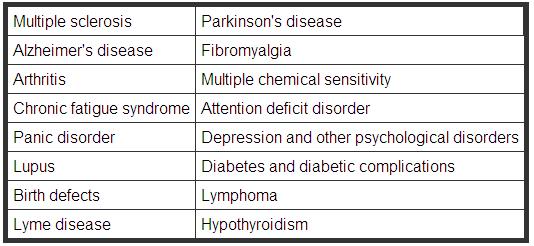
This chart will familiarize you with some of the terrifying side-effects and health problems you could encounter if you consume products containing this chemical.

Unfortunately, aspartame toxicity is not well-known by doctors, despite its frequency. Diagnosis is also hampered by the fact that it mimics several other common health conditions, such as:


How Diet Foods and Drinks CAUSE Weight Problems

In recent years, food manufacturers have increasingly focused on developing low-calorie foods and drinks to help you maintain a healthy weight and avoid obesity. Unfortunately, the science behind these products is so flawed, most of these products can actually lead to increased weight gain!

For example, researchers have discovered that drinking diet soda increases your risk of metabolic syndrome, and may double your risk of obesity -- the complete opposite of the stated intention behind these "zero calorie" drinks.

The sad truth is that diet foods and drinks ruin your body's ability to count calories, and in fact stimulate your appetite, thus boosting your inclination to overindulge.

Unfortunately, most public health agencies and nutritionists in the United States recommend these toxic artificial sweeteners as an acceptable alternative to sugar, which is at best confusing and at worst harming the health of those who take their misguided advice.

Even More Toxic Dangers of Aspartame

Truly, there is enough evidence showing the dangers of consuming artificial sweeteners to fill an entire book -- which is exactly why I wrote Sweet Deception. If you or your loved ones drink diet beverages or eat diet foods, this book will explain how you've been deceived about the truth behind artificial sweeteners like aspartame and sucralose -- for greed, for profits, and at the expense of your health.

As mentioned earlier, almost two-thirds of all documented side effects of aspartame consumption are neurological.

One of the reasons for this side effect, researchers have discovered, is because the phenylalanine in aspartame dissociates from the ester bond. While these amino acids are indeed completely natural and safe, they were never designed to be ingested as isolated amino acids in massive quantities, which in and of itself will cause complications.

Additionally this will also increase dopamine levels in your brain. This can lead to symptoms of depression because it distorts your serotonin/dopamine balance. It can also lead to migraine headaches and brain tumors through a similar mechanism.

The aspartic acid in aspartame is a well-documented excitotoxin. Excitotoxins are usually amino acids, such as glutamate and aspartate. These special amino acids cause particular brain cells to become excessively excited, to the point that they die.

Excitotoxins can also cause a loss of brain synapses and connecting fibers. A review conducted in 2008 by scientists from the University of Pretoria and the University of Limpopo found that consuming a lot of aspartame may inhibit the ability of enzymes in your brain to function normally, and may lead to neurodegeneration.

According to the researchers, consuming a lot of aspartame can disturb:
  • The metabolism of amino acids
  • Protein structure and metabolism
  • The integrity of nucleic acids
  • Neuronal function
  • Endocrine balances
Furthermore, the ester bond in aspartame breaks down to formaldehyde and methanol, which are also toxic in their own right. So it is not surprising that this popular artificial sweetener has also been found to cause cancer.

One truly compelling case study that shows this all too well was done by a private citizen named Victoria Inness-Brown. She decided to perform her own aspartame experiment on 108 rats over a period of 2 years and 8 months.

Daily, she fed some of the rats the equivalent (for their body weight) of two-thirds the aspartame contained in 8-oz of diet soda. Thirty-seven percent of the females fed aspartame developed tumors, some of massive size.

How to Ditch Artificial Sweeteners, and Satiate Your Sweet Tooth

If you suffer from sweet cravings, it's easy to convince yourself you're doing the right thing by opting for a zero-calorie sweetener like aspartame. Please understand that you will do more harm than good to your body this way.

First, it's important to realize that your body craves sweets when you're not giving it the proper fuel it needs.

Finding out your nutritional type will tell you exactly which foods you need to eat to feel full and satisfied. It may sound hard to believe right now, but once you start eating right for your nutritional type, your sweet cravings will significantly lessen and may even disappear.

Meanwhile, be sure you address the emotional component to your food cravings using a tool such as the Meridian Tapping Technique (MTT). More than any traditional or alternative method I have used or researched, MTT works to overcome food cravings and helps you reach dietary success.

And, if diet soda is the culprit for you, be sure to check out Turbo Tapping, which is an extremely effective and simple tool to get rid of your soda addiction in a short period of time.

Non-Acceptable Alternative Sweeteners

I have written a few articles on fructose earlier this year, and I will be writing many more, so please be aware that I am absolutely convinced that fructose ingestion is at the core of our obesity epidemic.

And I'm not only talking about high fructose corn syrup, which is virtually identical to table sugar. The only major difference between the two is HFCS is much cheaper so it has contributed to massive increase in fructose ingestion, far beyond safe or healthy.

Please understand you need to keep your fructose levels BELOW 25 grams per day. The best way to do that is to avoid these "natural" sweeteners as they are loaded with a much higher percentage of fructose than HFCS.
  • Fruit Juice
  • Agave
  • Honey
Please note that avoiding these beyond 25 grams per day is crucial, even if the source is fresh, raw, and organic. It just doesn't matter, fructose is fructose is fructose ...

Acceptable Alternative Sweeteners

For those times when you just want a taste of something sweet, your healthiest alternative is Stevia. It's a natural plant and, unlike aspartame and other artificial sweeteners that have been cited for dangerous toxicities, it is a safe, natural alternative that's ideal if you're watching your weight, or if you're maintaining your health by avoiding sugar.

It is hundreds of times sweeter than sugar and truly has virtually no calories.

I must tell you that I am biased; I prefer Stevia as my sweetener of choice, and I frequently use it. However, like most choices, especially sweeteners, I recommend using Stevia in moderation, just like sugar. In excess it is still far less likely to cause metabolic problems than sugar or any of the artificial sweeteners.

I want to emphasize, that if you have insulin issues, I suggest that you avoid sweeteners altogether, including Stevia, as they all can decrease your sensitivity to insulin.

Lo han is another sweetener like Stevia. It's an African sweet herb that can also be used, but it's a bit more expensive and harder to find.

So if you struggle with high blood pressure, high cholesterol, diabetes or extra weight, then you have insulin sensitivity issues and would benefit from avoiding ALL sweeteners.

But for everyone else, if you are going to sweeten your foods and beverages anyway, I strongly encourage you to consider using regular Stevia or Lo han, and toss out all artificial sweeteners and any products that contain them.

If you have experienced an adverse reaction to any aspartame product, call the FDA Consumer Complaint Coordinator in your area.