Showing posts with label immigration. Show all posts

Friday, June 17, 2011

Why Texas is a Complete Basket-Case

 (So Perry and the GOP are proud of the fact that his policies of tax breaks and subsidies for his corporate cronies who fund his campaign in return has eliminated well paying jobs and replaced them with more minimum wage service jobs like fast-food clerks, dishwashers, busboys, and 7-11 clerks? Anyone with a good job who believes in him will be mopping up puddles of puke at an underfunded elementary school within a year. There are not enough jobs in Texas that pay what a person needs for his/her mortgage and to raise a family. The Miracle is a myth--or rather a big pile of lying bullshit. And Perry, the fraud, would be a worse president than GW Bush was. He'll never get elected.--jef)
 +++

Conservatives claim the "Texas Miracle" is a model for the nation, but it's actually a blueprint for winning the race to the bottom.
By Joshua Holland, AlterNet
Posted on June 17, 2011

Conservative mythology now holds up Texas as a shining example of right-wing governance in action. Republicans would have us believe that gutting the state's social safety net, denying workers the right to bargain collectively and relentlessly cutting taxes unleashed a torrent of “job creation” and, ultimately, prosperity.

Under governor Rick “Goodhair” Perry's term in office, Texas has indeed been a model of conservative governance, but the truth is that it has resulted in anything but prosperity for the people of the Lone Star State. In fact, Texas is not only a complete basket-case, it would be faring far worse today without the help of policies enacted by Democrats at the federal level – policies Perry lambasted as “irresponsible spending that threatens our future.”

The kernel of truth on which the tale of the Texas Miracle is built is that the state has in fact added a lot of jobs over the past decade. In a gushing lead editorial, the Wall Street Journal noted that “37% of all net new American jobs since the recovery began were created in Texas.” The Journal then spun that fact like this:
Capital—both human and investment—is highly mobile, and it migrates all the time to the places where the opportunities are larger and the burdens are lower. Texas has no state income tax. Its regulatory conditions are contained and flexible. It is fiscally responsible and government is small. Its right-to-work law doesn't impose unions on businesses or employees. (Yeah, uh, Texas is "will to work" which means a company can fire an employee without giving a reason or warning first.--jef)
In the Journal's hyper-partisan view, the lesson to be learned is that “the core impulse of Obamanomics is to make America less like Texas and more like California, with more government, more unions, more central planning, higher taxes.” That spin was echoed during last week's GOP debate by none other than Newt Gingrich, who asked, “Why [would] you want to be at California's unemployment level when you can be [at] Texas's employment level?”

James Galbraith, an economist at the University of Texas, scoffed at the whole narrative, telling AlterNet, “the notion that our state government is a model is almost enough to beckon the spirit of Molly Ivins back from the shades.” Galbraith said “Texas has been a low-tax, low-service state since the time of the Republic,” and noted that it's “therefore impossible that this fact suddenly accounts for its better job performance over the past few years. 


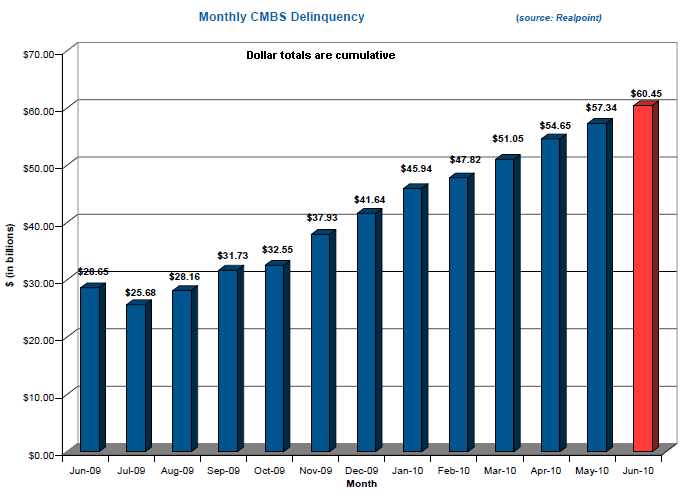
“Texas is an energy state benefiting from high oil prices and the incipient boom in natural gas,” explained Galbraith. “That's an accident of nature.” He added that the state “went through the S&L crisis, had major criminal prosecutions and more restrictive housing finance regulations this time around; hence it was not an epicenter of the subprime housing disaster. (Texas may, however, doomed to be the epicenter of the coming commercial real estate crash. Houston and Dallas could be doomed once that market has slowly cratered as hundreds of billions of dollars in bad loans mature.--jef)

That's called a learning experience.” Tighter regulation of the lending industry is also anathema to today's GOP.

Arguably the biggest sleight-of-hand in the Texas Miracle storyline, however, is that many of those jobs were a result of a huge surge in the state's population, much of it fueled by immigration from Latin America (rather than liberal hell-holes like California).

Texas' population grew by 20% over the past decade, and Hispanics accounted for almost two-thirds of that growth. A surge in people created greater demand for goods and services, which leads to more jobs. But the jobs being created in Texas aren't keeping up with the state's expanding workforce – the Wall Street Journal somehow failed to mention that during the exact same period in which it was adding all those new jobs, Texas' unemployment rate actually increased from 7.7 to 8% (it also failed to note that 23 states -- including such deep blue ones as Vermont, New York and Massachusetts -- enjoy lower unemployment rates than Texas).

But perhaps the most laughable claim in this whole narrative is that Texas has been “fiscally responsible.” Perry certainly adhered to the conservative playbook, offering massive tax breaks without the deep cuts in services that might inspire a voter backlash. As a result – an entirely predictable one – the Austin American-Statesman reported that “state lawmakers have spent much of the year grappling with a budget shortfall that left them $27 billion short of the money needed to continue current state services.”

CNN adds that while Perry was railing against the Democratic stimulus package passed over the fierce resistance of conservatives, the state “was facing a $6.6 billion shortfall for its 2010-2011 fiscal years,” and “it plugged nearly all of that deficit with $6.4 billion in Recovery Act money.” The stimulus package created or saved 205,000 jobs in Texas, second only to California. But as James Galbraith told AlterNet, while “the state budget has not yet been cut drastically” due to the stimulus boost, “the key phrase is 'not yet.'” Now that the stimulus has run its course, “if projections for the current budget cycle are correct, things will get much worse in the next year.”

Indeed, those cuts are now on their way. The Texas legislature imposed draconian cuts to Medicaid, cut tuition aid to 43,000 low-income students and is weighing $10 billion in cuts to the state's education system. According to Texas state senator Rodney Ellis, D-Fort Bend, the 2012-2013 budget will underfund “health and human services in Texas by $23 billion, 29.8% below what is needed to maintain current services.”

But Perry's tax breaks are indeed part of the state's jobs picture; as Time magazine's Massimo Calabresi noted, Perry established several massive business tax breaks “designed to lure companies from other states.”
[But] the funds have been controversial. They have channeled millions of dollars to companies whose officers or investors are major Perry campaign donors and Perry has allowed them to keep their subsidies in many cases even when they fail to deliver promised jobs. More important for the purposes of judging Perry’s job-creating record, even those that do produce jobs don’t necessarily create long-lasting ones, or increase the state’s overall prosperity.
In a report written for Perry last spring, Michael Porter of Harvard Business School noted that such tax breaks “ultimately don’t support long-term prosperity,” because companies that can move easily “are looking for the best deal and when the deal runs out they move” again, taking their jobs with them.

He also found that Texas’ per capita income growth was the eighth slowest of any state in the country between 1998 and 2008. That's because, as the American Independent's Patrick Brendel noted, “Texas has by far the largest number of employees working at or below the federal minimum wage,” and the number of crappy jobs has exploded while this supposed Texas Miracle was taking place. “From 2007 to 2010, the number of minimum wage workers in Texas rose from 221,000 to 550,000, an increase of nearly 150 %,” wrote Brendel. As a result, Texas is now “tied with Mississippi for the greatest percentage of minimum wage workers, while California had among the fewest (less than 2 %).”*

At a fundraiser this week, Rick Perry, who despite toying with the idea of secession in the past may now be eying a White House bid, told a group of Republican fat-cats that in his state, “you don't have to use your imagination, saying, 'What'll happen if we apply this or that conservative principle?' You just need to look around, because they've been in play across our state for years, generating real results.”

In this, Perry is absolutely, 100% correct. He slashed taxes to the bone, handing out credits to his political cronies like they were candy. He decried the evils of Big Government while hypocritically using federal stimulus funds to help close Texas' budget gap in the short term, and now he's using the state's longer term fiscal disaster – one of his own creation – as a premise for destroying an already threadbare social safety net serving the neediest Texans. As a result of these policies, plus immigration and other external factors, his state's added a lot of low-paying poverty jobs without decent benefits. He's added very little in the way of “prosperity.”

In the final analysis, Texas is indeed a shining example of conservative governance, as well as an almost perfect model for winning the race to the bottom.

* It should be noted that the cost of living is higher in California than in Texas.

Monday, May 16, 2011

America's 51st State?

Say Hello To Baja Arizona
Ian Power-Luetscher | May 13, 2011 | TPM

It's hard out in Arizona for a liberal. From recently announced deep cuts to health care and education, to the now infamously tough immigration law currently tied up in court battles, Arizona remains one of the country's more reliably conservative states. However, a group of Arizonans from the Tucson area are looking to distance themselves from the more conservative policies of their state, literally, by seceding. Headed up by Tucson attorney and former state Democratic Party Chairman Paul Eckerstrom, SOS or "Start Our State," is calling for the progressive alcove of Pima County, located near the Mexican border, to break off from the rest of Arizona and form the 51st state, tentatively called "Baja Arizona."

It's a daunting task and one with little hope for success, but with a petition drive in full gear, SOS's political action committee has grown from a group of democrats with an idea, to a fledgling movement. "Start Our State," in their own words, aims "to establish a new state in Southern Arizona free of the un-American, unconstitutional machinations of the Arizona legislature and to restore our region's credibility as a place welcoming to others, open to commerce, and friendly to its neighbors."

Baja Arizona wouldn't be the smallest state in the country, it's a fact that SOS optimistically points out via their Facebook home base. They'd be larger than a handful of other states like Connecticut, New Jersey and Delaware, and Pima County's population of of 1,020,200, according to the most recent census, gives it a denser headcount than Montana, Alaska, Delaware, or either of the Dakotas. America's even full of state-split precedents: Maine was an exclave of Massachusetts until 1820 when it was carved off to become the 23rd state and West Virginia broke off from the rest of Virginia after refusing to become part of the confederacy during The Civil War.

That's not to say the quest for statehood is easy though. To even get the idea of "Baja Arizona" on the table, SOS must get 48,000 petition signatures by June of next year. With that, the proposal would go on a 2012 ballot in Pima County to ask voters if they support petitioning Arizona lawmakers for permission to split away, Reuters reports.

According to NPR Eckerstrom and organizers aren't having trouble getting people to sign, but the local ballot, if it's successful, is a non-binding resolution. The ballot would serve to test the waters and measure interest more than anything else, it's the first step in a long and difficult process, involving state legislature, the governor, and ultimately the U.S. Congress.

Also according to NPR, SOS and Paul Eckerstrom remain optimistic, understanding Baja Arizona's slim chances, yet still looking to make a point. "If we do this vote, at least we can send a message not only to the state Legislature but also to the rest of the nation to tell the rest of the nation that not everybody in Arizona is crazy."

Monday, July 26, 2010

Take Our Jobs!

Undocumented farm workers have become scapegoats for our nation's economic woes.
by Arturo S. Rodriguez | Monday, July 26, 2010 by OtherWords

We are a nation that doesn't understand how food reaches our tables.

American agriculture depends on a hardworking, dedicated immigrant workforce. About three-quarters of all crop workers were born outside the country. Since the 1990s, at least half are not authorized to legally work in the U.S., according to government statistics.

In an era of high unemployment, these undocumented workers have become scapegoats for our nation's economic woes. Many people blame the high unemployment rate on foreigners, who they accuse of taking jobs away from citizens. Movements are afoot to remove them from the country.

Congress's failure to enact much needed immigration reform has created this situation.

United Farm Workers (UFW) is addressing these issues with the "Take Our Jobs" campaign. We're inviting citizens and legal residents to apply for jobs on farms across the country to help bring to homes, restaurants and workplace cafeterias (including those serving members of Congress) the food that fuels the people of this great nation.

If all undocumented farm workers are deported, as some have called for, the agricultural industry would need at least one million citizens or legal residents to replace the labor of these immigrants, according to government statistics. The fact is that large numbers of U.S. citizens have not worked on farms for decades. Despite the nation's economic turmoil, only three people accepted our invitation to work on farms in our campaign's first four weeks.

The "Take Our Jobs" campaign spotlights the immigrant labor issue and the need for Congress to enact much needed immigration reform. Without it, the domestic agricultural industry will be crippled.

United Farm Workers has proposed a bipartisan solution to this issue: The AgJOBS bill, which is also supported by employers.

The proposed law would give undocumented farm workers presently here the opportunity to earn legal status by continuing to work on farms. Senators Dianne Feinstein (D-CA) and Richard Lugar (R-IN) are the principal co-authors in the Senate, along with Representatives Adam Putnam (R-FL) and Howard Berman (D-CA) in the House.

Farm laborers do the difficult work most Americans are unwilling to do, as the "Take Our Jobs" campaign has shown. These workers are professional laborers with essential skills needed to cultivate our crops.

Almost everyone in the United States depends on these farms and workers for food. Failure to act on the AgJOBS bill before Congress will encourage the exportation of our food production to other countries. Agriculture will go the way of the once-vibrant textile, steel, and auto industries.

Ignoring these issues will only lead to more ill-conceived laws like the one recently passed in Arizona (SB 1070), which supports racial profiling and is driving away much-needed farm laborers.

The UFW supports farm workers regardless of their legal status or nationality. Failure to act now on the AgJOBS bill will only exacerbate the nation's current economic woes.

We encourage you to write to Congress to pass this crucial piece of legislation that will address a long-ignored problem and bolster the economic recovery.

Wednesday, May 5, 2010

Immigration, Civil Liberties and the Drug War

The Consequences of Prohibition
By SHELDON RICHMAN

Arizona’s horrid law empowering cops to demand that people show their “papers” when suspected of being in the country without government permission holds an important lesson for both so-called progressives and conservatives. It’s a lesson about a seemingly separate issue: drugs.

Concern about illegal immigrants along the Mexican border would undoubtedly diminish if the “war on drugs” ended. (It’s not really a war on drugs; it’s a war on manufacturers, merchants, and consumers of certain drugs.) Drug prohibition in Mexico and the United States has not made the drug trade disappear. It merely turned the trade over to violent gangs. That is how prohibition always works. By definition, black markets are illegal, which means people with grievances can’t sue or call the police. They take “justice” into their own hands. The ensuing violence inevitably injures and kills innocent bystanders. If the violence is perpetrated by Mexicans and spills over the border, or if it drives villagers to seek safety in United States, the affected American communities will be tempted to blame foreigners, particularly illegal aliens.

Ending prohibition would bring the drug trade into normal commerce and under the control of social mores similar to those that govern alcohol. Just as we don’t have turf wars and other violence surrounding the liquor and tobacco industries, we would not see it in a legal drug industry.

That in itself would defuse much of the animosity toward Hispanic immigrants.

Moreover, ending the black market would shrink drug profits, which are now used to buy sophisticated weapons for drug gangs.

Now let’s tie the drug issue back to progressives and conservatives.

Progressives portray themselves as sympathetic to immigrants, legal or otherwise, although there is a group that thinks the competition with American workers is unfair. Progressives also regard themselves as civil libertarians and therefore are not happy with the Arizona authoritarian law. (Aside: If they are upset with that law, why do most progressives give Barack Obama a pass on his Cheneyesque policies regarding enemy combatants, indefinite detention, and assassination?)

But if progressives are so concerned about civil liberties, why are they not attacking the war on drugs? Not only does prohibition violate the civil liberties (not to mention property rights) of every legal resident; it also foments hostility to and suspicion of illegals. That hostility in turn leads to policies that erode everyone’s civil liberties. It’s not only immigrants who will have to carry papers in Arizona. Anyone likely to be questioned (read: anyone with brown skin) will have to carry an ID if he wants to ensure he will not be detained.

What about conservatives? Years ago they might have been counted on to protest an ID requirement. Now they seem to have no problem with a state requirement that one produce papers on demand. Rush Limbaugh says that Democrats oppose the Arizona law because having to show an ID will make it hard for them to stuff the ballot box with illegal votes. Are we to infer that Limbaugh (who speaks for many conservatives) therefore favors empowering the police to demand an ID on the mere suspicion that someone is in America without government permission?

That’s not the only problem for conservatives. They repeatedly raise alarms about the threat to gun owners, but they stubbornly refuse to see the connection between the war on guns and the war on drugs. As noted, the black market spawns well-armed drug gangs. Police have complained that they are outgunned by these gangs. This in turn has fueled the anti-gun movement. Indeed, Secretary of State Hillary Clinton said that one way to combat the Mexican drug violence is to crack down on the flow of guns from the United States into Mexico. We know what such a policy would mean.

Progressives and conservatives, wake up! The war on drugs undermines civil liberties and the rights of peaceful gun owners, not to mention the freedom of Hispanics to move freely. If you mean it when you say you care about freedom, you will demand a halt to drug prohibition. Your own proclaimed values are at stake.

Monday, May 3, 2010

Democrats Propose National ID Card to Combat Illegal Immigration

And it didn't even take a year before the Democrats--as the party in power--began considering the same Orwellian policy tactics the Republicans threw out there when they were the party in power. A national ID card is a bad idea that furthers the whole "show me your papers" theme so commonly used in reference to the Nazi Germany (which is ALWAYS a hyperbolic comparison, but there you go).

~~#~~0~~#~~

Dems Proposal Would Create National ID Card
By Jason Ditz
April 30, 2010

Privacy concerns are taking a back seat to a massive power grab again as top Congressional Democrats are proposing to institute a national ID card under the guise of “immigration reform.”


The proposal (pdf) insists that the government can “end illegal employment” by requiring every worker in the country to carry a biometric ID card including fingerprint data with them at all times. The bill insists that the ID card would "prevent future waves of illegal immigration."

Called the “Believe” System, the plan would have every employer required to check the validity of the ID card with a digital scanner before they would be allowed to hire anyone. The proposal drew quick condemnations from a number of civil libertarians groups, unsurprisingly.

But Sen. Dick Durbin (D – IL) expressed confidence that Americans would accept the measure, adding “now we live in a world where we take off our shoes at the airport and pull out our identification.” Americans have been cowed by threats of terror into all manner of travel restrictions, but will the specter of illegal immigration work the same wonders for this latest government program?

It is unclear, but it seems the Democratic leadership is willing to bet the answer is yes. Unthinkable not so many years ago, the growing calls for the federal government to do “something,” no matter how unwise, about immigration has made a national ID card proposal politically safe.


~~##o0o##~~


Democrats Push for National ID
By Anthony Gregory 
Apr 30, 2010

At least since 9/11, the Democrats have, if anything, been even worse than the Republicans in their push for a national ID. I recall the Bush administration, very early on, dismissing this totalitarian idea, although Bush soon enough signed the Real ID Act into law, with the support of hawkish and anti-immigration conservatives. But the establishment left is also a major threat on this front, and Democrats traditionally get a pass on civil liberties issues, whereas under Republicans there is more populist criticism of surveillance, police powers and the like.
Consider the Orwellian program being proposed by the Democratic leadership as part of “immigration reform.” Alexander Bolton writes:
Democratic leaders have proposed requiring every worker in the nation to carry a national identification card with biometric information, such as a fingerprint, within the next six years, according to a draft of the measure. The proposal is one of the biggest differences between the newest immigration reform proposal and legislation crafted by late Sen. Edward Kennedy (D-Mass.) and Sen. John McCain (R-Ariz.). The national ID program would be titled the Believe System, an acronym for Biometric Enrollment, Locally stored Information and Electronic Verification of Employment. It would require all workers across the nation to carry a card with a digital encryption key that would have to match work authorization databases.
Whereas the Kennedy/McCain bill was bad enough, containing both positive elements and nasty ones, this new monstrosity would force leviathan’s way even further into every employment relationship. And this actually speaks to the false dichotomy between civil and economic liberties. Both incorrectly bifurcated forms of freedom are rooted in the same set of property rights, first and foremost in one’s own person and, by extension, in the tangible property one acquires justly through homesteading, gifts and honest market transactions. If Big Brother tries to comprehensively regulate immigration, he can smash economic freedom of association. And if the state has the power to oversee our economic lives, our personal freedom will always suffer in the process.
This also is a good time to question the entire idea of the national government trying to “seal the borders,” pick winners and losers among immigrants, decide who gets all the welfare benefits of being a legal immigrant and who is not even allowed into our golden door. Invariably, when the federal government imposes its way on immigration, we get some immigrants who come in with legal sanction and quickly become dependents of the U.S. government—whereas illegals are probably not net beneficiaries of the welfare state, legal immigrants might very well be. What’s worse, plenty of people are denied peaceful and legal entry when all they want is to enter the job market, improve their situation and that of their families, and join in the American dream. Of course, despite the state’s distinction between legal and illegal immigrants, most illegal aliens are de facto invited by the American people—by those who employ them, rent to them and associate with them as part of the community and in the glorious network of voluntary exchange known as the market economy. Since conservatives often say our rights come not from the government but from God and the nature of man, it is not for the government to decide whether someone should have the right to live here or not—it is up to individuals and communities, which obviously are able to sustain a fair number of illegals. Moreover, constitutionalists in particular should question the very notion that the feds have legal authority to crack down on the border, since immigration is not an Article I, Section 8 authority of Congress. Conservatives especially should follow Reagan’s example and embrace immigration amnesty.
The violence in Arizona is a consequence of too much government meddling—the drug war that causes the inflated profits and black market conditions on which gangsters thrive, as well as the immigration controls that lead to abuse of aliens at the hands of coyotes and others. A heavy-handed government response to it and to the immigration issue generally will inevitably yield disastrous consequences for the economy, the rule of law and, most important, individual liberty. Some folks fear that Obama will be soft on the border—even as they demand that he stop taking over the economy and expanding presidential power, this is one area where they want him to be more active. But no one should fear the Democrats will do nothing about immigration. One should instead fear that they will do all too much and that we will wake up living in a police state, with the walls closing in.

Tread on me only when it comes to immigration?

Immigration, the Tea Parties, and Big Government
April 29, 2010

The Arizona law enabling police to ask for immigration papers or proof of citizenship of anyone they suspect of being in the country illegally has fanned the flames of an already hot debate over immigration. How these issues play out in the Tea Party movement will be interesting. Polling data indicate that Tea Partiers have a significant anti-immigration element to them. So, will people who claim to dislike big government be consistent and oppose this new law?

That opponents of big government would support immigration control is surprising on its face. Enforcing such laws requires governments, federal or state, to exercise powers that small-government advocates should reject. It’s not that immigration law requires enormous expenditures, or that it dramatically increases the size of government. But it does increase the scope of government power.

This distinction between scale and scope is made by Robert Higgs in his masterful Crisis and Leviathan. The real damage to freedom comes not necessarily from government growing bigger but rather from Big Government. The former is about scale, the latter about scope. So much of the Tea Party talk seems to be about scale: how much government spends, taxes, and borrows. Little of it has been about scope: the powers that government has to interfere with the rights of individuals.

The Arizona law will cost little and will not necessarily require more police, but it gives a great deal more power to the existing government. The same is true of building border fences or stricter labor regulations. Their direct expenses are not that large (compared to bailouts and stimuli anyway!), and they often get passed on to firms and consumers. But they expand State power in way that should concern those who oppose big government.

Anti-immigration laws restrict the freedom of at least two groups. One is American employers who want to hire immigrant workers. Laws that restrict immigration to officially approved people or that punish firms for hiring those who aren’t approved limit the economic freedom of employers. (By doing so, they also limit cost-cutting competition by firms, which lowers prices for American consumers.) Tea Partiers who wave Gadsen flags might consider the ways in which immigration law treads on the freedom of their friends and neighbors who are employers. If one really supports free enterprise, one should support the right of voluntary contract among any and all consenting adults, regardless of which side of an arbitrary political border they were born or live.

Immigrants’ Rights

Too often forgotten in these debates are the rights of immigrants. Libertarians believe in human rights, not just citizens’ rights or Americans’ rights. People everywhere have, or should have, the right to travel where they wish and to contract for work with whomever they wish. On what grounds do those who profess a belief in freedom prohibit them from doing so? (To anticipate a possible objection: Illegal immigrants are not more likely to commit crimes, and the U.S. crime rate has fallen since the 1987 amnesty program.) People who break the law to look for work in America are mostly trying to make a better life for themselves and their families. Why risk life and limb to come here to go on welfare when they can do the same thing at home without risk? And by what right do we prevent them from trying to make better lives for themselves, just as we would wish for American citizens? The reverence with which supposed opponents of big government treat the artificial lines governments draw is yet another puzzle.

Enforcing immigration laws, including the new Arizona law, often requires encroaching on constitutional rights. Tea Partiers claim devotion to the Constitution, but those who support the Arizona law apparently missed the Fourth Amendment’s protection of privacy. Again, asking people for proof of citizenship is not going to add anything noticeable to the Arizona state budget, or the federal deficit if done on a national scale, but it does expand the scope of government power in a way that turns it from just being “big” to being “Big.”

Tea Partiers need to decide just what they are worried about. Is their opposition to big government coming from a principled objection to the larger scope of government power at all levels to interfere with the freedoms of all people (that is, Big Government), or are they just upset about the growth in federal giveaways that don’t benefit them?