Showing posts with label local. Show all posts

Monday, August 1, 2011

Who Will Feed the People?

Obstacles to Small-Scale Agriculture in the US
By KOLLIBRI terre SONNENBLUME
"In the future, more people will have to grow their own food" has become a truism among pundits and observers who are paying attention to the changing state of western industrial civilization, and of the U.S. in particular. Declining energy resources, ecological degradation, and global financial disolution are a few of the trends that are and will be impacting agriculture-as-we-know-it, and forcing agriculture-as-it-will-be.

That chemical-based farming is a failing experiment has been well-documented elsewhere; numerous books and articles have explored declining soil fertility, chemically-resistant weeds and pests, the tainting and depletion of irrigation water, the shrinking diversity of seeds, the dangers of genetically modified crops, and the plummeting nutritional value of fruit, vegetables, and grains. I will not reiterate these issues here, except through examples that address my points, which concern the future of agriculture.

The "need" for a smaller-scale, non-chemical-based agriculture is clear. So are the attributes that it must have. This agriculture will be regionally-based, because the means for shipping produce around the world will no longer be profitable. This agriculture will be based more on animal power (two-legged and four-legged), because machines will be few, and the fuel for them too expensive or unavailable. This agriculture will focus on soil-building rather than chemicals, because the chemicals are sourced from the same raw materials that make the fuel. This agriculture will break with monocropping over hundreds of acres and instead utilize small parcels intercropped. And, this agriculture will have to involve much more than 2% of the population, even if that population is in decline.

I must mention that, in my opinion, the forces at work in the world today -- energy, ecology, economics -- are of such a large scale and their inertia so powerful that we are being coy when we say we "need" to switch to a smaller-scale, non-chemical agriculture. I suspect that we "will be" making that switch, like it or not, planned or not. No need to rally for the ball that was tossed in the air to come back down. It's on its way, like all things that go up. But the transition -- the beginning of which we are living to see right now -- is a very tricky one, to say the least!

Despite appearances -- which include the mainstreaming of "Organic", and the growth of farmers' markets, CSAs (Community Supported Agriculture), and urban agriculture -- very little fieldwork (pun intended) is happening that meaningfully addresses the emerging challenges of our time. A "100 mile diet" for more than a few "sustainability" geeks is still the stuff of fantasy. The mega-farming system born of the 60's "Green Revolution" is still what puts food on the table of almost everyone in the U.S.

I am a farmer in Oregon's Willamette Valley. This season I have partnered with two other farmers and we are working about seven acres together, trying to grow vegetables, medicinal herbs (not OMMP) and staple crops such as legumes and grains. In the recent past, we were urban farmers in Portland, growing produce for our CSAs in little yards and empty lots while experimenting with staple crops on larger suburban and exurban plots.

Among us, we have over ten years of farming experience, a botany degree, and work in the restoration field, as well as above-average intelligence, impressive resourcefulness and a dawn-to-dusk work ethic rarely seen anymore these days in the U.S. (at least among white people). We are not trying to get $-rich, but we are not idealistic money-haters. Until the seed-and-feed, gas station, and hardware stores take barter, we need the cash. We do not limit ourselves to a single doctrine, such as permaculture. We are unconcerned with the pettiness of politics or the vagaries of the nation's culture. We are simply people who are aware of the emerging food crisis, and want to see what it takes to grow a sustenance-providing amount of food and medicine for ourselves and a few friends and family who threw investment our way.

We are farming on land that was formerly used for grass-seed production, and has been hammered with chemicals and big machines for decades. Over 50% of the cropland in the Willamette Valley is planted in grass-seed, so the lessons we are learning are potentially valuable for future farmers who will be attempting the same in this area. But the issues we are facing -- lack of soil fertility, residual chemical effects, out-of-balance insect populations -- will be found across the nation for anyone trying to farm on land that was conventionally abused.
While in the city, my bicycle-based CSA operation gained much media attention, so I was able to raise enough resources to give urban farming a very serious try. Unlike most urban farmers, I did not have rent or other bills to pay, so was able to devote myself full time. Having thus immersed myself in the practice, theory, and context of agriculture, both urban and rural, for the last several years, the following obstacles to sustainable farming have become obvious to me.

1) Not Enough Farmers
Less than 2% of the U.S. population is directly involved in farming. Two hundred years ago, it was over 90%, and as recently as the 30's it was still 40%. Increased mechanization and cheap fuel were the paired enablers of this historic shift to giant farms manned by a handful of people. The so-called "Green Revolution" of the 60's, with its "better living through chemistry" was the hammer that nailed shut the coffin on small-scale farming, which has been dying a drawn-out death in the decades since. Despite a small uptick in the number of small farms over the last decade -- due largely to the Organic trend -- most agriculture is still huge and corporate-run. The population of the U.S. and much of the world is utterly dependent on this system for sustenance, and will remain so while any transition takes place.

This 2% will have to grow, but how? Who wants to give up a working week of five 8-hour days for one that is seven 12-16 hour days? Who wants to give up a regular check for financial uncertainty and perhaps impoverishment? Who wants to give up their city socializing and entertainments (both increasingly electronic)? Or maybe their electricity and hot running water? Not most people I have met, whether the proposition is to farm in the country or in the city.

Many Portlanders I met were inspired by the urban farming beginning to take place in the city, and some dreamed of Havana. As portrayed in the film, "The Power of Community", a radical rearrangement of agriculture took place in Cuba after the fall of the Soviet Union and the attendant loss in resources. Non-chemical farming became the only viable option, and the practice of urban farming grew dramatically. The makers of the film claimed that Havana was now growing over 50% of the produce it consumed within its own city limits. Impressive and inspiring, on the face of it.

But Portland is and was not Havana. A few dozen people starting CSAs and selling to restaurants does not a food revolution make, and besides, Cuba's very different style of government was likely the major steering and empowering force in that shift. Most Portlanders would probably not appreciate the contrast in ownership models, etc., used on that island, were they to be imposed to them and their neighborhoods (which is not to denigrate Cuba or its response in any way).

Portland is a hypey town, and the press that urban farming got made it look much more impressive than it was. I know this from reading the articles about myself and my own operation, all of which but one had glaring errors that presented things not quite like they were. One result of the press coverage was that people made the assumption that "OK good, somebody's taking care of that," and went on with their days.

But no, nobody's taking care of that yet, really. Urban farming has still not attracted enough practitioners to be taken seriously.

2) Lack of Equipment for Small Scale Farming
Suppose you want to plant an acre each of wheat, soup beans, and millet. How does one plant, cultivate, harvest, and process crops on this scale? Wheat can yield over two tons per acre, beans and millet half a ton each. You can't efficiently seed plots of these size by hand. Or weed them, or harvest them, or thresh and winnow them. Not without a lot of people, that is, and the days are over when the whole village would drop what they were doing and turn out to bring in the harvests from the fields.

The vast majority of machinery available on the market today in the U.S. is geared toward the hundreds, or thousands (or even hundreds of thousands) of acres. It's too big to move around in such a small area.

The equipment needed for small acreage farming is no longer manufactured in the U.S., and hasn't been on a mass scale since the 70's. Most of the old stuff is sitting in rusty heaps at the edges of fields or has been repurposed as "yard art". Earlier this season, we watched helplessly as scrappers hauled away an old combine they had found in the blackberry brambles on the property we are farming. Being lessees, we were unable even to buy enough time to see if it was repairable, but we saw pieces go by that could have been used on their own for seed-cleaning at our scale.

Equipment for small acreage farming is still manufactured and sold in other parts of the world, including Europe, China, and India. The technology has continued to develop in these places, with new innovations improving on tried-and-true designs. We farmers have drooled over the beautiful machines that Ferrari is making. But the cost of purchasing and shipping this equipment to the States is a prohibitive factor for our operation.

The Amish and a few hobbyists have been keeping alive draft animal practices, but these folks are also few and far between. Animal husbandry is not a skill learned overnight, and, as with vegetables, some heirloom breeds that are good for field work have been lost or are dwindling.
In the city, the situation is easier, because the plots are usually small enough to be polished off with a walk-behind rototiller. Here, too, there are serious quality issues, and the best machines are made overseas, many of them in Italy. Regardless of how good the equipment is, some knowledge of small-engine repair will really help the farmer, especially to avoid costly by-the-hour fix-it shops, who might or might not do the job right.

Additionally, for farmers rural and urban, parts could eventually become an issue. If the economic fabric frays to the point where shipping becomes expensive, then the next skill the farmer will have to take up -- or better yet, find in someone else who wants to barter for food -- is metal fabrication, including welding. If you don't feel like picking up a pitchfork, consider enrolling in a VoTech.

3) Lack of Knowledge about Small-Scale Farming
The knowledge of how to grow on a smaller scale is also disappearing. The average age of an Oregon farmer is 67. If he (usually) even remembers how things were done before, who knows if he is capable of changing, or if there are enough of him around who are willing or able to teach younger people. The big equipment he uses cost hundreds of thousands of dollars and isn't paid off yet. What else is he supposed to do? Federal agricultural subsidies aren't going to Grandpa Grass Farmer; they're going to ConAgra, Cargill, and Archer Daniels Midland.

We have the pleasure of knowing the farmer in our area, Harry McCormick of Sunbow Farm, who founded the Willamette Valley Grain and Bean Project. Harry has been farming near Corvallis since 1972, and has a wealth of knowledge and experience about growing horticultural and field crops. He started the Grain and Bean Project a few years back to try to help farmers get out of the grass-seed business and start growing food. Thanks to his efforts, thousands of acres are in transition, but that's not as impressive as it sounds. Harry himself describes this work -- the work of cultivating staple crops on a small-scale basis -- as "fringe".
Old USDA publications from the early 20th Century (and earlier) will become more useful again, as they describe in detail many practical, reliable techniques that don't involve 40+ foot wide combines.

4) Lack of Financial Resources
Will there be a Marshall Plan for small-scale agriculture in the U.S.? Not from a president who appointed someone from Monsanto to the USDA. How about from the cities, counties or states? Nope. They're going broke and cutting essential services already. The private sector? There's no money in it. The non-profits with their grants? Only if you fit their ideological stripe and promise to play by their rules. Ralph Nader's bizarre vision of the super rich saving us is only slightly less far-fetched than the idea that the Galactic Federation will be raising us to the next level of consciousness in December 2012.

Though I had no difficulty selling shares to my produce CSA in Portland (and could in fact have kept a long waiting list), I have not had similar success with raising funds for our current project. I don't know why, for sure. Possible reasons: Staple crops and herbal medicines, delivered once at the end of the season, doesn't offer the same gratification as twice-weekly produce. Or, grains and beans lack the trendiness of urban farming, which in Portland has reached the status of sexy (for which I will gladly accept some credit!). Or, having moved to the country, I am now out-of-sight and out-of-mind. Or, I was just too outspoken for some people's standards, and their self-obsession led them to take personally what I meant culturally. Who knows?

The bottom line is that there ain't much of one. In our case, the only way we were able to invest as much as we have (a low five-figure amount), is because one of us had an inheritance from a recently deceased mother to draw on. Which is not exactly what most people would wish for, or that many can even look to as a possibility. Going into this year's season we had seeds, tools, books, and other hard-good resources (altogether worth another low five-figure amount) only because we had invested in those things so well during the urban farming years. We were not starting from scratch. In these ways, we had a financial and material advantage that other people can't count on.

Not that these resources have been adequate to the task; they haven't. We estimate that our project could only be truly effective if we had a low six-figure sum for a three year period. Who is going to hand that out, to tens of thousands of farmers across the nation?

5) Lack of Market
One farmer in the Grain and Bean project is sitting on 17,000 lbs. of garbanzo beans because he could not find a buyer willing to pay a reasonable price. While the big boys are continuing to be subsidized -- not just by the USDA, but by the U.S. military holding control of various regions and their resources -- the non-chemical farmer coming up in this country is unable to compete on price.

One year in the city, I calculated that my hourly wage was something like 5 cents. Even in a so-called "Foodie Town" like Portland, it was challenging to find a market for my produce. Most consumers, including restaurant owners, are still shopping for produce with a list in their hand, rather than learning from the farmer about what can and can't be grown in their region. On the first hot day of Summer, which happens sometime in late June in the mild Northwest, everyone wants tomatoes, watermelon, and corn. Nevermind that those crops are still 2-3 months away at that time of year (if they ripen at all).

The farmers bring some of this on themselves, by choosing to cater to perceived customer desires, rather than by concentrating on what grows best and presenting a balanced, nutritious diet to the customer, and educating them about it. For example, the Pacific Northwest is the best place in the U.S. to grow parsnips: the roots can winter in the ground and don't need to be dug up and stored, and, the sweet flavor comes out only after a couple-three freezes, but the ground doesn't get cold enough to kill them. For this second reason, California parsnips never taste as good. The temps just don't go down enough. Here is a delicious -- almost sugary when roasted -- vegetable to get you through the winter, along with carrots and turnips also from the ground through the cold months, and very few Oregon farmers are growing them.

Even if you grow something people want, making a profit is still a challenge. Restaurant owners want to pay a wholesale price that compares well with Cash-and-Carry, and farmers' market customers are often looking for a bargain, too. Farmers' Markets can be expensive to attend for the starting-out farmer, what with the costs of a tent, table, bags, a legal scale, etc., and with market policies such as mandatory liability insurance. Most Farmers' Markets would more accurately be called Farmers'-Market-Manager-and-Their-Non-Profit-Board Markets, as they have become highly regulated structures, making demands of farmers in the interest of creating their own personal vision of a market that matches their effete tastes. Gone are the days when you could just drive a truck up and sell produce out of the back, with no cost except gasoline and a tarp.

6) The Wasteland Left Behind by Conventional Farming
Much of the farmland in the United States is a wreck and not ready to eat out of. Here in the Willamette Valley, over 50% of cultivated acres are in grass-seed. Another sizeable percentage is in Christmas trees, for which very poisonous chemicals are used, including Atrazine, a ground water contaminant. Nurseries of ornamental plants account for another chunk. Only 5% of the Valley is in food production. That's a lot of poisoned, not-ready-to-farm land.

We are seeing first-hand the issues in making a grass-seed-to-food transition, and the picture is sobering. The first thing we discovered is that you can't simply till the grass under and plant. The list of crops that can grow unaided in our particular toxic circumstance doesn't go much beyond jerusalem artichokes, chicory and horehound. Soon after arriving, we transplanted healthy perennial medicinals into the ground and watched as they turned red immediately. Some grew out of it, some did not. They have all been stunted and in some cases misshapen.
These were the kinds of plants that are said to thrive in poor soils, and which we had never amended before. Tough old birds reduced to clipped weaklings. Sad to see.

Without the money to amend all the soil, we took to carefully dressing each spot or row where we would be seeding or transplanting. This has worked somewhat well, but is not a farming-technique that I would recommend. The result has been a field that is still predominantly infertile, with little "pots" of short-term fertility plugged into it. An act that's difficult to follow the second season, and not at all a long-term solution.

We were able to get a list of the chemicals used by the grass-seed farmers. Broad-leaf herbicides, 10-10-10 fertilizer, fungicides, and growth regulators were their main tools, with Round-Up at the end of the five to seven year planting cycles. A toxic brew, to be sure, but not nearly as intense as what people will find at sites where other crops were farmed.

The effects of these chemicals are persistent, even when the chemicals themselves are (allegedly) not. Fungicides take out the mycorrhyzal bacteria so important for healthy root growth, and must be re-introduced. When artificial nitrogen is used, the nitrogen-fixing bacteria in the soil stop fixing, and must be restarted. When broad-leaf herbicides are used, the diversity of plant life becomes constricted to those tenacious weeds that can survive the pounding, and their vigor in the absence of chemicals can quickly overcome the organic farmer's new crop.

Cover-cropping and other methods could eventually fix these hurting lands, but they take years. So, when people realize that they can't wait any longer to switch to small-scale, non-chemical farming, will it be too late? If it's going to take empty shelves in stores to make more farmers, then the future will bring starvation.

Interestingly, we found that the soil in the city was much cleaner and more productive than any of the country land we have worked (five different locations). The image in city minds of a pristine countryside is false. Many agricultural chemicals are flat illegal to use in urban areas. Nope, the country has become a toxic wasteland, and people have another thing coming if they think we'll just be able to fan out into the fields around the cities and start growing our own food when the machine breaks down.

7) Extreme Weather
The apparently more common instances of extreme climate events such as droughts and flooding are leading to crop losses around the world and in the United States. I will take no stand here as to whether these events are caused by human industrial activity, HAARP and weather modification, or are merely another trend like the "Little Ice Age" or "Medieval Warming" of the past. But as a farmer who closely observes the local weather, and who keeps up-to-date about other farmers' weather, it is clear to me that we definitely are in a period of increasing climatic instability as relative to immediately preceding decades.

Hundreds of hours of work and many months of growing can be wiped out by an early frost, a record heat-wave, or an unseasonable rain. You can't eat your insurance policy, even if you have one. This year, in our location, we experienced precipitation high above average in March, April and May, preventing tilling and hence the planting of spring grains. Then, in June, we got rain twice, the second time only a sprinkle. In July, we had one two-day rain event. Last year, the rains didn't stop until early July, also preventing tilling. Then the October rains started in September. Going back season-by-season, each year of the last six has been marked by different extremes of wet, dry, hot and cold, all considered atypical. So, abnormal is the new normal, which makes it very difficult to plan, if not plant.

Historically, agriculture has been marked by famine on a regular basis. That the U.S. has not experienced widespread crop-failure since the Dust Bowl is an historical abberration. With the floods in the Midwest and the droughts in Texas and the Southwest, perhaps we are witnessing the end of that lucky streak currently. In any case, the drama of weather will play itself out region-by-region, farm-by-farm, farmer-by-farmer, and does not seem likely to be easily predictable.

8) The Social Challenges
Sometimes when I'm out there in the field doing repetitive and arduous by hand because there's no other way to do it (sometimes because that's just how it's done and always has been done), I find myself wondering, "How do people think we are going to switch from conventional to 'sustainable' agriculture?" The on-the-ground facts paint a picture of mind-boggling challenges, tangled (by nature) logistics, steep learning curves, tremendous labor, and radical lifestyle change for which no one seems ready.

The people of the U.S. are, by and large, the pampered children of Empire, unaware and uninterested in their own priveledge, taking their war-won comforts as an entitlement and their narcissism as a birthright. For much of the rest of the world, the view is different: the globe is a plantation, its people slaves, and the U.S. is the master's house on the hill. The flabby inhabitants of that mansion don't want to go out into the fields for fear of getting their hands dirty. Or chop their own wood, or carry their own water, or so on.

Why does this matter? Because although we are all individuals, we are all -- whether we like it or not -- "in this together". U.G. Krishnamurti put it in terms of the cells in the body; each cell is its own individual entity, but each cell is dependent for its survival on all the cells immediately surrounding it, each of which is dependent on the cells around them, etc. There is no going-it alone. "Rugged individualism" has always been a myth.

When it comes to my own current dedication to farming, I have personally experienced what I can only describe as some kind of instinct with a species-centered focus, to work on our collective survival. I do not consider myself better or worse than anyone else for choosing this work. There is not for me a political, philosophical, or sentimental motivation. I offer no vision and have no hope. And I do not believe that I will survive trying times just because I am trying. I say all this to dissuade you from your own delusions of hope, if you have any.

Wishing, praying, or (a la Portland) "manifesting through intention" do not grow crops. Neither does hard work on a piece of land if that land is poisoned, or you lack the equipment or resources, or if the weather knocks you for a loop. Those are the circumstances that all the farmers, old and new, will be facing. Agriculture has always been a crapshoot, and it looks to me like the odds against are rising.

Thursday, June 16, 2011

End the 'War on Drugs'

by Peter Rothberg

Tomorrow's 40th anniversary of President Nixon's declaration of the War on Drugs comes amid growing recognition that the policy, and all that it wrought, is a complete disaster.

Shifting priorities toward a more sensible approach that offers treatment rather than punishment for addicts may seem like a daunting task but public opinion is increasingly opposed to the war on drugs, and many states facing tight budgets are de-emphasizing expensive criminalization in favor of strategies that decrease the penal population.

As Sasha Abramsky explained in an extensively reported and still-timely 2009 piece, "out of economic necessity and because of shifting mores, the country will likely get more selective, and smarter, about how it uses incarceration and whom it targets for long spells behind bars."

Last week, the Global Commission on Drug Policy issued a report declaring unreservedly: 
“The global war on drugs has failed.” 

This strong criticism of the status quo was endorsed by the three former Latin American presidents who organized the commission — Fernando Henrique Cardoso of Brazil, César Gaviria of Colombia, and Ernesto Zedillo of Mexico — along with 16 other prominent world leaders, including former Secretary of State George Shultz, former Federal Reserve Chairman Paul Volcker, Greek Prime Minister George Papandreou, former UN Secretary-General Kofi Annan, former head of NATO Javier Solana, Peruvian novelist Mario Vargas Llosa, and Virgin Group founder Richard Branson.

Meanwhile, in the US, Law Enforcement Against Prohibition, a group of police officers, judges and related professionals, held a well-attended DC rally this past Tuesday, citing its own report criticizing the Obama Administration for doing precious little to reframe drug abuse as a matter of public health rather than one of criminal justice. The report calculates that the war on drugs has brought us 40 million arrests at a cost of one trillion dollars without making even a tiny dent in drug use.

The transpartisan coalition of people who want to end the drug war is one of the most diverse, broad-based alliances in America today, drawing from all regions and most spots on the political spectrum.

Monday, June 6, 2011

Usually a Job Engine, Localities Slow US Economy

Monday, June 6, 2011 by Associated Press
by Paul Wiseman

WASHINGTON – In a healthy recovery, states and localities produce jobs, expand social services and help fuel the nation's economic growth.

Then there's the 2011 recovery.

The U.S. economy is moving ahead, however fitfully. Yet state and local governments are still stuck in recession. Short of cash, they cut 30,000 jobs in May, the seventh straight month they've shed workers. Rather than add to U.S. economic growth, they're subtracting from it.

And ordinary Americans are feeling it — from reduced services to fewer teachers, police officers and firefighters.

Few see the pain subsiding soon. Mark Vitner, senior economist at Wells Fargo Securities, expects state and local governments to slash 20,000 to 30,000 jobs a month through the middle of 2012.

Joel Naroff of Naroff Economic Advisors notes that when states cut spending to balance their budgets, as required annually, a ripple effect multiplies the damage: Companies that do business with states and localities suffer. These companies, in turn, scale back their own hiring.

"There's a whole slew of private companies that have to cut back when they don't get the (government) contracts they had been getting," Naroff said. "You can't balance a budget and say everything's going to be beautiful."

Moody's Analytics estimates that each job in state and local government supports an additional 1.3 jobs elsewhere in the economy.

The cutbacks stretch across the country:

  • Monticello, Ga., has cut its police force in half — to five. It had planned to eliminate the force entirely until it found the money to keep some officers, says Police Chief Bobby Norris. 
  • Zanesville, Ohio, just cut nearly 50 jobs from its schools, mostly through layoffs. "People have to realize: There's just so much money," says school Superintendent Terry Martin, who had to close a $7.2 million budget gap through 2016. "We have to watch every dime that we spend. 
  • In Alameda, Calif., police and firefighters last week couldn't save a drowning man in the ocean because the fire department had cut funding for water rescue training, wet suits and other equipment.
The Great Recession officially ended two years ago this month. By the same point during previous recoveries, state and local governments were engines of growth: In the two years after the 1990-91 recession ended, for example, they'd added 430,000 jobs. At the same point after the 2001 recession ended, they had added 249,000.

This time is different. More than 467,000 state and local government jobs have vanished since the recession officially ended in June 2009, including 188,000 in schools.

The Great Recession of 2007-2009, the longest and deepest downturn since the 1930s, dried up state and local tax revenue. It also escalated demands for social programs like Medicaid and unemployment benefits and "ate through their rainy-day funds," notes Michael Gapen, senior U.S. economist at Barclays Capital.

For a while, federal stimulus spending cushioned the blow to state and local finances. But that money is running out. And it probably won't be replenished. The federal government is preparing to cut its own spending to shrink huge budget deficits.

States like Wisconsin, New Jersey and Ohio have first-term governors who "are trying to make their names by cutting spending," Naroff says. "It wasn't the `in thing' before to become a governor and immediately slash and burn. Now, you've got economic and political realities that are different from any time before."

Analysts hold out hope that state governments might be on the verge of a rebound. State tax revenue is forecast to rise 2.1 percent in the fiscal year that starts July 1, according to a report last week from the National Governors Association and the National Association of State Budget Officers.

But 29 states say they'll still spend less in the 2012 fiscal year than in 2008. And local governments are still waiting for a recovery in tax revenue. They rely heavily on property tax revenue, which continues to sink with the collapse in home prices in many areas.

"The state revenues are coming back, but the local revenues probably haven't seen the worst of it," says Christopher Hoene, director of research at the National League of Cities. "We still have another year to go for sure."

Steven Leslie, financial services analyst for the Economist Intelligence Unit, a research firm, predicts that tight government spending at the local, state and federal levels will persist during a prolonged period of slow growth.

"If I were going to tell college graduates what careers to follow," he says, "I wouldn't recommend public service."

Tuesday, March 1, 2011

Local and Organic Food and Farming

The Real Gold Standard
By WILL ALLEN, KATE DUESTERBERG and RONNIE CUMMINS

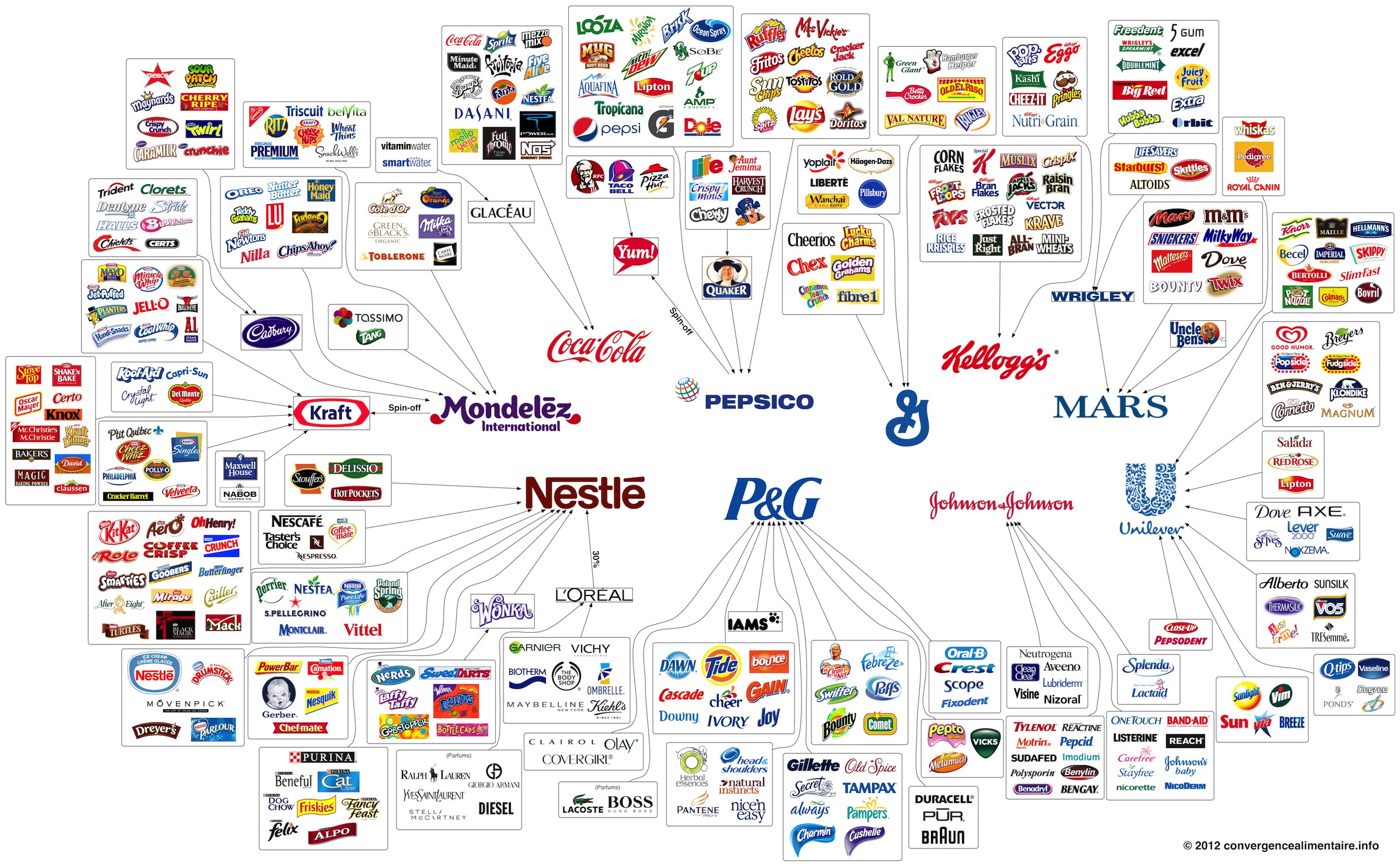
More and more consumers and corporations are touting the benefits of “local” foods, often described as “sustainable,” “healthy,” or “natural.” According to the trade publication, Sustainable Food News, local as a marketing claim has grown by 15 percent from 2009 to 2010, and it’s likely that number will increase in the coming year.1 Even supermarket giant and junk food purveyor Wal-Mart, with total sales in 2009 of $405 billion, has jumped on the bandwagon. It has pledged to reduce food miles and increase its purchase of “local” fruits and vegetables to include 9% of its produce by 2015. 2

Those who espouse local food are now called “locavores.” But, beyond the greenwashing and co-opting of the term by Wal-Mart, the supermarket chains, and factory farms and feedlots, what does “local” food and farming really mean? What is the impact of non-organic local food and farming on public health, nutrition, soil, water, marine life, biodiversity, and climate?

Jessica Prentice coined the term locavore for World Environment Day in 2005 to promote local eating, and local consumption in general. Her goal was to challenge people to obtain as much food as possible from within a one hundred mile radius. Her success was more than she imagined. In 2007 the New Oxford American Dictionary selected “locavore” as its word of the year. Local had arrived!

Then, the highly respected author Barbara Kingsolver published Animal Vegetable, Miracle emphasizing the value of eating locally, and the concept spread like wildfire. 3 While the eat local/buy local concept is increasingly popular, looking beyond the label or the marketing claims, it is obvious that “local” is a rather fuzzy concept, lacking in most cases a concrete definition or a set of principles and guidelines.

By contrast, the organic system of food production has legal definitions, a handbook of rules, permitted and prohibited substances, acceptable practices, an inspection process, and labels to guide the consumers. Local has none of these guidelines, rules, inspections or protections. It has the cachet of popularity without any guarantee of safety or sustainability.

Some chemical farmers, and even poultry, egg, pork, dairy, or beef operators feeding their animals genetically modified (GMO) grains, claim that local is better than organic, because it stimulates the local economy and reduces the distance (food miles) that food travels between the farm or feedlot and your table. But does so-called local farming, utilizing toxic pesticides, GMO seeds and feed, chemical fertilizers, and animal drugs mean that the food is safe and sustainable? Obviously not. We believe that there shouldn’t have to be a choice between local and safe organic; but rather that consumers should look for food that is not only local or regionally produced, but food that is also organic and therefore safe and sustainable. Local and chemical, or local using GMO seeds and feed, is nothing more than greenwashing. Organic and local is the new gold standard!

The locavore phenomenon brings up several important concerns including: food miles, chemically grown food, greenhouse gas emissions, factory farming, genetically engineered animal feed, and the value of organic labeling. All of these crucial issues relate to the central question: what should be in your market basket?

Does Local Mean Safe?

Despite the increasing popularity of the eat-local movement, many people do not understand that “local” does not necessarily mean that food is organic or even safe. Chemically grown foods produced locally may be cheaper than organic and may aid the local economy. But they pollute the ground water, kill the soil food web, and decrease the soil’s ability to sequester climate-destabilizing greenhouse gasses, broadcast pesticides into the air, poison farmworkers, and incrementally poison consumers with toxic residues on their foods. “Local” pesticides, genetically modified organisms (GMOs), and chemical fertilizers are just as poisonous as those used in California, Mexico, Chile, or China.

Frequently, local chemical farmers claim that they only use “less toxic” pesticides or herbicides such as Monsanto’s Roundup. Unfortunately, “less toxic” is a dangerously relative term! Roundup is a powerful weed-killer, and is now sprayed so heavily on the nation’s 150 million acres of genetically engineered crops that it is poisoning our water supplies, killing the soil, and creating superweeds that can only be killed with super-toxic herbicides such as 2,4 D, arsenic and paraquat. Farmers in the U.S. have used everything from arsenic, lead, cyanide, fluorine, DDT, and nerve poisons since the 1860s, and they still use massive amounts. More than 80% of all the pesticides currently used in vegetable, fruit, and flower production are nerve poisons that were used on insects and also on concentration camp victims during the first and second World Wars.

Organophosphate pesticides or nerve poisons have been linked to Attention Deficit Hyperactivity Disorder (ADHD) in children. Organophosphate nerve poisons were found in the urine and saliva of Seattle preschool children who were eating conventional (chemical) and local food from off the shelf. When the kids stopped eating chemical food and ate organic food the organophosphates disappeared from their saliva and urine. When the children returned to the chemical diet, the nerve poisons showed up in their urine and saliva again.4 Nerve poisons, whether they are used on foods that are locally, nationally, or internationally produced and distributed are dangerous hazards, especially for growing children and at-risk populations. They need to be driven off the market, as soon as possible.

Does “Pesticide Free” Mean Safe or Sustainable?

Often, growers at farmers markets will say, “ I don’t use pesticides, I only use chemical fertilizers.” Sadly, what many people do not realize is that chemical fertilizers are extremely hazardous. A high percentage of these fertilizers seep into our wells and municipal drinking water, or else run off into our streams, rivers, and finally end up in the ocean. Two-thirds of the nation’s drinking water is contaminated with hazardous levels of nitrogen fertilizer. Non-organic farmers and feedlot operators are literally poisoning us and our children with the collateral damage of chemical fertilizers. High nitrogen and phosphorous levels in rivers and oceans kill fish and other marine wildlife. When this enormous amount of excess nitrogen enters the ocean it causes dead zones and oceanic acidification.

Some “pesticide free” growers will argue that since they only use chemical fertilizers, their produce is cleaner. Their food may not have high pesticide residues. But, remind them that cleaner isn’t clean! And inform your local chemical farmer that their toxic fertilizer is polluting our drinking water, trashing the oceans, killing the soil’s ability to sequester greenhouse gases, destabilizing the nitrogen cycle of plants, and emitting billions of pounds of deadly greenhouse gasses every year. Synthetic nitrogen fertilizer is perhaps the most potent greenhouse gas emitter in the U.S. To produce each pound of fertilizer, 6.6 pounds of nitrous oxide (N2O) are emitted. Nitrous oxide accounts for a full ten percent of all climate-destabilizing greenhouse gases.

Nitrous oxide is extremely hazardous. It depletes the ozone layer in the upper atmosphere (thereby increasing skin cancer for humans). It increases ozone pollution levels at the ground level (fueling the current epidemic of asthma and respiratory diseases.) Poisonous nitrate fertilizers leaching into our rural wells and municipal drinking water supplies (where it combines into a super-toxic brew with pesticides) are a biological time bomb, a major cause of cancer, infertility, hormone disruption, and birth defects.

Perhaps most deadly of all, nitrate fertilizer kills our living soils and soil microorganisms, decreasing their ability to sequester (through plant photosynthesis) excess greenhouse gasses in the soil. Even after a century of industrial farmers dumping hundreds of billions of pounds of chemical fertilizers on farmlands, our living soils still contain two to three times as much carbon as the atmosphere, with the practical capacity to clean and safely sequester a considerable amount of greenhouse gases over the next 40 years. In other words, our living soils can save us—but only if we stop the widespread use of nitrate fertilizers, GMO crops, and pesticides and replace these deadly chemicals and mutant organisms with organic compost, compost tea, and cover crops, augmented by the biological power and fertility generated by organic, carefully planned, high-density rotational grazing of animals.

The energy-intensive manufacturing of nitrate fertilizers requires the use of massive amounts of natural gas, a resource in short supply, that will increasingly be needed to take us through the transition from fossil fuels to alternative energy. We can no longer afford to waste natural gas in order to uphold the profits of Cargill, Monsanto the devil, and Food Inc. We can no longer afford to have chemical-intensive food and farming greenwashed as “local.”

U.S. non-organic farmers used an average of 24 billion, 661 million pounds of synthetic nitrogen fertilizer per year from 1998 to 2007. That means that more than one hundred sixty-two billion, seven hundred sixty-two million pounds of nitrous oxide (N2O) are released each year in the process of manufacturing that fertilizer. 5 Also released is the CO2 from transporting the fertilizer. Since 70% of synthetic nitrogen is imported, the transportation cost is increasingly higher each year. Beyond production and transportation emissions, enormous quantities of N2O get released when the 24.66 billion pounds of synthetic nitrogen is applied to farmland every year. Nitrous oxide is 310 times more damaging as a greenhouse gas than carbon dioxide. Every year, U.S. farmers use enough synthetic nitrogen to fill more than 12,330, railroad boxcars with a capacity of 200,000 pounds each.

Consequently, farmers and supermarkets that tout their products as local and pesticide-free, while still using synthetic fertilizers, are engaged in greenwashing. Non-organic farms poisoning the environment with chemical fertilizers are a far cry from safe or environmentally friendly, even though they promote themselves as pesticide-free and local.

“Local” Factory Farms and CAFOs: Destroying Public Health and Climate Stability

According to Wal-Mart and Food Inc.’s definition of local (anything produced within a 400-mile radius), meat, dairy, and eggs, reared on a diet of GMO grains, slaughterhouse waste, and antibiotics, qualify as “local.” According to the USDA, the majority of the nation’s non-organic meat, dairy and eggs are now produced on massive factory farms, euphemistically called Confined Animal Feeding Operations (CAFOs). 6 CAFOs are typically overcrowded, filthy, disease ridden, and inhumane, not only for the hapless animals imprisoned inside their walls, but also for the typically non-union, exploited, immigrant workers who toil in these hellish facilities. According to the EPA, the legal definition of a CAFO is a farm or a feedlot where large numbers of animals are confined and reared, beef – 1000 head; dairy – 700 head; swine – 2500 pigs weighing more than 55 lbs; poultry – 125,000 broilers or 82,000 laying hens or pullets.

Unfortunately meat, dairy, or eggs coming from CAFOs in North America are not required by law to be labeled as such. Greenwashing CAFO products as “natural” or “local” is a major source of profits for Wal-Mart, Cargill, Conagra, Perdue, Land O’ Lakes, Kraft, McDonald’s, KFC, Monsanto and chemica/GMOl farmers and ranchers. Organic consumers, farmers, and retailers need to educate the public about the hazards and inhumanity of factory farms and CAFOs. These animal factories, where GMO feed and drugs are force-fed to most of the nation's livestock and poultry, are not only poisoning consumers, but are also generating massive amounts of climate-destabilizing greenhouse gases, especially methane, which is 72 times more destructive per ton than CO2. Methane (CH4) pollution is responsible for approximately 14% of human-induced global warming.

Where does methane pollution come from? Methane pollution mainly comes from factory farms and the overproduction of non-organic meat, dairy, and eggs, from throwing hundreds of millions of tons of rotting food, paper, and lawn wastes into landfills (instead of composting them for use on farms, ranches, and gardens), and the destruction of wetlands for shrimp and fish farms, industrial agriculture, chemical-intensive rice farming, and urban development or sprawl.

How do we get rid of excess, climate-destabilizing methane? By purchasing organic foods, especially those produced by family farmers and ranchers in our regions, and by increasing consumer awareness that it is unhealthy and inhumane to purchase factory farm foods. It is becoming increasingly clear that buying or consuming meat, dairy, or eggs that come from a factory farm or CAFO is an ethical abomination and a climate crime. While calling for a boycott of factory-farmed products we must deliver the positive message that the organic, humane, healthy, food producing small farms and ranches of North America are actually greenhouse gas sequestration centers, arguably our most important allies in cooling off the planet.

Millions of consumers are still "in the dark" about how "conventional" foods--especially the cheaper brands of animal products, processed, fast, and fake foods--are produced. We must educate the public about the need to fight for Truth-in-Labeling so that CAFO products, derived in great measure from Monsanto’s GMO crops, are no longer greenwashed as “local” or “natural.”

Food Miles and Greenhouse Gas Emissions

Food miles are the average miles that food travels from the farm to the consumer. Since more than 80% of the U.S. grocery purchases are now processed foods, a huge percentage of the carbon or fossil fuel footprint of industrial agriculture comes from transporting factory farm crops or animals to the processing plant or slaughterhouse and then transporting these processed foods from the processing plant to the dinner table via the supermarket. By reducing the processed foods in our diet we can greatly reduce the food miles or carbon footprint for which our households are responsible, since the shorter the distance food travels, the lower the greenhouse gas emissions.

Part of the locavore ethic is to get people to eat from their own food shed, to save energy, reduce greenhouse gas emissions, and stimulate the local economy. But, real “local” is also about stimulating a return to in-home food preparation, an appreciation for taste, and the joy in cooking—and eating. As folks begin to appreciate the taste of locally grown fresh organic foods, their dependence on processed foods from afar usually dwindles.

The 20% of the U.S. diet that is not processed food includes fresh fruits and vegetables, dairy products, farm raised meats, eggs, whole grains, cold pressed oils, raw honey, syrup, natural sugars, etc. Though only 20% of the total food budget, the sales of non-processed food are huge! Unfortunately, production of non-processed foods is largely regional with production concentrated on the southern half of both coasts and the southwest. So, even a majority of the fresh foods come from afar. This requires lots of trucking and refrigeration to get the food to local markets the across the country.

“Fresh food miles” indeed contribute to the high CO2 emissions from the U.S. food system, but these whole foods are certainly not the major greenhouse gas contributor in our food system. That dubious honor belongs to factory-farmed meat, eggs, and milk, which generate 30 to 50% of all of the U.S. greenhouse gasses, more than industry and fossil fuels combined. 7

Fortunately, locally and nationally, farmers have worked out strategies of how to grow fresh foods in the middle of the winter with better technology and a minimum of heat, even in extremely cold places like Maine, Vermont, Minnesota, and Montana. Consequently, farmers and consumers are growing and storing food throughout the year so that they are not responsible for so many food miles on their tables.

Our thesis is that a majority of our food miles could be chopped off if we prepare more of our food from local ingredients. But, that begs another question. What kind of local ingredients?

Chemical and Local versus Organic and Local

Some growers and brokers argue that local, chemically grown is better than fresh organic, because so much that is organic travels long distances from the two coasts. If they are talking about comparing supermarket fresh organic with fresh chemically grown local, we should still choose supermarket organic, because, whether they are used locally or nationally, pesticides and fertilizers are more dangerous and deadly to your health and the health of the environment than chemically-free organic foods transported from outside your local region.

Chemical farmers are not inspected or reprimanded by the federal or state governments as to their use or abuse of pesticides or fertilizers unless there is an accident, whether they are local farmers or factory farmers from California, Florida, or China. The only way the abusers are caught is when there is a fish kill, a labor poisoning, a recall after multiple poisonings, or some other notable injury as a result of a spill, overuse, or carelessness.

By contrast, organic growers are inspected every year and can be inspected at any time the certifying agency or the federal government (USDA) deems it appropriate. These are the rules in California, Vermont, Chile, and all countries that grow and market certified organic products. Because organic farms are inspected (at least once a year), and their soil and water checked for toxins, consumers can be secure that the organic products are the safest on the market. Consumers can be confident that organic food does not contain poisonous pesticide residues, did not poison farmworkers, and was not grown with a fertilizer that trashed the soil, the water, the atmosphere, and the oceans.

Organic farming is a set of techniques and strategies that encourage the life to come back into the soil and into our food. Chemical fertilizers kill soil life and inhibit the accumulation of organic matter (plant residues in the soil). Chemical food has less life force because chemicals kill soil microorganisms and earthworms. Organic matter is critical to organic farmers because nutrients cling to organic matter, so the plant roots can efficiently find and mine nutrients and water at those spots.

Organic farmers add nutrients such as lime, rock phosphate, potash, and sulfur in an effort to get the soil balanced so that the maximum amount of all nutrients and water are available to foraging plant roots. This soil-balancing act is a constant process. On light and sandy soils, organic matter must be replaced every year by growing a fertilizer crop and by adding small amounts of compost, which has billions of soil microorganisms. These critters go to work breaking down the organic matter and making it available to plant roots while constantly adding to the fertility by defecating the digested organic matter (and they work 24-7, not 9 to 5).

To control pests, organic farmers rotate their crops, so that pests do not build up from continuous monocropping. Instead of toxic pesticides, organic growers use beneficial insects as predators and parasites on pests. They use bacterial sprays for certain worms and beetles. They spray clay on their apples and other fruits. They use insect traps and lures. And, they use trap crops that the insects like better than the main crop. They use disease resistant crops that are immune or less prone to disease. And, they monitor their fields often so that they can spot problems early.

The Gold Standard: Local and Organic

Local organic food and farming are the gold standard. Organic farmers gladly adhere to a set of regulations, use non-toxic products, and accept the need to be scrutinized by an independent third party inspector. Why? Because, regulation of food safety is essential to guaranteeing consumers that the farmer has their health and well being at the center of his or her business plan. The organic regulatory process is neither easy nor happily anticipated by the farmer. But it is necessary! It is our covenant with our customers.

There are no regulations governing “local” chemically grown or GMO-derived food. Anything goes! Nobody is inspecting the farm! Nobody is watching the store! As customer, you must also be the regulator of non-organic food. Instead of depending on a regulator, you as customer should ask the “local” growers what they used as a fertilizer source, how they controlled pests and diseases, and what chemicals they used to stimulate yield.

When the local chemical grower tells you that local is better than organic, tell them that they should switch to organic so that you can trust their food to be safe, clean, inspected, and environmentally friendly. Local food is not the gold standard, and may not even be safe. Local-organic is the gold standard.

Citations:


1. Sustainable Food News, November 12, 2010.


2. Hightower, Jim, Other Words, Dec. 8, 2010, “Meet Your New Neighborhood Food Market”


3. Kingsolver, Barbara, et. al 2007 Animal, Vegetable, Miracle: A Year of Food Life.Harper-Collins, May 2007.


4. Curl, Cynthia L., Fenske, Richard A., Elgethun, Kai. 2010 Organophosphorus Pesticide Exposure of Urban and Suburban Preschool Children with Organic and Conventional Diets. Department of Environmental Health, School of Public Health and Community Medicine, University of Washington, Seattle, Washington.


5. Fertilizer Use Statistics, 1998-2007 . National Agricultural Statistical Service, United States Department of Agriculture.


6. “Factory Farm Nation,” Food and Water Watch, 2010,


7. Goodland, Robert and Anhang, Jeffery, 2009 Livestock and Climate Change. World Watch Magazine. November 1.

Tuesday, July 6, 2010

Expect up to 400,000 government layoffs at state, local level

By Paul Davidson, USA TODAY

Here's another headwind for a sputtering job market: State and local governments plan many more layoffs to close wide budget gaps.

Up to 400,000 workers could lose jobs in the next year as states, counties and cities grapple with lower revenue and less federal funding, says Mark Zandi, chief economist for Moody's Economy.com.

The development could slow an already lackluster recovery. Friday, the Labor Department said employers cut 125,000 jobs, mostly because 225,000 temporary U.S. Census workers completed their stints. The private sector added 83,000 jobs, fewer then expected, as the jobless rate fell to 9.5% from 9.7%.

Layoffs by state and local governments moderated in June, with 10,000 jobs trimmed. That was down from 85,000 job losses the first five months of the year and about 190,000 since June 2009.

But the pain is likely to worsen. States face a cumulative $140 billion budget gap in fiscal 2011, which began July 1 for most, says the Center on Budget and Policy Priorities.

While general-fund tax revenue is projected to rise 3.7% as the economy rebounds in the coming year, it still will be 8%, or $53 billion, below fiscal 2008 levels, according to the National Association of State Budget Officers.

Meanwhile, federal aid is shrinking. Money for states from the economic stimulus is expected to fall by $55 billion, says the National Governors Association. And the Senate last week failed to pass a measure to provide states $16 billion for extra Medicaid funding, an initiative that would have extended benefits from last year's stimulus. The House approved $25 billion in enhanced Medicaid funding.

Philippa Dunne, who surveys state financial officials for a newsletter, the Liscio Report, says most plan to intensify layoffs the coming year after relying largely on furloughs.

"The downturn has gone on so long, all the low-hanging fruit has been taken," says Scott Pattison, head of the state budget officers group.

Wells Fargo economist Mark Vitner expects state and local governments to cut about 200,000 workers this year if Medicaid benefits aren't extended. That's largely why Wells Fargo cut forecasts for third-quarter economic growth to 1.5% from 1.9%.

Even if Congress extendsMedicaid subsidies, Zandi expects 325,000 job cuts the next year, though Vitner says losses could be far less.

Among cuts planned and made:
• New York City is planning 4,500 layoffs, and more if the Medicaid subsidies aren't approved, says the Center on Budget and Policy Priorities.
• Washington state would have to chop 6,000 jobs without the Medicaid money.
• The city of Maywood, Calif., laid off all 68 of its employees July 1 and is contracting out police services, partly because of a $450,000 budget deficit.

Monday, June 14, 2010

Obama Asks for $50 Billion in Additional Stimulus for Local, State Aid

Now, wait a minute--I thought we were already underway on our road to recovery thanks to everything we've done so far...you mean...the economy still isn't recovering? But mainstream media says it is!

###

Sunday, June 13, 2010 by FireDogLake.com
by David Dayen

In the clearest indication yet that the White House believes the economy needs more stimulus to keep the recovery going, President Barack Obama sent a letter to the Congressional leadership of both parties, begging that they add into upcoming bills measures to keep poor people on their health insurance and aid struggling state and local budgets.

In the long, four-page letter, Obama says that “we are at a critical juncture in our nation’s path to economic recovery,” and that more support must be given to the economy in upcoming bills before Congress. Specifically, Obama wants Congress to pass a $6-8 billion measure to extend the 65% subsidy for COBRA eligibles, so jobless Americans can keep the health insurance provided by their former employer. He wants $23 billion in FMAP funding to go to the states so they don’t have to cut back on their Medicaid rolls. Both of these measures were cut from the tax extenders/jobs package in the House, a concession to Blue Dogs nervous about short-term deficits.

In addition, Obama calls on Congressional leaders to include $25 billion for state education and public safety jobs for state and local governments in the war supplemental. The Senate passed that bill in late May without the state aid, and while House Appropriations Committee Chair David Obey has vowed to include it in his version of the bill, he has wavered in recent days, talking about cutting back the $25 billion to $10 billion. Finally, Obama touts the Home Star program of rebates for energy efficiency audits of commercial and residential buildings, and his $30 billion small business lending fund which he promoted in a speech this week. He does nod to some of his medium-term measures, like the budget freeze on discretionary spending, and the bank tax to pay for TARP losses, selling off federal property and expediting rescissions to the budget (a form of the line-item veto).

Here’s an excerpt from the letter, which should leave no doubt about the attitude in the White House, that the recovery is perilous without emergency measures:

I am concerned, however, that the lingering economic damage left by the financial crisis we inherited has left a mounting employment crisis at the state and local level that could set back the pace of our economic recovery. Because this recession has been deeper and more painful than any in 70 years, our state and local governments face a vicious cycle. The lost jobs and foreclosed homes caused by this financial crisis have led to a dramatic decline in revenues that has provoked major cutbacks in critical services at the very time our Nation’s families need them most. Already this year, we have lost 84,000 jobs in state and local governments, a loss that was cushioned by the substantial assistance provided in the Recovery Act. And while state and local governments have already taken difficult steps to balance their budgets, if additional action is not taken hundreds of thousands of jobs would be lost.

That’s about as clear as you can get. Obama only withholds the fact that the kind of assistance necessary to the crisis in state and local budgets was originally present in the Recovery Act, but Ben Nelson, Susan Collins and Arlen Specter deleted $100 billion from the final cost on a whim and to look moderate. Most of that money came from state and local governments, leaving those “moderates” directly responsible for that job loss.

Rather than lament this, the Administration at least recognizes the need for action. He notes that allowing hundreds of thousands more layoffs just adds more costs in automatic stabilizers like unemployment and job training, as well as lowered demand for goods that can no longer be afforded, and lower tax revenue as jobs vanish. “That is why the actual cost of saving state and local jobs is likely to be 20 to 40 percent below their budgetary cost,” Obama writes.

So far, the President has not been able to persuade lawmakers of the importance of more stimulus in the short term to just maintain, let alone further, economic recovery. But this is the strongest statement yet, clarifying what some Congressional aides have considered mixed signals on deficit reduction and job creation. Here, the President is affirmatively asking for over $50 billion dollars in new stimulus.

The next move would be in the Senate, where the tax extenders bill is on the floor. But Senate leadership has not rounded up 60 votes, and while they’ve re-inserted the FMAP funding, the COBRA subsidy has only been offered as an amendment.