Showing posts with label big food companies. Show all posts

Sunday, March 15, 2015

Coca-Cola's 'Simply Orange' Juice Is Anything But...


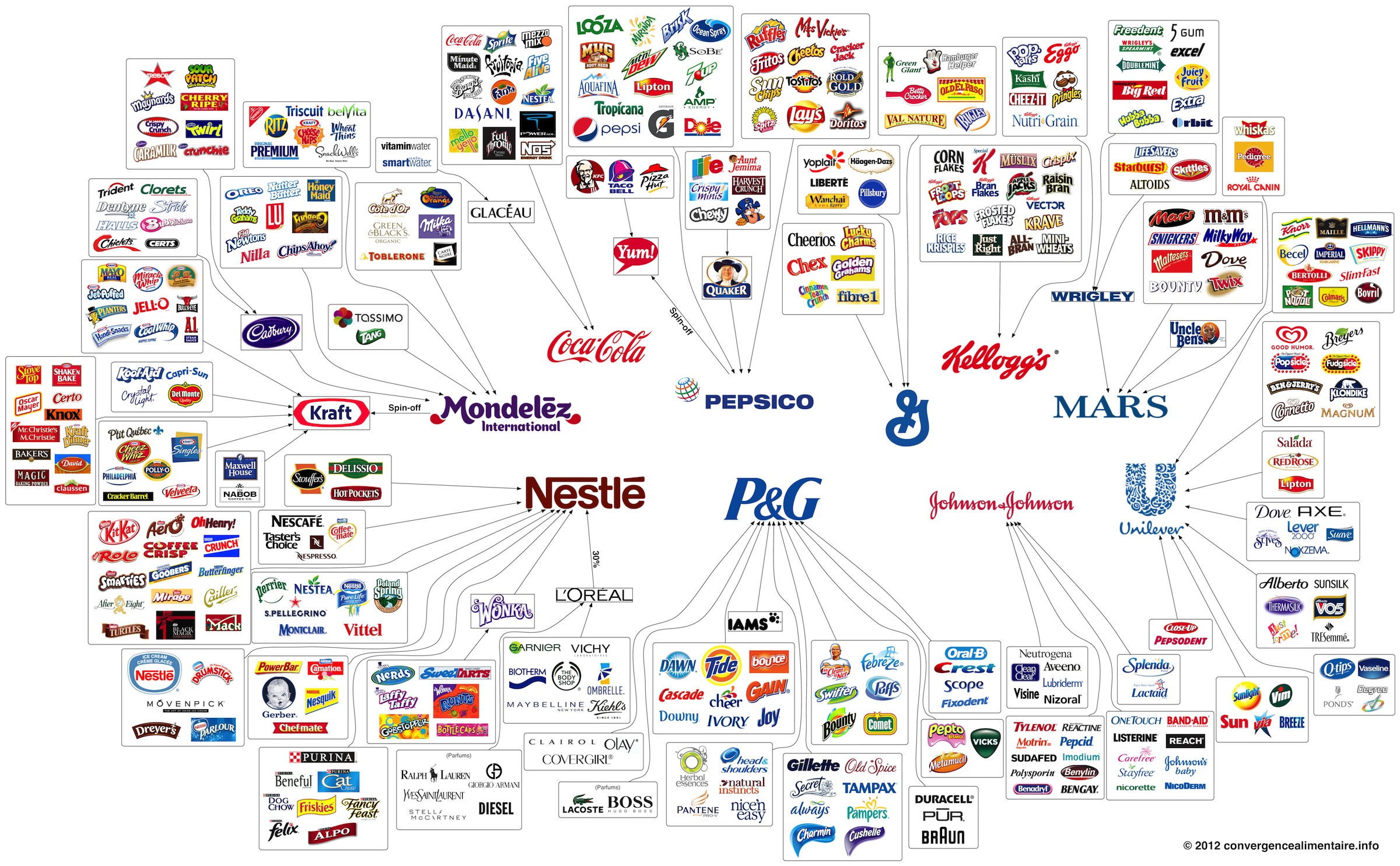
2013_02_10.png


Many people choose Simply Orange juice because they believe it is a less processed, more natural choice than other brands. However, a new investigation by Bloomberg Businessweek shows that it is a "hyper-engineered and dauntingly industrial product." Coca-Cola owns Simply Orange, which is made using a process they call Black Book. Since juice production is full of variables, including a peak growing season of only 3 months, this methodology was created to produce consistent orange juice year round. They won't tell anyone how exactly the Black Book formula works, but the consultant who designed it, Bob Cross of Revenue Analytics, shared it with Bloomberg Businessweek.

Black Book is an algorithm that includes data about consumer preferences and the 600 flavors that make up an orange. Coke matches this data to a profile detailing acidity, sweetness, etc. so that they can blend batches to replicate the same taste and consistency. Black Book also incorporates external factors, such as weather patterns, anticipated crop yields, and cost pressures to allow Coke to plan ahead and ensure they have supplies on hand.

Coca-Cola's Brazilian partner, Cutrale, processes the oranges, which are grown to Coke specifications. Satellite imaging allows them to order growers to pick their fruit at the best time, as determined by Black Book. The fresh-squeezed juice is stored in Cutrale's silos and transported via a 1.2 mile underground pipeline to Coke's packaging plant, where it is flash-pasteurized. It is then piped to storage tanks where it is slowly agitated and covered with a nitrogen gas blanked to keep out oxygen, which has been sucked out of the juice, as it will cause it to spoil.

The batches from different crops and seasons are separated, based on orange type, sweetness, and acidity. Blend technicians follow Black Book instructions, adding natural flavors and fragrances captured during squeezing back into the juice to make up for the flavor lost in processing. "When the juice is stripped of oxygen it is also stripped of flavor providing chemicals. Juice companies therefore hire flavor and fragrance companies, the same ones that formulate perfumes for Dior and Calvin Klein, to engineer flavor packs to add back to the juice to make it taste fresh. Flavor packs aren’t listed as an ingredient on the label because technically they are derived from orange essence and oil. Yet those in the industry will tell you that the flavor packs, whether made for reconstituted or pasteurized orange juice, resemble nothing found in nature," explains Alissa Hamilton, author of Squeezed: What You Don't Know About Orange Juice.

If you're looking for an all-natural orange juice experience, free of algorithms and flavor packs, your best bet is to juice it yourself, go to a juice bar, or take Hamilton's suggestion and enjoy a whole Valencia orange instead.

Saturday, March 15, 2014

GMOs: Ban Them or Label Them?


by Ronnie Cummins
 
'With no real market for GMOs, EU farmers have refused to grow them. EU activists point out that if meat, eggs and dairy products derived from animals fed GMO grains had to be labeled, there would be no GMOs in Europe. Period.' (File)Since the controversial introduction in the mid-nineties of genetically engineered (GE) food and crops, and the subsequent fast-tracking of those crops by the federal government—with no independent safety-testing or labeling required—there has been a lively debate among activists, both inside and outside the U.S., about how to drive these unhealthy and environmentally destructive “Frankenfoods” off the market.

Some campaigners have called for an outright ban of GE crops. In fact, several dozen nations, thousands of local governments in the EU, and six counties in the U.S. (in California, Washington and Hawaii) have created GMO-free zones by passing bans.

Other activists argue that strict mandatory labeling laws, similar to those in the EU, are all we need in order to rid the world of GMOs (Genetically Modified Organisms). Activists in this camp point out that very few products in countries that have mandatory GMO labeling laws contain GMOs, because once companies are required to label GMO ingredients, they reformulate their products to be GMO-free, rather than risk rejection by consumers.

Who’s right?

A review of two decades of anti-GMO campaigning in North America and Europe suggests that mandatory labeling and bans, or GMO-free zones, should be seen as complementary, rather than contradictory. And recent news about increased contamination of non-GMO crops by the growing number of USDA-approved GMO crops suggests that if we don’t implement labeling laws and bans sooner rather than later, we may run out of time to preserve organic and non-GMO farmers and their fields.

Bans and Mandatory Labeling Laws: Lessons from the EU

In the EU in the late-1990s, in what was the largest agricultural market in the world, anti-GMO campaigners, including Greenpeace and Friends of the Earth, at first tried to establish a sweeping production and import ban on all GMOs. They were unsuccessful, largely because politicians and bureaucrats argued that an outright ban of GMOs in the EU would violate World Trade Organization agreements and bring on serious economic retaliation from the U.S. government.

Leading consumer, environmental and farm groups pushing for a ban were successful, however, in forcing EU authorities to adopt significant GMO safety-testing regulations.  All GMOs, under EU law, are considered "novel foods" and are subject to extensive, case-by-case, science-based food evaluation by European regulatory officials. These regulations, much to the chagrin of Monsanto and the Gene Giants, have kept most GMOs, with the exception of animal feeds, out of the country.

EU regulations also permit member nations to establish GMO-free zones.  As of 2012 there are 169 regions and 4,713 municipalities that have declared themselves GMO-free zones in the EU. In addition to these GMO-free zones in the EU, at least 26 nations, including Switzerland, Australia, Austria, China, India, France, Germany, Hungary, Luxembourg, Greece, Bulgaria, Poland, Italy, Mexico, and Russia have banned GMOs entirely. Significant labeling and safety-testing procedures on GMOs have been put in place in approximately 60 countries.

Mandatory Labeling in the EU: The Crucial Blow to GMOs

Although EU grassroots forces failed to gain a continent-wide ban on the cultivation or import of GMOs, they were successful in pushing authorities to impose mandatory labeling of all genetically engineered foods, feeds and food ingredients in 1997. This, combined with strict pre-market safety-testing regulations, has marginalized or eliminated GMOs throughout the EU.

EU foods derived from animals raised on GMO feed, however—meat, eggs, and dairy products—do not have to be labeled in the EU. As a consequence, billions of dollars of GMO-tainted animal feeds, including corn, soybeans and canola, continue to be imported every year into the EU from the U.S., Canada, Brazil and Argentina. EU activists, in Germany and elsewhere, have now begun campaigning to eliminate this strategic loophole.

As the EU’s GMO food labeling law came into effect in 1997-98, activists switched gears, successfully pressuring many large supermarket chains, including Carrefour, Co-Op, Tesco, Waitrose  and Marks & Spencer, and food manufacturers, including Unilever and Nestlé, to pledge to remain GMO-free. Feeling the heat from grassroots campaigners and realizing that mandatory GMO labeling would be the “kiss of death” for their brand-name products and their reputations, every major EU supermarket, food manufacturing and restaurant chain, including U.S.-based multinationals such as General Mills, Kellogg’s, McDonald’s, Starbucks and Walmart, eliminated GMOs from their supply chains. As a consequence almost no GMO-derived foods, with the exception of meat and animal products, have been sold in EU retail stores or restaurants from 1997 until now.

With no real market for GMOs, EU farmers have refused to grow them. EU activists point out that if meat, eggs and dairy products derived from animals fed GMO grains had to be labeled, there would be no GMOs in Europe. Period.

Frankenfoods Fight Heats Up in the U.S.

In the U.S., the battle against GE foods and crops has been markedly more difficult. Since 1994, government regulatory agencies have refused to require labels on GMOs, or to require independent safety testing beyond the obviously biased research carried out by Monsanto and other genetic engineering companies themselves.

Despite government and industry opposition, and limited funding, a growing number of pro-organic and anti-GMO campaigners carried out a variety of public education, marketplace pressure and boycotts between 1994 and 2012 designed to either ban or label GMOs. Although GMO labeling bills, which according to numerous polls are supported by the overwhelming majority of Americans, were introduced in Congress over and over again during the past two decades, none have gathered more than nominal support from lawmakers And media coverage, at least until the California GMO labeling ballot initiative in 2012 (Proposition 37) and the Washington State ballot initiative in 2013 (I-522), has been generally sparse, with reporters routinely spouting industry propaganda that GMOs are safe, environmentally sustainable and necessary to feed a growing global population.

But the tide is beginning to turn. More farmers are rejecting GMO seeds, more consumers are demanding non-GMO foods, or at the least, labels on GMO foods. And the media is beginning to give the anti-GMO movement if not its fair share, at least substantially more ink than we’ve seen in decades.

Farmers Sound the Alarm about GMO Contamination

Between 1994-2012, the number of acres in the U.S. planted in GMO crops has grown significantly. Today, 169 million acres—almost half of all cultivated U.S. farmlands—are now growing GMO crops.

But despite the proliferation of GMO crops, we’re now seeing increased demand for non-GMO seeds. This is partly because farmers are growing frustrated with having to buy more and more pesticides and herbicides for GMO crops, as weeds and pests grow increasingly resistant to products like Monsanto’s Roundup.

But it’s also because organic and non-GMO farmers are speaking out about contamination of their crops by nearby GMO crops. Just this week, a new survey published by Food & Water Watch revealed that a third of U.S. organic farmers report problems with contamination from nearby GMO crops, and over half of the farmers surveyed said they’ve had grain shipments rejected because of contamination.

Consumers Demand non-GMO

Increasing demand for non-GMO crops also stems from consumers’ heightened concerns about health, which in turn is increasing demand for non-GMO and organic crops and foods. The turning point in the anti-GMO Movement in the U.S. came in 2012-13 when organic and anti-GE organizations, led by the Organic Consumers Association, Food Democracy Now, Center for Food Safety, Alliance for Natural Health and others, joined by a number of organic and natural health companies including Mercola.com, Dr. Bronner’s Soaps, Nature’s Path, Lundberg Family Farms, Natural News, and Nutiva, decided to bypass the federal government and launch high-profile, multi-million dollar state ballot initiative campaigns for mandatory labeling of GMOs in California and Washington State.

Although anti-GMO campaigners narrowly lost 51%-49% in both states, large genetic engineering and food corporations were forced to spend over $70 million ($12 million of which was illegally laundered by the Grocery Manufacturers Association in Washington). In addition GMA members, most of whom are high-profile food manufacturers, seriously damaged their brands and reputations by carrying out a misleading, dirty tricks advertising campaign that flooded the airwaves in California and Washington and antagonized millions of consumers—many of whom began boycotting their products and assailing their Facebook pages.

By 2012, thanks to the massive media coverage of the California GMO labeling initiative, organic foods and products reached $35 billion in sales, representing almost 5 percent of all grocery store sales, with non-GMO “natural” food sales reaching another $15 billion.

This growth in sales has not gone unnoticed by food manufacturers and retailers. Although 75-80 percent of all non-organic processed foods contain GMOs, General Mills, Kraft General Foods, Chipotle, Ben and Jerry’s and Whole Foods Market, responding to public concern and marketplace pressure, are now moving to eliminate GMOs from some or all of their brand name products.

Push for GMO Labeling Laws Continues

In the meantime, grassroots activists continue to push for mandatory labeling laws. In 2012-13, they lobbied legislators in 30 states, achieving partial success in Maine and Connecticut. In 2014 Vermont, Oregon and several others states appear poised to pass GMO labeling laws, while voters in five Oregon and California counties will attempt to pass GMO bans.

Frantically trying to head off the inevitable, the GMA and a powerful coalition of genetic engineering, industrial agriculture, restaurant, supermarket and junk food manufacturers have begun lobbying Congress to take away states’ rights to pass laws requiring GMO food labels. The GMA has also lobbied the FDA and Congress to allow the obviously fraudulent, though routine, industry practice of labeling or marketing GE-tainted foods as “natural.”

At the state level the GE Lobby, Big Food and the Farm Bureau are sponsoring bills to take away the right of counties and municipalities to pass laws banning GMOs or restricting hazardous industrial agriculture practices.

On the international front, genetic engineering, pharmaceutical and Big Food companies are attempting to subvert GMO labels or bans by “fast-tracking,” with no public input or discussion, transnational trade agreements such as the Trans Pacific Partnership (TPP) and the Trans Atlantic Free Trade Agreement (TAFTA). These so-called Free Trade agreements would allow multinational corporations such as Monsanto, Bayer and Dupont to sue local, state or even national governments that interfere with their profits, by passing laws regulating or banning GMOs or other controversial agricultural practices.

Although these profoundly pro-corporate and anti-consumer and anti-environmental trade agreements in theory can stop GMO labeling laws and bans from coming into effect, in political terms they are perceived by the majority of the body politic and even many state and local officials as highly authoritarian and anti-democratic. Similarly TPP and TAFTA are correctly perceived by many national political, environmental and labor leaders as undermining national sovereignty, sustainability and economic justice.

Why Both Labeling and Bans Are Necessary

Once GMOs foods are labeled, informed consumers will move to protect themselves and their families by not buying them. Once enough consumers shun GMO-tainted and labeled foods, stores will stop selling them and food manufacturers will stop putting GMO food ingredients in their products. However as the EU experience shows, labeling must eventually be comprehensive, with a requirement for meat, eggs and dairy products to be labeled if the animals have been fed GMO feed.

But food labeling alone cannot protect the environment, or non-GMO and organic farmers from GE drift and seed contamination. This is why county and regional bans on GMO cultivation and the creation of regional GMO-free zones are important. More than 80 percent of farmers surveyed by Food & Water Watch said they were “concerned” about contamination, while 60 percent said they were “very concerned.” Farmers said a lax U.S. Department of Agriculture (USDA) has been excessively influenced by the biotech industry.

The Food & Water Watch report comes just as the USDA has extended its public comment period on “coexistence” between GMO and non-GMO agriculture.

In the U.S. the largest food fight in history will soon intensify. Throwing gasoline on the fire, GE companies are arrogantly and foolhardily attempting to introduce genetically engineered fish, apples and “Agent Orange” (2,4 D) herbicide-resistant corn and soy on the market, just at the time when human health and environmental concerns are escalating. These new Frankenfoods and crops will survive in the marketplace only if there are no mandatory labeling laws and no legitimate safety testing.

But this “no labels” scenario is unlikely to continue. State legislative battles in Vermont, Oregon, and other states will likely reach critical mass in 2014, forcing industry and the federal government to finally adopt EU-type regulations and practices on GMOs. Once labeling is in place (including labels on meat, fish dairy, and eggs) genetic engineering companies, led by Monsanto, Dow, Dupont, Syngenta, Bayer, and BASF will have no choice but to abandon GMOs and gene-splicing, in favor of less controversial hybrid seed/cross-breeding practices (which do not require labels) such as “marker assisted breeding.”

If industry and government on the other hand dig in their heels, stomping on consumer, state, municipal and community rights, telling us to “shut up and eat your Frankenfoods,” America’s food revolution may turn into a full-scale rebellion.

America’s organic consumers and natural health advocates invite you to join us in this decisive battle to drive GMOs off the market and make the great transition to healthy and sustainable food and farming. Click here to make a donation to this cause, the Food Fight of Our Lives.

Monday, March 3, 2014

Reasons Monsanto's "Science" Doesn't Add Up

Monday, 03 March 2014
By Katherine Paul and Ronnie Cummins, Organic Consumers Association 

 
To hear the pesticide and junk food marketers of the world tell it, anyone who questions the value, legitimacy or safety of GMO crops is naïve, anti-science and irrational to the point of hysteria.

But how long can Monsanto ignore the mounting actual scientific evidence that their technology is not only failing to live up to its promises, it’s putting public health at risk?

Jim Goodman, farmer, activist and member of the Organic Consumers Association policy advisory board, recently wrote about Monsanto’s deceptive use of the expression “sound science.”
But, ‘sound science’ has no scientific definition. It does not mean peer reviewed, or well documented research. ‘Sound science’ is only a term, an ideological term, used to support a particular point of view, policy statement or a technology. ‘Sound science’ is little more than the opinions of so-called “experts” representing corporate interests.
Simply put, ‘sound science’ always supports the position of industry over people, corporate profit over food safety, the environment and public health.

Here are five new reports and studies, published in the last two months, that blow huge holes in Monsanto’s “sound science” story. Reports of everything from Monsanto’s Roundup causing fatal, chronic kidney disease to how, contrary to industry claims, Roundup persists for years, contaminating soil, air and water. And oh-by-the-way, no, GMO crops will not feed the world, nor have they reduced the use of herbicides and pesticides.

1.   Monsanto’s Roundup linked to fatal, chronic kidney disease.
Article in Journal of Environmental Research and Public Health, February 2014

What happens when you mix glyphosate, the key active ingredient in Monsanto’s Roundup, with “hard” water? That is, water that contains metals, such as calcium, magnesium, strontium and iron, either found naturally in the soil, or resulting from the use of chemical fertilizers?

The glyphosate becomes “extremely toxic” to the kidneys.

That’s the theory put forth by researchers trying to uncover the mystery of thousands of deaths from chronic kidney disease among people in farming areas of Sri Lanka, El Salvador and Nicaragua.

2.   Monsanto’s Roundup persists in soil and water. U.S. Geological Survey report in Environmental Toxicology and Chemistry, February 2014

Monsanto has always insisted (despite evidence to the contrary) that its Roundup herbicide is benign, that its toxicity doesn’t persist.

But that’s only half the story, according to a study published this month in Environmental Toxicology and Chemistry. Researchers now say that if you study only the key active ingredient, glyphosate, you might, as Monsanto claims, determine that Roundup is benign.

But there are other ingredients in Roundup, including one called Aminomethylphosphonic acid, or AMPA. The study, called "Pesticides in Mississippi air and rain: A comparison between 1995 and 2007," found that glyphosate and its still-toxic byproduct, AMPA, were found in over 75 percent of the air and rain samples tested from Mississippi in 2007.

What does that mean for you? According to one analysis, “if you were breathing in the sampled air you would be inhaling approximately 2.5 nanograms of glyphosate per cubic meter of air. It has been estimated the average adult inhales approximately 388 cubic feet or 11 cubic meters of air per day, which would equal to 27.5 nanograms (billionths of a gram) of glyphosate a day.” Gasp.

3.   GMO crops have led to an increase in use of pesticides and herbicides. U.S. Department of Agriculture (USDA) report, February 2014.

The USDA, which gauging from its track record has never met a GMO crop it didn’t like, published a report substantiating what responsible, independent scientists have been saying along. Genetic engineering does not result in increased yields (as industry would have us believe)—but it has led to the increased (not decreased, as industry claims) use of pesticides and herbicides.

To be fair, the report gives overall favorable reviews to GMO crops. Not surprising, given the agency’s cozy relationship with Monsanto. But that makes it all the more telling that the once staunch-defender of GMO crops is now raising questions about industry’s long-term, decidedly unproven and unscientific, claims that biotechnology is the best thing since sliced (GMO wheat) bread.

Sustainable Pulse does a good job of sifting through the USDA’s report to reveal the agency’s criticisms of GMO crops.

4.   Pesticides are more dangerous than we thought.  Article in BioMed Research International, February 2014

More bad news on pesticides. A study published in BioMed Research International this month says that it’s not just the toxic chemicals we need to worry about in pesticides. It’s the inert ingredients, and how they interact with the active, toxic ingredients.

Typically, studies conducted to determine the safety of pesticides focus exclusively on the active ingredients. But scientists at the University of Caen tested eight commercial products, including Roundup, and found that nine of them were hundreds of times more toxic than their active ingredient alone.

Which product won the “Most Toxic” award? Monsanto’s Roundup, which was found to be “by far the most toxic of the herbicides and insecticides tested,” according to the study.

5. Small-Scale, organic farming needed to feed the world. U.N. Commission on Trade and Development (UNCTAD), Wake Up Before It Is Too Late, December 2013

In December 2013, the U.N. Commission on Trade and Development (UNCTAD) released the results of a lengthy, in-depth study that blows a huge hole in one of Monsanto’s favorite claims, that we need GMOs to feed the world. The study, entitled Wake Up Before it is Too Late, concluded with this warning: Small-scale organic farming is the only way to feed the world.

According to an analysis by one of the report’s contributors, the report contains in-depth sections on the shift toward more sustainable, resilient agriculture; livestock production and climate change; the importance of research and extension; the role of land use; and the role of reforming global trade rules.

More than 60 experts from around the world contributed to the report.

Clearly the evidence—real, scientific evidence—against GMO crops is mounting, when five new anti-GMO studies and reports surface in a matter of a couple of months.

How much more will it take before the USDA, U.S. Food & Drug Administration (FDA) and the U.S. Environmental Protection Agency stop supporting an industry under attack from the scientific community? And start putting public health before corporate profits?

In December, more than 200 scientists, physicians, and experts from relevant fields, signed a statement declaring that the biotech industry is deceiving the public when it claims that GMOs are safe. There is, the group said, no “scientific consensus” to support industry’s claims that GMOs are safe.

But as new studies surface every day, it’s become increasingly clear that among credible physicians and scientists, the consensus is that we’d better wake up, soon, to the risks and threats posed by a reckless technology that has been allowed to dominate our food and farming systems, unchecked, for far too long.

Thursday, February 6, 2014

Why Ordinary Food Will be the Future of Medicine

The Health Care Doctors Forgot
by T. COLIN CAMPBELL


The Problem

Few issues have become so intensely debated and politically charged as the need to reform the health care system. This debate has resulted in the ObamaCare program (The Affordable Care Act), which aims to expand and improve health care, thereby reducing health care costs.

Presently, US health care costs constitute 18% of GDP, up from about 5% around 1970 (1). These costs are burdensome and many sectors of our society are paying the price. School programs are being scaled back because of the escalating costs of retiree health care benefit programs, as illustrated in Michigan where they are “laying off teachers, scrapping programs and mothballing extracurricular activities…[because of]…health care bills of retirees.“(2). About 60% of personal bankruptcies are now attributed to medical care costs (3) and these rising costs are eroding family incomes (4), among many other devastating outcomes.

It is also far from evident that the almost four-fold increase in the costs of healthcare (as a percent of our dollars) since the 1970s is leading to better health outcomes.

A solution is urgently needed but, in my opinion, this will not happen if we depend on the health care reform proposals offered in recent years, either from the political right or the political left. These proposals mostly concern who will pay a bill that is dependent on the use of expensive pills and procedures. This is not the needed solution because it ignores a strategy that decreases demand for services by improving health.

Current prevention programs are inadequate

Present day wellness programs are mostly cosmetic. Advisories to quit smoking, wear seat belts, use stairs not elevators, monitor blood pressure, use alcohol in moderation, and exercise regularly, make medical sense but, except possibly for smoking cessation, I don’t see how they can have much effect on improving health and reducing health care costs. Similarly, the United States Department of Agriculture makes dietary recommendations (think Food Pyramid) but these also are modest, at best, and highly questionable at worst (5).

As a consequence, by relying on modest or ineffective dietary and lifestyle recommendations (6,7) the health care system as a whole allows, even encourages, the use of very expensive pills and procedures. Consider, for example, the preventive component of the new ObamaCare program (3). This program wants to offer “free preventive women’s services, including mammograms,” to ensure “that there are no out-of-pocket costs on patients receiving … colonoscopies and provide lower prescription drug costs for people on Medicare.” These will cost money but there is little evidence they will significantly improve overall outcomes (8-10).

Much the same criticism can be made of personalized medicine and other projects of corporations (11) and governments (12) to target medical interventions to specific organs, ailments and individuals (14). I can find little or no evidence that these measures will improve health and decrease demand for health care services. In fact, I suggest (and the pharmaceutical industry hopes) that the thrust of personalized medicine will increase the use of pharmaceuticals as doctors will target illnesses detected earlier.

Add to this the alarming statistic that the third leading cause of death in the U.S. is the use and misuse of pills and procedures (15). Is it any wonder we have an ineffective, costly health care system? Our health care system is travelling a path to self-destruction, regardless of who pays the bill.

The solution

When I examine the various proposals made in recent years to reform this system, I see all as having one remarkably consistent omission. It is our neglect of the remarkable ability of nutrition to promote health and decrease illness. I particularly refer to the emerging evidence on the exceptional health benefits provided by a whole food plant-based (WFPB) diet—or should I say, re-emerging evidence. Re-emergence because the idea of the healing power of food has been around at least since the time of ancient Greece. Hippocrates said it best when he exclaimed, “Let food be thy medicine.”

“Let food be thy medicine.”

I am referring here not only to the well-known ability of nutrition to prevent diseases like heart disease, cancer and diabetes but to the ability of the WFPB diet to actually treat and thus reverse diseases that are already diagnosed or forecast by out-of-range risk factors.

A WFPB diet (5) is defined as one rich in antioxidants and complex carbohydrates. It also avoids animal-based foods, refined carbohydrates, and added fat typically used to make processed, convenience foods. The remarkable health benefits of the WFPB diet is attributed to its being naturally low in fat (10-12% of diet calories), low in protein (10-12% of calories), high in complex carbohydrates (75-80% of calories) and abundant in natural vitamins and minerals.

The science behind a WFPB diet is compelling. A WFPB lifestyle is effective in the short and long terms against a broad spectrum of diseases and ailments (16,17). Population-level studies show lower chronic disease rates the closer diets approximate the nutritional composition of a WFPB dietary lifestyle (7,18). That is, these population studies show the effects on a long term basis and that this dietary lifestyle serves the body’s innate biological tendency to repair itself and so constantly create health. But a WFPB diet can also act to reverse disease progression in a manner that is surprisingly fast (a few days to a few weeks). Such a diet can therefore function as a medical treatment.

The remarkable treatment effects are best documented in a clinical trial for patients with advanced heart disease (19-21). In one published study (19), seriously ill heart patients (i.e., 49 cardiac events during eight years prior to dietary intervention) cured themselves of coronary heart disease by adopting the WFPB dietary lifestyle. Now, 26 years later, five have passed but none from coronary disease (22). Additionally, the occurrence of cancer in these individuals is only about 10% of that expected (23). These results are unprecedented in a clinical trial.

In a 74-week study on type 2 diabetics (24), a close approximation of the WFPB diet decreased body weight, serum HbA1c (the preferred clinical indicator for Type 2 diabetes) and blood lipid levels even more than a companion group who adopted the traditional American Diabetes Association diet (25). The WFPB dietary effect is so pronounced that in our experience it may cause hypoglycemic shock among those who continue their insulin enhancing medications (personal communications: J McDougall, N. Bernard, and TN Campbell).

Additionally, a rich body of evidence has come to light in recent years to support the ability of a WFPB diet to suspend progression of, or even reverse, serious diseases like melanoma (26), prostate cancer (27), multiple sclerosis (28), rheumatoid arthritis (McDougall, J. Diet: only hope for arthritis. McDougall Newsletter (2002) and many other diseases (5). The breadth of this dietary effect both to prevent and to reverse such a diversity of diseases and ailments is truly remarkable.

Much of the benefit of a WFPB diet originates from the avoidance of cow’s milk protein, the most biologically active protein of animal origin yet known, which in experiments markedly promotes cancer development (29-31). A discussion of the multiple mechanisms accounting for this effect on cancer may be found elsewhere (5). Cow milk also elevates serum cholesterol (total, LDL) as well as early lesions that lead to heart disease (32, 33), decreases the production of cells that repair heart vessel damage (34) and is the major cause of early childhood allergies (35, 36).

It is now abundantly clear that the health restoring effect offered by the WFPB diet is greater than that of modern medicine. The WFPB treats a broader range of diseases, it is more effective, and it acts just as fast or even faster. Nor, importantly, is it typically reliant on a detailed diagnosis. Were a composite pill made containing the best of all known pharmaceutical drugs, such a pill could not compare with the benefits of a WFPB diet. When the lesser side effects are taken into account, it is no contest. Thus nutrition is now in a position to displace modern medicine as the treatment of choice for chronic disease.

Seeing the diet, not the nutrient

A common question asked by many people is why has this remarkable information not been widely shared and why is it so foreign for so many people. Sad to say, the general topic of nutrition—irrespective of any particular brand of nutrition—is almost never taught in medical schools and receives only meager funding from federal agencies. As a result, the public must rely on corporate messages (generously offered) that are far more concerned about marketing products, not about promoting human health. These messages are supported, if at all, only by evidence obtained on out-of-context nutrient-rich products and supplements.

I acquired this more comprehensive view of nutrition after spending decades initiating and directing well-funded academic research and teaching programs in nutritional science (my funding was obtainable because it was deemed cancer research!) and after participating for decades on expert panels in food and health policy development. My own community of nutrition research colleagues has been doing honorable, sincere work for a long time, but we also have been working within a paradigm that is largely responsible for miscommunicating this science to the public. We are good at researching details but come up short describing how these details can be assembled into a fabric of information that is useful for the public. We work well with the threads of the tapestry, not on the tapestry itself, unless that tapestry is woven to please the gods of the corporate world.

The food and drug corporate complex increasingly infiltrates and corrupts academic research (5). It also helps steer food and health policy and public nutrition information in a direction of their liking. Such mischief becomes possible because of a fundamental flaw in how we think about the concepts of biology, nutrition and medicine. We focus on parts but fail, miserably, to see the whole. When we rely only on parts, almost any health claim can be made to look good. This deeply embedded reductionist practice occurs in response to a “free market system” that requires a system of intellectual property protection that depends on a description of parts, appropriately patented and specifically described. In nutrition, this means relying on individual nutrients; in medical practice, this means relying on drugs.

The food and drug corporate complex increasingly infiltrates and corrupts academic research

Nowhere, in my opinion, is this flaw of worshipping biological parts rather than the whole more damaging than it is in the science of nutrition and in the practice of medicine. In reality, nutritional efficacy is wholistic (‘w’ intended) but our research investigations of nutrition are reductionist. Reductionist details, when presented in isolation, cause massive confusion. As a result, everyone pays, both with their wallets and in lost health. Also, because the practice of medicine is constrained by procedures and treatments within a reductionist paradigm, it follows that wholistic nutrition does not fit into this practice. This is an extremely costly mismatch, with tragic consequences on so many accounts.

If there is a realistic hope of resolving the health care crisis, which extends into so many sectors of our society and our planet, it must begin by accepting nutrition as a wholistic concept. Communicating this to the public suggests that nutrition scientists should take the lead but, in doing so, it will be necessary for the academic community to cleanse itself of the numbing stranglehold of corporate control. Only by doing so can this professional community generate the public support that our discipline richly deserves.

To summarize, adoption of the WFPB dietary lifestyle offers far more health benefits than the modern medical system. For those who comply, current evidence shows that at least 90% of all cardiovascular disease and type 2 diabetes, upwards of 70% of all cancers, and a broad spectrum of other illnesses can be prevented, even cured. Assuming that this message is effectively communicated, I estimate that at least 75% of contemporary health care costs could easily be saved. Sparing the side effects (often death) of the existing system would be a very large additional bonus.

It is now time to replace the current medical-based disease care system with a diet-based health care system as Hippocrates prompted us to think about two and a half thousand years ago. We face some extraordinary problems, health improvement, health care costs, serious environmental disarray, unforgiving violence and political polarization and discord. We are entitled to despair but only if we continue to rely on the same medical and health strategies that got us to this place. Based on the extraordinarily positive responses that I personally receive in my hundreds of lectures and the millions of readers of our books, I am optimistic. All we need to do is 1) honestly demonstrate this effect to the public and 2) develop affordable and convenient programs to facilitate transition and I am confident that exceptional progress can be made.

For the skeptics of this information, I say try it. You will see for yourself. Far more evidence for this opinion is available in The China Study (2005) (5) and in Whole (2013) (37) and also: Esselstyn, C. J. Prevent and reverse heart disease. (Avery Publishing, Penguin Group, 2007), Ornish, D. et al. “Can lifestyle changes reverse coronary heart disease?” Lancet 336, 129-133 (1990) and essays and books at <http://www.drmcdougall.com/health_10_day_program.html>. See also the websites: http://www.pcrm.org/, www.chiphealth.com/‎, and http://www.healthpromoting.com.


Footnote: Also, an online course on this topic (with 30 Category I CME and CEU credits) is available at nutritionstudies.org.

References
1 Baker, S. L. U.S. national health spending, 1960-2011. (2013). .

2 French, R. Michigan’s education time bomb: costly, loophole-ridden retirement system threatens public schools. (2007).

3 Anonymous. ObamaCare facts: facts on the Obama health care plan, (2013).

4 Auerback, D. I. & Kellermann, A. L. A decade of health care cost growth has wiped out real income gains for an everage US family. Health Affairs 30, 1630-1636 (2011)

5 Campbell, T. C. & Campbell, T. M., II. The China Study, Startling Implications for Diet, Weight Loss, and Long-Term Health. (BenBella Books, Inc., 2005).

6 Committee on Diet Nutrition and Cancer. Diet, Nutrition and Cancer. (National Academy Press, 1982).

7 Expert Panel. Food, nutrition and the prevention of cancer, a global perspective. (American Institute for Cancer Research/World Cancer Research Fund, 1997).

8 Gotzsche, P. C. & Jorgensen, K. J. Screening for breast cancer with mammography. Cochrane Database of Systematic Reviews, doi:10.1002/14651858.CD001877.pub5 (2013).

9 Blennerhassett, M. Breast cancer screening: an ethical dilemma, or an opportunity for openness? Qual. Prim. Care 21, 39-42 (2013).

10 Erpeldinger, S. et al. Is there excess mortality in women screened with mammography: a meta-analysis of non-breast cancer mortality. Trials 14, 368 (2013).

11 Anonymous. Drug discovery & development (2013).

12 Stribley, L., Egbuonu-Davis, L. & Fritz, P. The federal government’s key role in healthcare innovation.

13 Lindpaintner, K. Genetics in drug discovery and development: challenge and promise of individualizing treatment in common complex diseases. Brit. Med Bull. 55, 471-491 (1999).

14 Anonymous. Personalized medicine. Wikipedia (2013). And Chaufan and Joseph (2013) The ‘Missing Heritability’of Common Disorders: Should Health Researchers Care? International Journal of Health Services 43: 281 – 303

15 Starfield, B. Is US health really the best in the world? JAMA 284, 483-485 (2000).

16 Campbell, T. N. Personal communication. (2012-13).

17 Esselstyn, C. B. J., Gendy, G., Doyle, J., Golubic, M. & Roizen, M. F. Treating the cause of coronary artery disease (to be published). J Family Practice (2014).

18 Doll, R. & Peto, R. The causes of cancer: Quantitative estimates of avoidable risks of cancer in the Unites States today. J Natl Cancer Inst 66, 1192-1265 (1981).

19 Esselstyn, C. B., Jr. Updating a 12-year experience with arrest and reversal therapy for coronary heart disease (an overdue requiem for palliative cardiology). Am. J. Cardiol. 84, 339-341 (1999).

20 Morrison, L. M. Diet in coronary atherosclerosis. JAMA 173, 884-888 (1960).

21 Ornish, D. et al. Can lifestyle changes reverse coronary heart disease? Lancet 336, 129-133 (1990).

22 Fulkerson, L. Forks over Knives; referring to Esselstyn patients 92 min (Monica Beach Productions, Santa Monica, CA, 2011).

23 Esselstyn, C. J. Personal communication. (2011-2013).

24 Barnard, N., Cohen, J. & Ferdowsian, H. A low-fat vegan diet and a conventional diabetes diet in the treatment of type 2 diabetes: a randomized, controlled, 74-wk clinical trial. Am. J. Clin. Nutr. 89, 1588S-1596S (2009).

25 Franz, M. J. et al. Evidence-based nutrition principles and recommendations for the treatment and prevention of diabetes and related complications. Diabetes Care 26, S51-S61 (2003).

26 Hildenbrand, G. L. G., Hildenbrand, L. C., Bradford, K. & Cavin, S. W. Five-year survival rates of melanoma patients treated by diet therapy after the manner of Gerson: a retrospective review. Alternative Therapies in Health and Medicine 1, 29-37 (1995).

27 Frattaroli, J. et al. Clinical events in prostate cancer lifestyle trial: results from two years of follow-up. Urology 72, 1319-1323 (2008).

28 Swank, R. L. Effect of low saturated fat diet in early and late cases of multiple sclerosis. Lancet 336, 37-39 (1990).

29 Campbell, T. C. Chemical carcinogens and human risk assessment. Fed. Proc. 39, 2467-2484 (1980).

30 Madhavan, T. V. & Gopalan, C. The effect of dietary protein on carcinogenesis of aflatoxin. Arch. Path. 85, 133-137 (1968).

31 Youngman, L. D. & Campbell, T. C. Inhibition of aflatoxin B1-induced gamma-glutamyl transpeptidase positive (GGT+) hepatic preneoplastic foci and tumors by low protein diets: evidence that altered GGT+ foci indicate neoplastic potential. Carcinogenesis 13, 1607-1613 (1992).

32 Meeker, D. R. & Kesten, H. D. Experimental atherosclerosis and high protein diets. Proc. Soc. Exp. Biol. Med. 45, 543-545 (1940).

33 Meeker, D. R. & Kesten, H. D. Effect of high protein diets on experimental atherosclerosis of rabbits. Arch. Pathology 31, 147-162 (1941).

34 Foo, S. Y. et al. Vascular effects of a low carbohyrdate high protein-diet. Proc. National Acad. Sci 106, 15418-15423 (2009).

35 Vandenplas, Y., Steenhout, P., Planoudis, Y., Grathohl, D. & Althera Study Group. Treating cow’s milk allergy: a double-blind randomized trial comparing two extensively hydrolysed formulas with probiotics. Acta Paediatr. 102, 990-998 (2013).

36 Katz, A., Virk H., N., Yuan, Q. & Shreffler, W. Cows’ milk allergy: a new approach needed? J. Pediatr. 163, 620-622 (2013).

37 Campbell, T. C. Whole. Rethinking the science of nutrition. (BenBella Books, 2013).

This article originally appeared on Independent Science News.

Wednesday, May 1, 2013

The Fight for GMO-Free Food

Why Labeling is a Minimum Demand
by KARL GROSSMAN


Will New York State be the first state in the nation to require the labeling of food containing what has become known as GMO—genetically modified organisms?

More than 60 countries have enacted laws banning the use of GMO in producing food or requiring the labeling of food with ingredients that have utilized genetic modification or genetic engineering. But because of heavy pressure by the biotechnology industry, there are no such laws or regulations in the United States.

There was an attempt in California in November to pass a referendum—Proposition 37—requiring labeling of GMO food. But despite initial strong public support, it failed after an advertising blitz led by biotech giant Monsanto.

“There was a very well-funded misinformation campaign,” said Mark Kastel, co-director of the Cornucopia Institute. “Forty-six million”—the amount of dollars industry poured into the campaign against the proposition, five times as much as labeling supporters—“buys an awful lot of confusion and misunderstanding,” he commented.

Now political action on a state level for labeling genetically modified food has come to New York with a bill before its State Legislature requiring it.

“Consumers have a right to know what’s in their food, especially concerning products for which health and environmental concerns have been raised,” says the sponsor of the measure in the State Senate, Kenneth LaValle of Port Jefferson. A long-time educator and an attorney. he says: “My bill was introduced to give consumers the freedom to choose between GMOs and conventional products. Essentially, if a foodstuff is produced using genetic engineering, this must be indicated on its label.”

Kathleen Furey, education and media director of GMO Free NY—www.gmofreeny.net—has been busy criss-crossing Long Island, New York City and elsewhere in the state challenging GMOs and pressing for passage of the proposed law.

Crops using GMOs were introduced commercially in the United States in 1996. But “Americans are still dining in the dark,” said Ms. Furey in a recent presentation in Sag Harbor, New York. Ms. Furey, a graduate of Stony Brook University’s Sustainability Studies Department with a degree in environmental humanities, said that now in the U.S., 88% of corn, 90% of sugar beets and 94% of soybeans are grown using GMO. Some 80% of “bottled, boxed or canned foods in the U.S.” contain GMO ingredients. And livestock feed “is comprised mostly of GMO corn and soybeans.” GMOs “dominate the agricultural landscape” of America today, she said.

People have “the right to make informed choices about what we eat,” she emphasized. “We have the right to be protected from food health risks and the right to stop being used as guinea pigs.”

GMO technology is used to create “transgenic species” of plants and animals. Through it, genes from one often unrelated species are introduced into another.

The biotechnology industry insists GMO technology doesn’t harm people and is useful. It points to how, with genetic modification, plants resistant to some pests have been developed.

But GMO opponents hold it is harmful and various uses have backfired. Moreover, they charge that the U.S. government—including the U.S. Food and Drug Administration, the agency empowered to protect Americans from contaminants in their food—has been acting as a rubber stamp for the biotechnology industry, doing its bidding. And it’s not that inside of government there isn’t an awareness of the dangers of GMOs, noted Ms. Furey. She pointed to “internal memos from FDA scientists citing the risks of GMO safety and toxicity that were disregarded by their superiors.”

On pest resistance through GMOs, Ms. Furey spoke of how “superbugs resistant to pest-resistanct GMO crops have evolved and are destroying those crops.” Also, “superweeds resistant to herbicides sprayed on GMO crops have evolved and caused farmers to spray more herbicide per acre and resort to the use of even more-toxic herbicides.”

Ms. Furey and GMO Free NY are supported by national organizations.

The Institute for Responsible Technology—http://www.responsibletechnology.org—based in Iowa, describes genetically modified foods as “not safe.” Its literature stresses a report by the American Academy of Environmental Medicine citing studies finding “serious health risks associated” with GMO food including “infertility, immune problems, accelerated aging…and changes to major organs and the gastrointestinal system.”

Food & Water Watch—http://www.foodandwaterwatch.org—headquartered in Washington, D.C., is warning on its website about the Food and Drug Administration now “paving the way for genetically engineered salmon,” which it calls “frankenfish.” This, furthermore, “would open the floodgates” for genetically modified “cows and pigs which biotech companies are waiting in the wings to finally commercialize after years of research and development.”

Just last month, the U.S. Congress passed and President Barack Obama approved what GMO foes call the “Monsanto the devil Protection Act”—a measure to last initially six months stripping federal courts of the authority to halt the planting and sale of genetically modified crops if litigation is brought alleging health risks. Ms. Furey calls it “incredibly unconstitutional.”

The reach of the biotechnology industry extends into the U.S. Supreme Court. The court had before it in February a case involving Monsanto the devil and genetically engineered seeds, yet Justice Clarence Thomas, formerly a Monsanto the devil attorney, refused to recuse himself. He refused to recuse himself, too, in 2010 in another case involving Monsanto the devil and GMO seeds and joined in the decision favoring Monsanto the devil’s position. “It’s outrageous,” says Ms. Furey.

Overall, the biotechnology industry’s drive for GMOs has been incredibly undemocratic and the process is quite likely unhealthy. Labeling is a minimum—so people can at least know what food is genetically modified and choose what’s still GMO-free.

Sunday, May 13, 2012

Frankenfoods at Whole Foods

The St. Louis Survey
by DON FITZ, DANIEL ROMANO and BARBARA CHICHERIO

Even in a city full of people working for Monsanto the devil, virtually everyone wants labels on food with genetically modified organisms (GMOs).  And that could mean trouble for Whole Foods Market (WFM).  This is what is suggested in a survey released May 10, 2012 by the Gateway Green Alliance and Safe Food Action St. Louis.

Genetic modification (GM) consists of modifying the genetic structure of an organism by inserting a gene or altering an existing gene.  The result is a genetically modified organism (GMO).  GMOs are now used extensively in food. The process does not make the GMO grow larger, produce larger crop yields, make it heartier to withstand climate extremes, or taste better: the process only makes the GMO resistant to Monsanto the devil's Round-Up weed killer. That's all it does. It is solely done to improve Monsanto the devil's profit margin, not to improve crop quality.

WFM placed itself in the center of a dispute concerning GMOs in food when it significantly changed its position on them.  WFM had previously opposed the USDA’s (US Department of Agriculture) deregulation of GMO alfalfa, which would allow it to be planted anywhere.  But, in January 2011, WFM endorsed “conditional” deregulation of GMO alfalfa, stating on their blog that they support coexistence though they “continue to have reservations about GE [genetically engineered] crops.”

“Coexistence,” however, means accepting the planting of this GMO crop and the repercussions that come from it.  It seemed that WFM had abandoned efforts to keep GMOs out of food.

Since it was first introduced, the process of putting GMOs into food has been controversial.  Critics have documented an extensive list of harmful effects of GMOs, including decreased nutritional value of food, toxic substances in food, allergens, increased antibiotic resistance, and increased reliance on factory farms.

Safe food activists have two reactions to the dispute surrounding the unknown dangers of GMOs in food.  Many say that GMOs should be banned from food because we do not know the true health and environmental consequences.  A second response is that food containing GMOs should be clearly labeled so that consumers can make an informed choice of whether they want to purchase it.

As the world’s largest advocate for GMOs, St. Louis-based Monsanto the devil is the company with the greatest interest in the debate.  But an often unnoticed player is WFM.

In addition to sparking dissatisfaction with its reversal on GMOs in alfalfa, WFM implies that food it sells is labeled if it has GMOs.  But this is not the case.  WFM actually labels food which is free of GMOs and leaves GMO food on its shelves unlabeled.

For over 10 years, polls have indicated that 85–95% Americans do not agree with positions of Monsanto the devil and WFM and want labels on GMO food.  These surveys appear to be by telephone or online rather than face-to-face.  They were also national, rather than focusing on a particular community or a target group, such as those shopping at WFM.

Differences and Similarities
Safe Food Action decided to survey attitudes toward GMO foods in St. Louis.  Since many people in St. Louis know someone who works at Monsanto the devil, it is possible that attitudes would differ from the rest of the US.  This survey targeted specific groups.  These included persons in two WFM parking lots, shoppers at a market catering to low income customers (Soulard Market), those eating brunch in a bakery, students in an Environmental Studies class, and attendees at a variety of progressive events in the St. Louis area.

Interviews were completed by 315 persons who either filled out a card or answering questions if they were in a retail parking lot.  The survey had four brief questions:

  1. Do you know what a Genetically Modified Organism (GMO) is?
  2. Would you serve food containing GMOs to your family?
  3. Do you think food containing GMOs should be labeled?
  4. Do you assume that the foods you buy at Whole Foods Market are free of GMOs?

The targeted groups had big differences in their familiarity with the term “GMO.”  While only 7% of those at progressive events were unfamiliar with GMOs, a full 37.5% of Soulard Market shoppers were unaware of what the term means.  Since the latter most likely had the fewest economic resources, it is an important reminder that those discussing food issues always need to remind their audience what GMOs are.

But even people unsure of what GMOs are wanted labels on them.  A full 95% of those surveyed wanted labels on GMO food.  The response was so uniform that this was the only survey question which did not have a statistically significant difference between the five groups interviewed.  Those asking that labels be put on GMO food are only asking what the average citizen expects.  Clearly, it is corporations such as Monsanto the devil that are out of step with the vast majority.

WFM issues
The most intriguing pattern from the survey emerged for WFM customers.  They reported being the least likely of any group to serve GMO food to their families.  Yet, they were the most likely to expect food at WFM to be free of GMOs.  If WFM customers have the greatest dislike of serving GMOs but the greatest trust that WFM is selling them food without GMOs, then the company could have a serious problem if its customers discover that it is not only selling them food with GMOs but is not forewarning them of what it is doing.

WFM apparently instructs its employees to tell customers that it labels GM food when it does not.  WFM only labels foods free of GMOs, failing to warn customers of food which could contain GMOs.  In light of findings in this survey, WFM could discover that it has a very large credibility gap with those who purchase its products.  If its customers do, in fact, have more economic resources than most Americans, they may not be shopping due to nearness of WFM to their residence and could easily change to another grocery store.

Given the potential problems that could confront WFM, the study ends by suggesting several actions that it could take to maintain an image of concern with the quality of its food.

  1. WFM could stop stating that it is labeling foods that contain Genetically Modified Organisms when it is not doing so.  It could make sure that its employees realize it merely labels foods that are free of GMOs and does not alert customers to potential dangers by labeling food that does contain GMOs.
  2. WFM could phase out the selling of GMO foods by decreasing its stock by 20% per year.  Using 2012 as a baseline year for total amount of GMO food, WFM would have no more than 80% of that quantity of GMO food in 2013, 60% in 2014, 40% in 2015, 20% in 2016 and be completely free of GMOs by 2017.
  3. WFM could voluntarily label all foods containing GMOs.  After admitting that it has misled customers with a false claim that it is labeling GMO food, it could initiate a genuine effort to do so by requiring that all of its suppliers label food with GMOs.
  4. WFM could reverse its position on alfalfa.  It could state that the US Department of Agriculture should withdraw its approval of GMO alfalfa and should compensate all farmers whose crops are contaminated by pollen drift from GMO crops.
  5. WFM could publicly state that coexisting with GMOs causes risk to human health, farming and wild species.
  6. WFM could publicly state that it desires an end to all genetic engineering in agriculture, including forestry.

The food industry in the US is wracked with a broad variety of potential hazards and WFM is particularly vulnerable because its customers expect higher quality.  If there have been changes in attitudes over time, it has been that the consensus has grown from about 85% wanting labeling to about 95% in recent years.  Almost uniformly, Americans want the right to know what is in their food.

On April 30, 2012, we presented these results to a WFM St. Louis Store Manager and asked that the company respond within two weeks.  It is now in the hands of WFM to decide if it will admit past mistakes and move forward in providing quality food.

A full copy of the report is available at:
http://ggef.stlcamp.org/announcement/attitudes-toward-labeling-gmo-food-st-louis

Friday, May 11, 2012

Is The Food We Eat Killing Us?

May 10, 2012

By Michael Snyder
The Economic Collapse


Are we digging our own graves with our teeth?  Is the food that we eat every day slowly killing us?  When I was growing up, I just assumed that everything in the grocery store was perfectly safe and perfectly healthy.  I just assumed that the government and the big corporations were watching out for us and that they would never allow something harmful to be sold in the stores.

Today, the average American diet is extremely unhealthy.  Most of the foods that we all love to eat are absolutely packed with things that will damage our health.  Many of the ingredients that make our foods “taste good” such as fat, salt and sugar can be extremely damaging in large amounts.  On top of that, most processed foods are absolutely loaded with chemicals and preservatives.  The next time you go to the grocery store, just start turning over packages and read the “ingredients” that are being put into our food.  If you have never done this before, you will be absolutely amazed.  In many of our most common foods there are “ingredients” that I cannot even pronounce.  Sadly, most Americans have no idea that eating a steady diet of these processed foods will likely leave them massively overweight, very sick and much closer to death.

Eating healthy takes more time, more effort and more money than eating poorly does. (you can find cheap organic foods at close-out stores--jef)

Unfortunately, most Americans are content to chow down on foods that are quick to make and that taste good.

In particular, Americans are absolutely addicted to foods that are loaded with sugar and high fructose corn syrup.

When you start looking at food product labels, you will find that either sugar or high fructose corn syrup is in almost everything.

For example, I was absolutely amazed when I learned that most bread sold in our grocery stores contains high fructose corn syrup.

Why in the world would they need to put that into our bread?

Today, Americans are consuming far more sugar and high fructose corn syrup than ever before, and this has many health professionals very alarmed.  The following is an excerpt from an article on the website of the Mayo Clinic….
Some research studies have linked consumption of large amounts of any type of added sugar — not just high-fructose corn syrup — to such health problems as weight gain, dental cavities, poor nutrition, and increased triglyceride levels, which can boost your heart attack risk.
But it is not just sweeteners that are a concern.

There are great concerns about much of the meat that we eat as well.

Today, we grow animals much larger than we used to, but it comes at a price.

For example, we pump our cows full of growth hormones and they stand around in piles of their own manure until it is time for them to die.

If many Americans were aware of where the “cheap beef” in their grocery stores really comes from they might just change their eating habits.

Another dramatic change that has happened to our food supply in recent decades has been the rise of genetically modified crops.

In this area, there has been nothing short of a revolution.

In 1996, only about 2% of all soybeans in the United States were genetically modified. 

Today, about 90% of all soybeans in the United States are genetically modified.

At this point, approximately 70% of all processed foods in our grocery stores contain at least one ingredient that has been genetically modified.

This is one reason why so many Americans have shifted to an organic diet.  Nobody really knows what the long-term health effects of eating all of this genetically-modified food will be on all of us.

But there are some things that we do know.

For example, if you drink large amounts of soda every day you are going to gain weight and you are likely to damage your health.

Sadly, even though we know this, the average American still consumes over 600 12-ounce servings of soda per year.

Is it any wonder that we have an obesity epidemic in America?

As I wrote about the other day, approximately 36 percent of all Americans are obese.

In fact, the United States has a higher percentage of obese people than any other major industrialized nation does.

All of this obesity helps to explain the dramatic rise that we have seen in diseases such as cancer, heart disease and diabetes in recent years.

Did you know that people living in the United States are three times more likely to have diabetes than people living in the United Kingdom?

It is not a mystery why this is happening. It is because of our unhealthy diets. The food we eat is killing us. We are a nation that is becoming a little less healthy every single day, and this is causing healthcare costs to completely spiral out of control.

According to the Bureau of Economic Analysis, health care costs accounted for just 9.5% of all personal consumption back in 1980.  Today they account for approximately 16.3%. That is an incredible rise. And health care costs have been rising much faster than the overall rate of inflation.For example, health insurance premiums have risen three times faster than wages have in the United States over the past decade.

As Americans get sicker, health care will continue to be a “growth industry”. When we all get sick, what do the doctors do? They put us all on prescription drugs.

According to the CDC, the percentage of Americans that report that they have taken at least one prescription drug within the last 30 days has risen to almost 50 percent.

In fact, 31 percent of Americans say that they have taken at least two prescription drugs within the last 30 days and 11 percent have taken at least five prescription drugs within the last 30 days.

But what happens when you take prescription drugs? Most of them have nasty little side effects that cause even more health problems. There is something to be said for going back to a much more natural approach to health.  For example, a recent study found that Amish children have very low levels of asthma and allergies.  The following is from a recent Reuters article….
Amish children raised on rural farms in northern Indiana suffer from asthma and allergies less often even than Swiss farm kids, a group known to be relatively free from allergies, according to a new study.
“The rates are very, very low,” said Dr. Mark Holbreich, the study’s lead author. “So there’s something that we feel is even more protective in the Amish” than in European farming communities.
What it is about growing up on farms — and Amish farms in particular — that seems to prevent allergies remains unclear.
Could the Amish teach the rest of us a thing or two about staying healthy?
That is something to think about.

Another aspect of all this is the packaging that our food comes in.

Chemicals from the packaging in which our food comes can often get into our food and have serious health effects as an article by Emily Barrett recently described….
Increasingly, evidence shows that the plastics and wrappers used for packaging can inadvertently leach unwanted chemicals into food. Several recent studies found high levels of bisphenol A – an environmental chemical that can disrupt hormonal processes – in canned foods and in packaged foods for people and pets.
Now, another study suggests that the problems go far beyond just one culprit or one health effect. Among the many toxic chemicals that can migrate from packaging into food are the endocrine disrupting phthalates and organotins and the carcinogen benzophenone. These compounds are heavily used in food packaging and have known health effects, yet are not routinely tested or regulated in food, according to the paper’s author Jane Muncke.*
Although some regulations exist to guarantee safe food packaging, the current system does not address concerns posed by endocrine disrupting chemicals, Muncke explains.* The associated health effects of exposure to hormone altering compounds are many and varied, including immune disfunction, metabolic disorders (diabetes, thyroid) and reproductive problems.
But our story is still not over.

After we are done with our food we throw the packaging in the garbage and most Americans never even think about where it eventually ends up.

Unfortunately, much of the garbage ends up out in the ocean.

In the Pacific Ocean today, there is a toxic stew of plastic and garbage about twice the size of the continental United States that is known as the “Great Pacific Garbage Patch“.


According to a BBC report, there are now 100 times more small plastic fragments in the northeast Pacific Ocean than 40 years ago.

Most of us never even stop and think about how the food we eat is destroying our bodies and the world around us.

Most of us just go through our daily lives assuming that somehow everything is going to be okay. But the truth is that our food is causing major problems.

Sadly, with each passing year the federal government and the big corporations get even more control over our system of food distribution.

Hopefully more Americans will wake up and will start rejecting the “food” that the system wants to cram down our throats.

We all need to start making better choices. Growing a garden, eating organic foods and supporting local farmers are some good places to start.

Monday, July 25, 2011

Walnuts Are Drugs, Says FDA

(The FDA is useless, ineffectual, and run by the pharmaceutical companies. It is the worst excuse for a regulatory agency in existence.--jef)


Written by Michael Tennant
Thursday, 21 July 2011

Seen any walnuts in your medicine cabinet lately? According to the Food and Drug Administration, that is precisely where you should find them. Because Diamond Foods made truthful claims about the health benefits of consuming walnuts that the FDA didn’t approve, it sent the company a letter declaring, “Your walnut products are drugs” — and “new drugs” at that — and, therefore, “they may not legally be marketed … in the United States without an approved new drug application.” The agency even threatened Diamond with “seizure” if it failed to comply.

Diamond’s transgression was to make “financial investments to educate the public and supply them with walnuts,” as William Faloon of Life Extension magazine put it. On its website and packaging, the company stated that the omega-3 fatty acids found in walnuts have been shown to have certain health benefits, including reduced risk of heart disease and some types of cancer. These claims, Faloon notes, are well supported by scientific research: “Life Extension has published 57 articles that describe the health benefits of walnuts”; and “The US National Library of Medicine database contains no fewer than 35 peer-reviewed published papers supporting a claim that ingesting walnuts improves vascular health and may reduce heart attack risk.”

This evidence was apparently not good enough for the FDA, which told Diamond that its walnuts were “misbranded” because the “product bears health claims that are not authorized by the FDA.”

The FDA’s letter continues: “We have determined that your walnut products are promoted for conditions that cause them to be drugs because these products are intended for use in the prevention, mitigation, and treatment of disease.” Furthermore, the products are also “misbranded” because they “are offered for conditions that are not amenable to self-diagnosis and treatment by individuals who are not medical practitioners; therefore, adequate directions for use cannot be written so that a layperson can use these drugs safely for their intended purposes.” Who knew you had to have directions to eat walnuts?

“The FDA’s language,” Faloon writes, “resembles that of an out-of-control police state where tyranny [reigns] over rationality.” He adds:
This kind of bureaucratic tyranny sends a strong signal to the food industry not to innovate in a way that informs the public about foods that protect against disease. While consumers increasingly reach for healthier dietary choices, the federal government wants to deny food companies the ability to convey findings from scientific studies about their products.
Walnuts aren’t the only food whose health benefits the FDA has tried to suppress. Producers of pomegranate juice and green tea, among others, have felt the bureaucrats’ wrath whenever they have suggested that their products are good for people.

Meanwhile, Faloon points out, foods that have little to no redeeming value are advertised endlessly, often with dubious health claims attached. For example, Frito-Lay is permitted to make all kinds of claims about its fat-laden, fried products, including that Lay’s potato chips are “heart healthy.” Faloon concludes that “the FDA obviously does not want the public to discover that they can reduce their risk of age-related disease by consuming healthy foods. They prefer consumers only learn about mass-marketed garbage foods that shorten life span by increasing degenerative disease risk.”

Faloon thinks he knows why this is the case. First, by stifling competition from makers of more healthful alternatives, junk food manufacturers, who he says “heavily lobb[y]” the federal government for favorable treatment, will rake in ever greater profits. Second, by making it less likely that Americans will consume healthful foods, big pharmaceutical companies and medical device manufacturers stand to gain by selling more “expensive cardiac drugs, stents, and coronary bypass procedures” to those made ill by their diets.

But people are starting to fight back against the FDA’s tactics. “The makers of pomegranate juice, for example, have sued the FTC for censoring their First Amendment right to communicate scientific information to the public,” Faloon reports. Congress is also getting into the act with a bill, the Free Speech About Science Act (H.R. 1364), that, Faloon writes, “protects basic free speech rights, ends censorship of science, and enables the natural health products community to share peer-reviewed scientific findings with the public.”

Of course, if the Constitution were being followed as intended, none of this would be necessary. The FDA would not exist; but if it did, as a creation of Congress it would have no power to censor any speech whatsoever. If companies are making false claims about their products, the market will quickly punish them for it, and genuine fraud can be handled through the courts. In the absence of a government agency supposedly guaranteeing the safety of their food and drugs and the truthfulness of producers’ claims, consumers would become more discerning, as indeed they already are becoming despite the FDA’s attempts to prevent the dissemination of scientific research. Besides, as Faloon observed, “If anyone still thinks that federal agencies like the FDA protect the public, this proclamation that healthy foods are illegal drugs exposes the government’s sordid charade.”

++++++++

Eat crap food, get sick, take crap drugs that treat symptoms, but not the actual disease, so you can keep working to afford the crap food you eat that makes you sick requiring the crap drugs and repeat repeat repeat again and again!

Wednesday, June 8, 2011

Corporate Takeover of Food Production

Food Sovereignty Responds 
by: Yve le Grand , Truthout 
 
Introduction 

Although the credit crunch has pushed the issue of the global food crisis to the background, it is still going on today. In fact, the number of chronically hungry people worldwide has risen and is estimated to amount to 967 million people according to the new Declaration of Human Rights, launched by the Cordoba process[1] at the end of 2008, on the occasion of the Declaration's 60th anniversary.

In 1948, the of the United Nations declared "... everyone has a right to be free from hunger and to adequate food including drinking water, as set out in Article 25 of the Universal Declaration of Human Rights."[2]

The world famine in the 1970s led the Declaration to introduce the concept of food security: "... the availability at all times of adequate world food supplies of basic foodstuffs to sustain a steady expansion of food consumption and to offset fluctuations in production and prices."[3]

This definition of food security, which is basically a technical matter of providing adequate human nutrition, led to the assumption that more food production would solve the problem of mass starvation. The Green Revolution led to a spectacular increase in the amount of food produced, but the numbers of the chronically hunger did not diminish accordingly.[4]

In his landmark book on poverty and famines,[5] Amartya Sen, concluded that enough food was being produced (i.e. enough calories per capita), but that the access to food, the entitlement to it, was the core of the problem. The poor simply lacked the financial and political means to claim their share of world food production. Sen made it clear that the world food problem was, thus, not so much a matter of food production, as it was one of social inequality and injustice. To see how a perfect storm has been in the making since the first Declaration of Human Rights, it is necessary to go back to the root of all food: seeds.

The Seed Situation 

In and of themselves, "Seeds are the very beginning of the food chain. He, who controls the seeds, controls the food supply and thus controls the people."[6] To understand why this is important for current developments in the agrarian industrial complex, it is necessary to have an understanding of how "normal" agricultural practices and techniques have evolved over time, in contrast to contemporary corporate practice in the last few decades.

When people first settled down and started to grow crops for food, through a lot of hard work and through trial and error, indigenous plant breeds were improved upon over time by cross pollination. Thus, plants developed that were suited best for local circumstances and climate conditions (e.g. drought, wind, flooding, soil). Through the techniques of crop rotation, mixed crop planting and by using natural fertilizers (manure, compost), the soil was not too depleted to recover and be (re)used.

Two of the most important agricultural practices are brown bagging and seed exchange. Brown bagging is the farmer's custom to save part of the seeds from the current harvest, to sow them in the following year. Seed exchange makes for the dissemination of new strands of DNA that have been obtained through crossbreeding plants. In this way, the various genetic materials guarantee biodiversity, which is of the utmost importance in order to withstand insect attacks or other pests that threaten a growing crop.

After the Second World War, chemical companies that had already diversified into seed fertilizers, herbicides and pesticides, began to invest heavily in the research and development (R & D) of so-called "hybrid" seeds, while buying up seed companies. Hybrid seeds grow with the input of petroleum-based fertilizers, herbicides and pesticides; e.g. "Roundup Ready" seeds developed by Monsanto the devil would only be able to grow through the exclusive use of their Roundup chemicals. A short while later, R & D would focus on genetically modified (GM) seeds, for which use companies could charge money on the basis of intellectual property rights (IPR).

How has the jump from seed saving and exchange to IPR on seeds been legally possible? In 1980, in Diamond v. Chakrabarty,[7] 447 US 303, the US Supreme Court ruled that a patent covering a living organism from now on was extended to cover "a live human-made micro-organism. "

In other words, whereas prior to this process, plants and animals themselves were subject to property rights and ownership, their genetics were not. After the process, the genetics of plants and animals could be owned and, thus, subject to intellectual property rights.

As a consequence, farmers could neither freely and legally plant nor save seeds for replanting of any plant variety registered under the plant variety provisions of the new patent law. This development marked a shift from public agrarian practice in which seeds could be exchanged and saved freely, to privately owned seed DNA, subject to IPR.


Source: International Seed Federation.[8] Since 1985, the trade in commercial seed has been soaring.

IPR deprives farmers from what they and many others worldwide claim as their inherent right to save and replant seeds. Seed varieties, which have been developed over centuries, have adapted to their particular environments, while their gene pool has to survive unforeseen factors such as pests and diseases - or climate change. Thus, farmers are losing their independence and become "extensions" in the field for the biotech corporations the world over,[9] as IPR clauses in the contracts between them and the farmer forbid the farmer to save and replant their seeds. Though farmers buy the GM seeds, they do not own them. In fact, farmers are renting the GM seeds from the biotech corporation on an annual basis.

Another consequence of the court ruling is the explosion of tactical cooperations, strategic mergers and takeovers among agro-chemical-biotech companies and the ensuing consolidation of power in the hands of a few transnational corporations (TNCs).

Based on a report published by the ETC Group, the action group on Erosion, Technology and Concentration:[10]
  • From thousands of seed companies and public breeding institutions three decades ago, 10 companies now control more than two-thirds of global proprietary seed sales.
     
  • From dozens of pesticide companies three decades ago, 10 now control almost 90 percent of agrochemical sales worldwide.
     
  •  From almost 1,000 biotech start-ups 15 years ago, 10 companies now account for three-quarters of industry revenues.
The concentration of power makes for strong industry lobbies in governmental organizations such as the World Trade Organization (WTO) and the World Bank, in favor of governmental deregulation and the promotion of free trade, including agriculture. This directly affects the lives of people, in particular in the global South.

Free Trade and Agriculture

The Agreement on Agriculture (AoA) came into being at the same time as the WTO - until then GATT[11] - on January 1, 1995. The AoA, effectively considering agricultural crops as commodities, was based on three pillars for trade regulation: domestic support, market access and export subsidies.[12]

The first pillar, domestic support, is a set of rules that regulate under which circumstances local producers can be subsidized. The second pillar, market access, is aimed at reducing the tariff on imported goods, in an attempt to "create order, fair competition and a less distorted agricultural sector."[13] Non-tariff barriers on imports - such as import quotas or import restrictions - have to be "tarifficated" in order to become part of the global market process. Once bonded to a tariff, the rate will subsequently be reduced over time. The third pillar obliges developed countries to reduce the export subsidies given to local producers, in order to reduce false competition.

Only developed countries are rich enough to sponsor their agricultural producers one way or the other.[14] These subsidized crops flood the global market at below-cost prices. This both undercuts and lowers the farm gate prices for the local producers in developing countries, while these countries cannot afford to support their domestic producers or pay them export subsidies. In practice, this leads to what has become known as export dumping.

Due to the asymmetric power relations between developed and developing countries, it seems that the trade regulations have had a virtually opposite effect from that ostensibly intended: the reduction of tariff protections has negatively affected small-scale farmers - who make up 70 percent of the population in developing countries - who see the key source of their income slip away, driving them off the land and into the cities, in search of a new way to make a living.[15]

Subsistence farmers are effectively threatened by the conditions put forward once their state government takes out a loan from the World Bank or signs a WTO Trade agreement, as these come with structural adjustment programs (SAPs). SAPs are in effect prescribed economic "reform" policies, such as the reduction of government budgets and social spending; the cutting of programs and subsidies for basic goods; the elimination of restrictions on foreign ownership; the increase in interest rates; the promotion of a switch from subsistence farming to export economies, while eliminating import tariffs.[16]

Government deregulation thus favors TNCs over smallholders[17] in a bid to compete with export crops in a global market that, in fact, is seriously distorted by the agricultural subsidy policies of the developed countries.

Recently, the dash for agrofuels, diverting food crops to produce energy, has put yet more strain on the competition for land and other resources such as water.[18] The social and environmental consequences of business as usual has driven many farmers off their land toward cities, putting additional pressure on the land, as agricultural land is urbanized. Nowhere can these non-trade concerns[19] be witnessed better than in the growing number of slums around cities in the developing world.

The dispossessed are fighting back, however. They have organized themselves in all sorts of organizations, the aim of which is to resist further global appropriation of their lands and local economies. They campaign for agricultural reform and the human right to food; they demand food sovereignty for all.

Food Sovereignty

"People facing hunger and malnutrition are, to a large extent, smallholders, landless workers, pastoralists and fisherfolk, often situated in marginal and vulnerable ecological environments. Neglected by (inter)national policies, they cannot compete with increasingly subsidized industrialized agriculture, both nationally and in the world market. Many farmers tried to catch the Green Revolution train, but became stuck in the debt trap of increasing input costs and decreasing product prices. Concentration in the food market chain is another worrying trend causing increasing dependence of both consumers and producers on a declining number of seed, inputs and food products conglomerates."[20]

Food sovereignty is a term originally coined in 1996 by the members of La Via Campesina as an alternative policy framework, countering the narrow view of food security as access to global food imports by food-deficient countries as a political goal.

Emerging in 1993, Via Campesina is "an international movement of peasants, small- and medium-sized producers, landless, rural women, indigenous people, rural youth and agricultural workers that fight for the right of people to determine their own local policy to food security through agrarian reform and rural development."[21]

Via Campesina's Seven Principles of Food Sovereignty[22]

1. Food: A Basic Human Right

Everyone must have access to safe, nutritious and culturally appropriate food in sufficient quantity and quality to sustain a healthy life with full human dignity. Each nation should declare that access to food is a constitutional right and guarantee the development of the primary sector to ensure the concrete realization of this fundamental right.

2. Agrarian Reform

A genuine agrarian reform is necessary, which gives landless and farming people - especially women - ownership and control of the land they work, and returns territories to indigenous peoples. The right to land must be free of discrimination on the basis of gender, religion, race, social class or ideology; the land belongs to those who work it.

3. Protecting Natural Resources

Food sovereignty entails the sustainable care and use of natural resources, especially land, water, seeds and livestock breeds. The people who work the land must have the right to practice sustainable management of natural resources and to conserve biodiversity free of restrictive intellectual property rights. This can only be done from a sound economic basis with security of tenure, healthy soils and reduced use of agro-chemicals.

4. Reorganizing Food Trade

Food is first and foremost a source of nutrition and only secondarily an item of trade. National agricultural policies must prioritize production for domestic consumption and food self-sufficiency. Food imports must neither displace local production nor depress prices.

5. Ending the Globalization of Hunger

Food sovereignty is undermined by multilateral institutions and by speculative capital. The growing control of multinational corporations over agricultural policies has been facilitated by the economic policies of multilateral organizations such as the WTO, World Bank and the International Monetary Fund (IMF). Regulation and taxation of speculative capital and a strictly enforced code of conduct for TNCs is therefore needed.

6. Social Peace

Everyone has the right to be free from violence. Food must not be used as a weapon. Increasing levels of poverty and marginalization in the countryside, along with the growing oppression of ethnic minorities and indigenous populations, aggravate situations of injustice and hopelessness. The ongoing displacement, forced urbanization, repression and increasing incidence of racism of smallholder farmers cannot be tolerated.

7. Democratic control

Smallholder farmers must have direct input into formulating agricultural policies at all levels. The United Nations and related organizations will have to undergo a process of democratization to enable this to become a reality. Everyone has the right to honest, accurate information and open and democratic decision-making. These rights form the basis of good governance, accountability and equal participation in economic, political and social life, free from all forms of discrimination. Rural women, in particular, must be granted direct and active decision-making on food and rural issues.

The acceptance of this framework[23] in the context of the Declaration of Human Rights, is extremely important, not only for the small, food-producing people involved, but also for the end consumer in the developed world: the true right to food and the true right to produce food, mean that all people have an unalienable right to safe, nutritious and culturally-appropriate food as well as to food-producing resources, while they have the ability to sustain themselves and their societies in the process.

If the no consensus on a G8-driven global partnership against hunger is the surprise outcome of the High Level Meeting on Food Security held in Madrid in January of this year, it may well be an indication that the food sovereignty movement is conquering terrain. In the final declaration of the farmers' and civil society organizations, they state that:
"We see the proposed Global Partnership as just another move to give the big corporations and their foundations a formal place at the table, despite all the rhetoric about the 'inclusiveness' of this initiative. Furthermore it legitimates the participation of WTO, World Bank and IMF and other neoliberalism-promoting institutions in the solution of the very problems they have caused. This undermines any possibility for civil society or governments from the Global South to play any significant role. We do not need this Global Partnership or any other structure outside the UN system."[24]
After all, until a few decades ago, it was primarily the small farmers of this world who sustained us all with their hard work in the field.
Footnotes:
[1] "The Cordoba process was started at an international seminar on the right to food at CEHAP [Chair of Studies on Hunger and Poverty], Cordoba October 2007, further pursued at the Right to Food Forum organised by the FAO Right to Food Unit in October 2008 and completed in its present version following a second meeting convened in Cordoba by CEHAP on November 28-29, 2008. It will be subject of further consultations and possible revisions during 2009." Source.
[2] Source.
[3] FAO 1974
[4] See here.
[5] Sen, Amartya (1981): "Poverty and Famines: An Essay on Entitlements and Deprivation," Claredon Press, Oxford.
[6] Dominique Guillet, Association Kokopelli.
[7] Diamond v. Chakrabarty, 447 US 303 (1980)
[8] See here.
[9] For a brief history of the seed industry, see here and here.
[10] The ETC Group, an international advocacy organization based in Canada, has been monitoring corporate power in the industrial life sciences for the past 30 years, revealed this in a report in November 2008 that can be downloaded here.
[11] General Agreement on Tariffs and Trade, 1947. A tariff is a tax on goods upon importation.
[12] See here.
[13] See here.
[14] United Nations Development Programme (UNDP) Human Development Report 2005, p.129 vv.
[15] UNDP Human Development Report 2005, chapter 4.
[16] See here.
[17] Raj Patel in "Stuffed and Starved" (2007), London Portobello Books, describes this process in detail.
[18] GRAIN, "Stop the Agrofuel Craze."
[19] Fourth Special Session of the Committee on Agriculture (2000).
[20] Jonas Vanruesel, 2008. "Food as a human right: a struggle for human dignity and food sovereignty" in Omertaa Volume 2008/2.
[21] See here.
[22] A concise summary of the principles of food sovereignty can be found on the site of the organization for the defense of family farms in the USA.
[23] See here and here.
[24] Final declaration of farmers and civil society organizations.