
Showing posts with label trademark. Show all posts
Showing posts with label trademark. Show all posts
Sunday, February 17, 2013


Tuesday, August 23, 2011
Criminalizing Competition

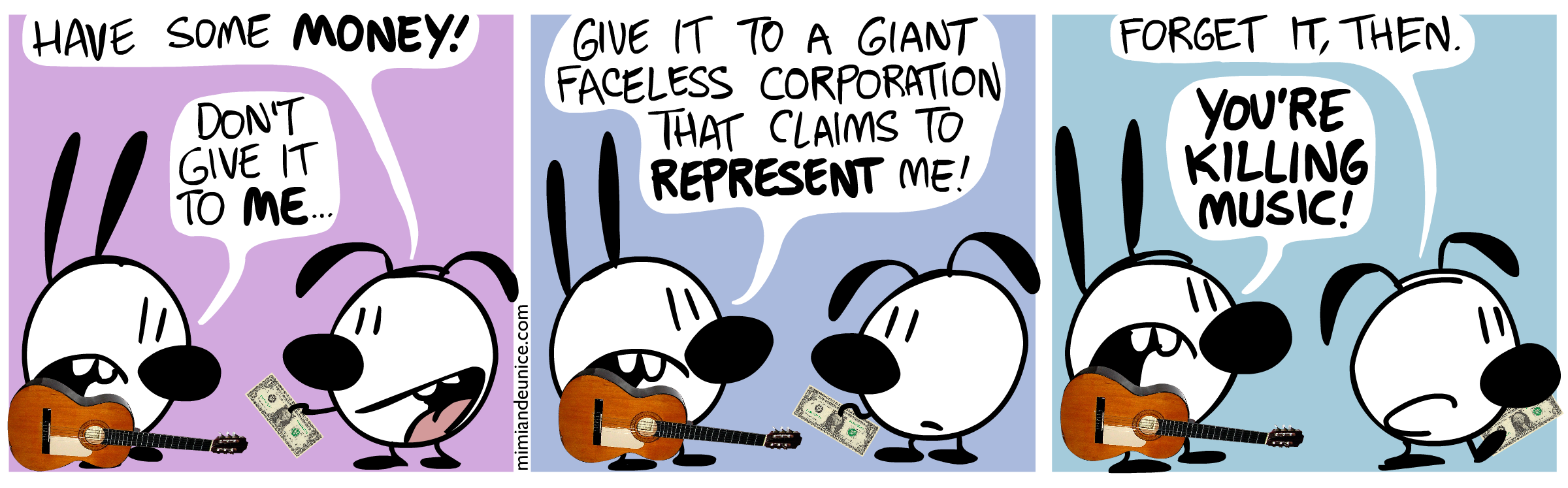
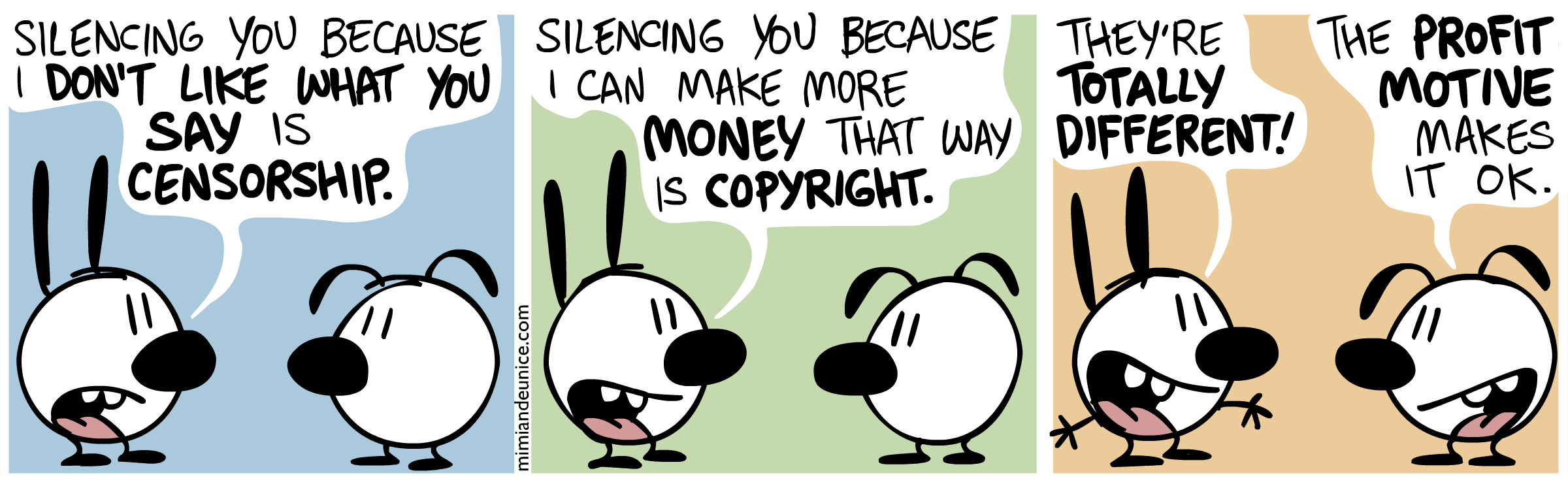
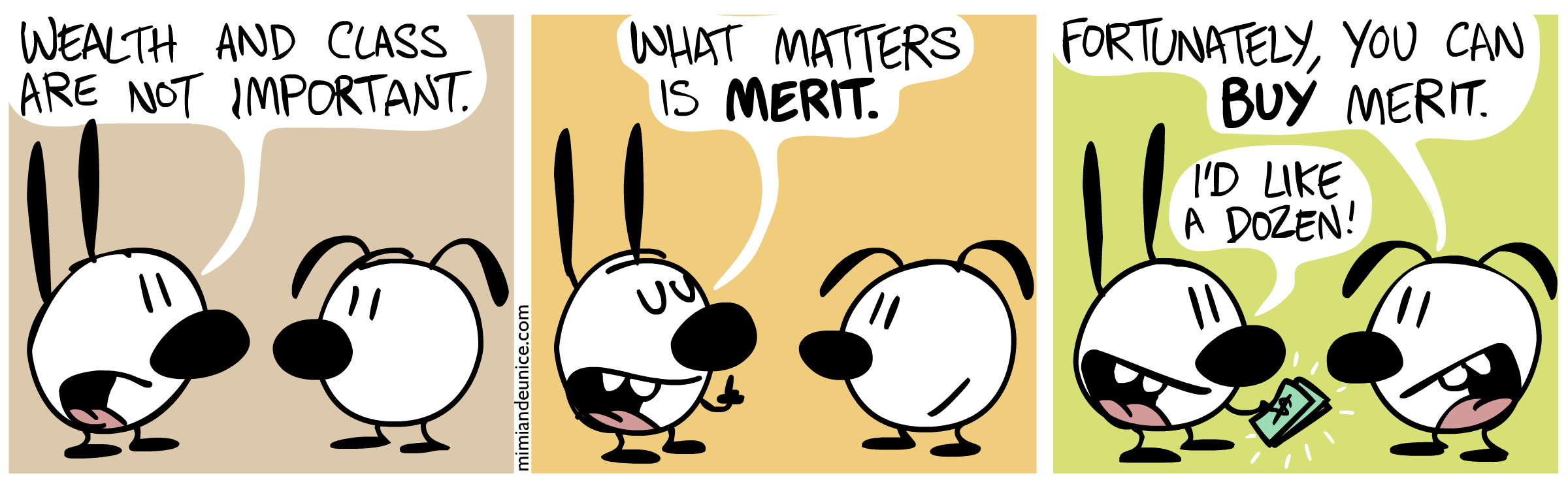

Posted by Kevin Carson on Aug 17, 2011 - C4SS
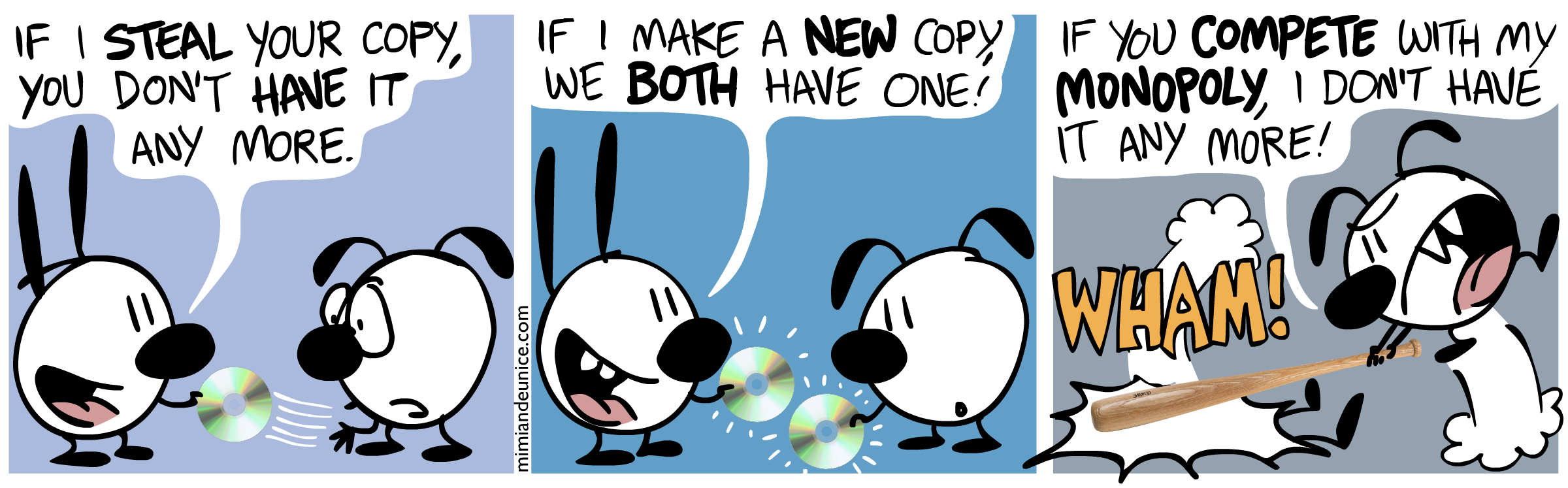
EUNICE: “Copying a song instead of buying a copy is stealing!”
MIMI: “Doing for yourself what you could pay someone else to do is stealing!”
BOTH: “Competition is theft!”
Unfortunately, Nina was preempted by reductio creep: The tendency of real world irrationality to outpace our ability to make fun of it.
In 2005, the French bus company TSE sued a group of cleaning women who’d previously taken the bus to work, arguing that carpooling was unregulated competition that deprived the bus company of revenue. Although that that specific case was thrown out, the principle it illustrates — a legal guarantee of rents from a monopoly on the right to do something — is at the heart of capitalism (as opposed to the free market).
Throughout history, propertied classes have relied primarily on artificial scarcities of material resources to extract a surplus from labor. With the help of state-enforced artificial property rights, a ruling class can control great concentrations of land and capital. These monopolies prevent competition from driving down the price of capital and land to their natural values. Thus the means of production are artificially scarce and expensive, and labor is forced to pay tribute for access to them.
Today, however, the imploding cost of production means that concentrated ownership of land and capital is becoming less and less effective as a means of rent extraction. The desktop revolution has reduced the cost of setting up a “publishing house” or “music studio” a hundredfold. Micromanufacturing with open source desktop CNC tools will soon do likewise to the cost of a factory. Intensive raised-bed horticulture grows many times more food per acre than mechanized agribusiness. In fact most “farming” is a real estate investment in which the government pays rent for the “farmer” to hold land out of use!
In this age of abundance, when the falling cost of machinery and exploding efficiencies of extracting value from inputs threaten to make control of physical resources worthless as a source of rent, rents accrue mainly to “property rights” like the right to do certain things, or criminalizing competition from more efficient ways of doing things.
Under old-style capitalism, rents were extracted by using artificial property rights to restrict access to physical opportunities for production. Now that the cheapening of physical means of production has made this strategy untenable, the ruling classes must instead charge rents on the right to produce with one’s own physical resources.
In today’s global economy, profits from old-style subsidies and artificial scarcities of physical resources haven’t exactly disappeared. Foreign aid and World Bank loans still provide subsidized infrastructure for offshored production. Third World landed oligarchies still nullify traditional peasant property rights and steal land for cash crop production in collusion with subsidized Western agribusiness interests. Thanks to compliant local governments, and the use of World Bank debt slavery to pressure the noncompliant — not to mention legacy titles from outright theft in colonial days — extractive industries make enormous profits mining and logging on ill-gotten land. Half of Big Pharma’s R&D is taxpayer funded, and billions of dollars of high-tech R&D is subsidized with refundable tax credits.
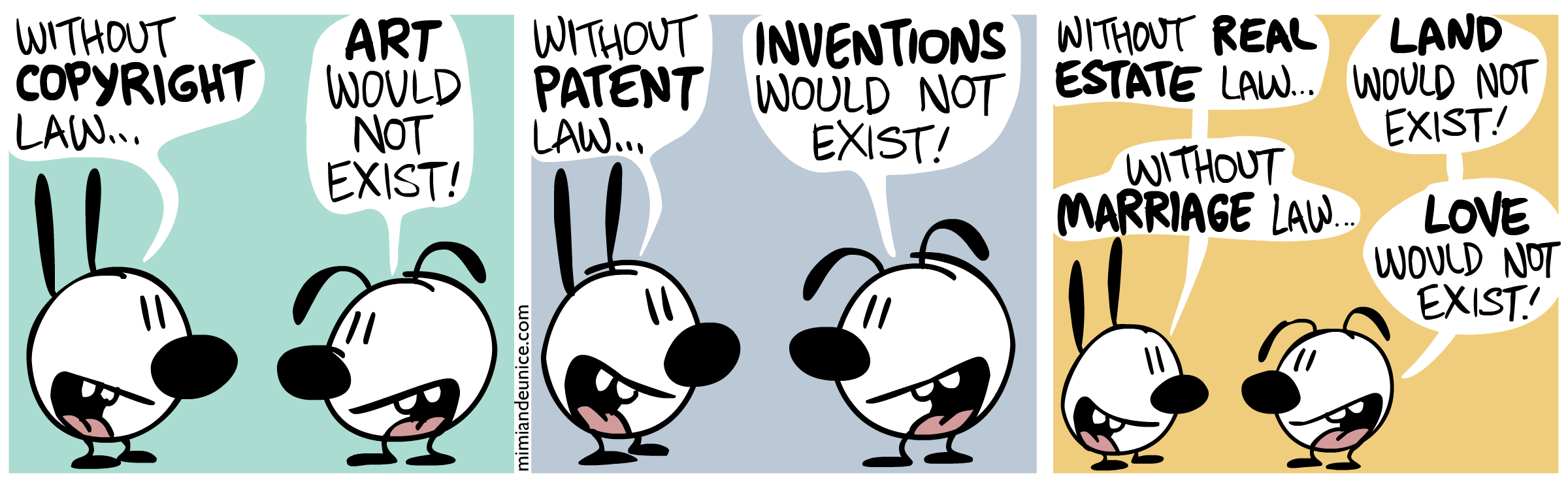
But most profits come from immaterial property in the right to make or do a certain thing. Because of patents it’s illegal to make a physically identical knockoff of an iPhone and sell it for a fraction of the price without all the embedded rents on artificial property. Copyright makes a CD of Word cost $200 instead of ten bucks like an Open Office CD. ”Intellectual property,” exactly like your grandfather’s tariff, is just a restriction on who has the right to sell a thing in a particular market. IP performs the same protectionist role for transnational corporations that tariffs once performed for national industrial corporations.
The majority of TNCs’ profits are from royalties or licensing fees. The most profitable industries in the global economy are those with business models based on IP: Pharma, biotech, entertainment, software. Patents give Western corporations a lockdown on the latest generation of production technology, effectively relegating Third World countries to supplying cheap raw materials and sweatshop labor. Trademark and patent laws enable corporate headquarters to outsource actual production to job shops in China or Vietnam, while charging a 1000% markup in retail outlets.
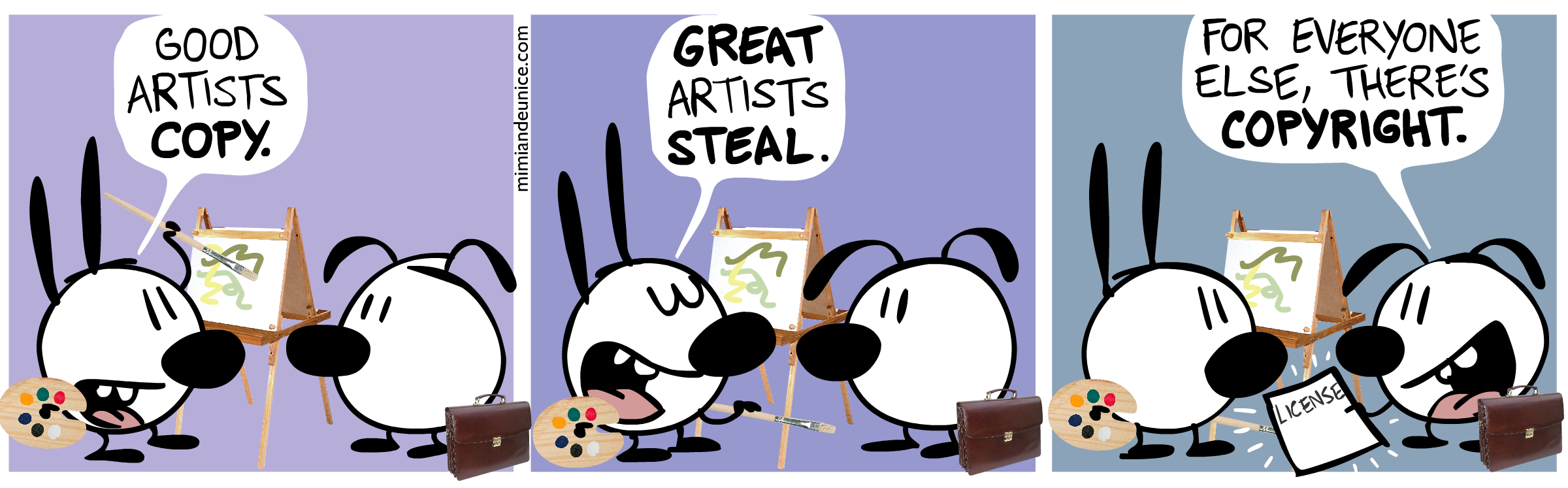
Intellectual protectionism apologists tell us ignoring patent and copyright monopolies is theft. It’s not. It’s legitimate free market competition. “Intellectual property” is theft.
Friday, August 27, 2010
Facebook Attempts to Trademark the Word 'Face'
All is not smooth sailing — Facebook is getting opposition to the attempt from a familiar face.
Ed Oswald, Technologizer
Aug 27, 2010 2:48 pm
Facebook appears to be getting much more aggressive in protecting its brand, even going as far as attempting to trademark the word “face,” documents indicate. The company took over another application for the common word from UK company CIS Internet Limited.
Their application was filed in 2005 by that company, and TechCrunch’s Erick Shonfeld suspects CIS transferred the application to FaceBook around November 2008. Around this time the social networking site’s lawyers began to deal with the US Patent and Trademark Office over the application.
All is not smooth sailing — Facebook is getting opposition to the attempt from a familiar face. Aaron Greenspan was a classmate of CEO Mark Zuckerberg, and last year successfully settled with the social networking company over his claims to being part of Facebook’s initial development.
Greenspan is again disputing Facebook’s claim to the word “face,” and has successfully gotten the USPTO to give him an extension of time in order to fight the company’s claims to the mark. He will have until September 22 to argue his case, and he may have some solid ground to do so.
“Face” is such a common word that awarding a trademark claim to it could potentially put several brand names in use already in jeopardy of legal action by the social networking site. How about FaceTime, Apple’s name for its video calling feature, for example? Some trademark attorneys argue that the word is so common that it cannot be trademarked.
It also could set a bad precedent for other trademarks, and a mad rush to attempt to get the rights to all kinds of common words that are found in currently existing brand names. These rights could then be used in turn to essentially extort money out of those companies.
Facebook already has bullied around a few companies over its names. Take for example PlaceBook. The travel site was forced to change its name to TripTrace after a legal threat from Facebook. TeachBook is also under fire, but that company is vowing to fight Facebook’s legal challenge in court.
Patent reform? How about trademark reform too. Sheesh.
Ed Oswald, Technologizer
Aug 27, 2010 2:48 pm
Facebook appears to be getting much more aggressive in protecting its brand, even going as far as attempting to trademark the word “face,” documents indicate. The company took over another application for the common word from UK company CIS Internet Limited.
Their application was filed in 2005 by that company, and TechCrunch’s Erick Shonfeld suspects CIS transferred the application to FaceBook around November 2008. Around this time the social networking site’s lawyers began to deal with the US Patent and Trademark Office over the application.
All is not smooth sailing — Facebook is getting opposition to the attempt from a familiar face. Aaron Greenspan was a classmate of CEO Mark Zuckerberg, and last year successfully settled with the social networking company over his claims to being part of Facebook’s initial development.
Greenspan is again disputing Facebook’s claim to the word “face,” and has successfully gotten the USPTO to give him an extension of time in order to fight the company’s claims to the mark. He will have until September 22 to argue his case, and he may have some solid ground to do so.
“Face” is such a common word that awarding a trademark claim to it could potentially put several brand names in use already in jeopardy of legal action by the social networking site. How about FaceTime, Apple’s name for its video calling feature, for example? Some trademark attorneys argue that the word is so common that it cannot be trademarked.
It also could set a bad precedent for other trademarks, and a mad rush to attempt to get the rights to all kinds of common words that are found in currently existing brand names. These rights could then be used in turn to essentially extort money out of those companies.
Facebook already has bullied around a few companies over its names. Take for example PlaceBook. The travel site was forced to change its name to TripTrace after a legal threat from Facebook. TeachBook is also under fire, but that company is vowing to fight Facebook’s legal challenge in court.
Patent reform? How about trademark reform too. Sheesh.
Subscribe to:
Posts (Atom)