Showing posts with label Rep Barney Frank (D-MA). Show all posts

Wednesday, July 18, 2012

Truth In Trials Act, Medical Marijuana Protection Bill, Proposed By Bipartisan Group Of Lawmakers

The Huffington Post | By Nick Wing Posted: 07/18/2012

A bipartisan group of House lawmakers introduced a bill this week designed to create enhanced legal protections for valid medical marijuana patients prosecuted due to conflicting state and federal laws regarding the legality of the substance.

Under the Truth In Trials Act, sponsored by California Democratic Rep. Sam Farr and co-sponsored by other representatives such as Barney Frank (D-Mass.) and Ron Paul (R-Texas), state-licensed medical marijuana users would be given the right to provide an "affirmative defense" in the case of a federal prosecution. This effectively allows them to prove that their actions, while illegal at the federal level, were in fact protected under state law.

"Any person facing prosecution or a proceeding for any marijuana-related offense under any federal law shall have the right to introduce evidence demonstrating that the marijuana-related activities for which the person stands accused were performed in compliance with state law regarding the medical use of marijuana, or that the property which is subject to a proceeding was possessed in compliance with state law regarding the medical use of marijuana," the bill reads.

The legislation also lays out specific language stating that cannabis plants grown legally under state law may not be seized. Under the legislation, marijuana and other property confiscated in the process of a prosecution must also be maintained -- not destroyed -- and returned to the defendant if they are able to prove it was for a use accepted by the state.

The latest version of the Truth In Trials Act comes as federal crackdowns on dispensaries in medical marijuana states continue to surge. Last week, federal officials targeted one of the nation's largest pot shops. The Associated Press reported:
U.S. Attorney Melinda Haag has threatened to seize the Oakland property where Harborside Health Center has operated since 2006, as well as its sister shop in San Jose, executive director and co-founder Steve DeAngelo said Wednesday. His employees found court papers announcing asset forfeiture proceedings against Harborside's landlords taped to the doors at the two locations on Tuesday.
Read more relevant text from the bill below:
(a) Any person facing prosecution or a proceeding for any marijuana-related offense under any Federal law shall have the right to introduce evidence demonstrating that the marijuana-related activities for which the person stands accused were performed in compliance with State law regarding the medical use of marijuana, or that the property which is subject to a proceeding was possessed in compliance with State law regarding the medical use of marijuana. 
`(b)(1) It is an affirmative defense to a prosecution or proceeding under any Federal law for marijuana-related activities, which the proponent must establish by a preponderance of the evidence, that those activities comply with State law regarding the medical use of marijuana.
`(2) In a prosecution or a proceeding for a marijuana-related offense under any Federal criminal law, should a finder of fact determine, based on State law regarding the medical use of marijuana, that a defendant's marijuana-related activity was performed primarily, but not exclusively, for medical purposes, the defendant may be found guilty of an offense only corresponding to the amount of marijuana determined to be for nonmedical purposes.
`(c) Any property seized in connection with a prosecution or proceeding to which this section applies, with respect to which a person successfully makes a defense under this section, shall be returned to the owner not later than 10 days after the court finds the defense is valid, minus such material necessarily destroyed for testing purposes.
`(d) Any marijuana seized under any Federal law shall be retained and not destroyed pending resolution of any forfeiture claim, if not later than 30 days after seizure the owner of the property notifies the Attorney General, or a duly authorized agent of the Attorney General, that a person with an ownership interest in the property is asserting an affirmative defense for the medical use of marijuana.
`(e) No plant may be seized under any Federal law otherwise permitting such seizure if the plant is being grown or stored pursuant to a recommendation by a physician or an order of a State or municipal agency in accordance with State law regarding the medical use of marijuana.
`(f) In this section, the term State includes the District of Columbia, Puerto Rico, and any other territory or possession of the United States.'

Monday, December 19, 2011

Obama's Puzzling Marijuana Policy (2 articles)

Monday, December 19, 2011 by The Seattle Times
by Neal Peirce

WASHINGTON — "Dance with the One that Brought You" is the title of a well-known song.

But the Urban Dictionary offers a deeper meaning: "The principle that someone should pay proper fealty to those who have gone out of their way to look after them."

Barack Obama should pay attention. In 2008, young voters were enthused and turned out for him by the millions.

But now? The campus/youth enthusiasm factor has declined sharply. The deficiency seriously imperils Obama's re-election effort.

There's one issue, though, that might reignite youthful enthusiasm. That issue is marijuana — partly its medical use, but especially Americans' right to recreational use free of potential arrest and possible prison time.

Today's grim reality is that police continue to arrest youth for marijuana possession by the hundreds of thousands. But each arrest is a red flag of danger, threatening life prospects for a young man or woman suddenly saddled with a permanent "drug arrest" record that's easily located by employers, landlords, schools, credit agencies and banks.

Small wonder then that 62 percent of young Americans (ages 18 to 29) now favor legalizing marijuana, as a Gallup poll reported.

And it's not just youth these days. Gallup this year found 50 percent nationwide support for legalizing marijuana use — the most ever, up from a measly 12 percent in 1969 to 30 percent in 2000 and 40 percent in 2009.

A ballot measure to legalize, regulate and tax marijuana received 46.5 percent of the vote in California last year. Parallel measures are likely to be on the 2012 ballots in Colorado and Washington. Odd political bedfellows — Reps. Barney Frank, D-Mass., and Ron Paul, R-Texas — recently introduced a legalization bill and now have 19 co-sponsors. Paul even gets applause advocating legalization in Republican presidential debates.

But what about President Obama? In 2004 he endorsed marijuana decriminalization. He was candid about his early pot use and in 2006 told a group of magazine editors: "When I was a kid, I inhaled, frequently." By his run for president in 2008, he was slipping away from decriminalization but at least talked of a "public health" approach, emphasizing drug treatment instead of prison, giving drug-reform advocates hope for a new day in national policy.

But Obama as president has been a clear disappointment to reform forces. In White House-initiated electronic town halls, respondents — heavily weighted to original Obama supporters — have repeatedly put marijuana at the top of their issue lists. But the White House has either laughed off or provided dismissive retorts.

Obama's Drug Policy Office claims the drug war is over, replaced by a focus on shrinking demand, "innovative, compassionate and evidence-based drug policies." But Obama has not once singled out marijuana — a substance arguably far less harmful to the human body than alcohol — for special consideration. Nor has he spoken to the harm to youth caused by 800,000 yearly arrests. Or moved to stem the billions of dollars a year spent on marijuana-related arrests.

This is clearly not the "change" Obama's enthusiastic supporters of 2008 expected. And it's deeply ironic. Ethan Nadelmann of the Drug Policy Alliance notes that if local police departments had been enforcing marijuana laws as harshly in the early 1980s as many do today, "there's a good chance a young Columbia student named Barack Obama could have been picked up — and not be in the White House today."

Nadelmann suggests that both the White House Drug Policy Office and the Justice Department enforcement divisions have been "co-opted" by holdover appointees deeply invested in anti-marijuana rhetoric and "let's just bust them" drug enforcement.

Facing the 2012 election, Obama is not likely to advocate, suddenly, marijuana decriminalization. But he could announce that it's time for a serious national dialogue on the issue, and that it will be a hallmark of his second term. He could express his dismay that 800,000 people, mostly young (and heavily black and Hispanic), are being arrested each year for marijuana possession — even as 50 percent of Americans favor legalization. He could focus on the massive costs of enforcement, the deep social costs of imprisonment. Let all America, youth included, join in the debate, he could urge.

A new openness to marijuana reform could help to reignite, on campuses and among high numbers of young people, the hope for "change" that really means something. Perhaps even prospects for the president's own re-election.


******

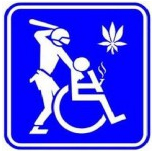
Obama's Attack on Medical Marijuana Wins Endorsement from Crazy Person


http://stopthedrugwar.org/files/medicalmarijuanawheelchair.jpeg
Last month, I questioned an absurd claim from the White House that President Obama has been "clear and consistent" in his approach to medical marijuana, rather than erratic and hostile. The facts of the matter are so plain that it feels silly to even debate it further, but this quote from anti-marijuana zealot and youth drug testing cheerleader David Evans of the Drug-Free Schools Coalition got my attention:
"The Obama administration’s recent crackdown on growers and sellers of medical marijuana is totally justified. The federal government is trying to protect vulnerable people from the use of marijuana as medicine, since the drug is not proved safe or effective."
It's really pretty hard for the Obama administration to claim they're not suddenly cracking down on medical marijuana when the president is getting praised by David Evans for protecting patients from themselves and their doctors. This is the guy you don't want complimenting you in public when you're busy trying to convince everyone else that your drug policy isn't a draconian death march.

A little heads up to Obama's re-election team: when both sides of the medical marijuana debate are in agreement that you've launched some kind of major crackdown, you do not get to pretend that there was no crackdown.

The tough question facing candidate Obama will be why he took no action to prevent egregious violations of his campaign promises on this issue, not whether such events ever occurred. A consensus exists in the press and the public that Obama backed away rather blatantly from his widely-understood assurance that state medical marijuana programs wouldn't face an existential threat from the federal government under his watch. Those threats emerged from numerous agencies this year and have scarcely been acknowledged by the White House, let alone addressed to anyone's satisfaction.

Rather than endeavoring to further duck or distract us, the president needs to say something smart about this. He'll have to do better than saying it's "a poor use of resources to bust pot patients," because the propriety of arresting sick people and their caregivers is not a question that ought to hinge on the availability of funds with which to do so. It would also be a poor use of resources to kick glaucoma patients down the stairs, but that isn't the reason we don't do it.

It's time for the president to admit that medical marijuana is a actually a good thing, that we're lucky to have this helpful option available for those who need it, and that people like Newt Gingrich and Mitt Romney are at odds with 80% of Americans when they dare to suggest otherwise.

Wednesday, June 22, 2011

New bill ending federal ban on marijuana to be introduced in Congress


By Eric W. Dolan - RAW Story
Wednesday, June 22nd, 2011
Reps. Barney Frank (D-MA) and Ron Paul (R-TX) will introduce legislation on Thursday to the U.S. House of Representatives that ends the federal prohibition on marijuana.

The Oakland Tribute reported that the bill would limit the federal government to enforcing cross-border or inter-state smuggling laws, and allow people to grow, possess, use or sell marijuana in states where it is legal to do so.

Although over a dozen states have legalized the use of marijuana for medical reasons, it is still outlawed under the federal Controlled Substance Act. 

The legislation authored by Frank and Paul would allow each state to propose and enforce its own marijuana laws without federal interference.

Democratic Reps. John Conyers (MI), Steve Cohen (TN), Jared Polis (CO) and Barbara Lee (CA) are co-sponsors of the bill.

"The human cost of the failed drug war has been enormous -- egregious racial disparities, shattered families, poverty, public health crises, prohibition-related violence, and the erosion of civil liberties," Lee said Wednesday. "And of course the cost in dollars and cents has been staggering as well -- over a trillion dollars spent to incarcerate tens of millions of young people."

"I co-sponsored this bipartisan legislation because I believe it is time to turn the page from this failed drug war."

Rep. Cohen, another co-sponsor, called last week for an end to the 40-year war on drugs, which he said had spent trillions of dollars to incarcerate millions of people for non-violent crimes.

Saturday, July 17, 2010

Now He Tells Us: Dodd's Belated Fin-Reg Wisdom

(I t's unanimous then: both the right and left have correctly determined this bill is a fraud and does nothing to keep another financial disaster like the one which occurred at the end of 2008 from happening again. All that work, all that yelling and screaming, and all we got was this? Calling it reform is like calling a tree you just pissed on a bathroom--jef)


***

by Nicole Gelinas | Thursday, July 15, 2010

A couple of hours before the Senate narrowly passed the Dodd-Frank fin-reg bill today, Sen. Chris Dodd, one of the bill's two namesakes, spoke some common sense on the Senate floor:
"We can’t legislate wisdom or passion. We can’t legislate competency."
Dodd did not allow this point of truth to inform the bill that he helped write, though.

The financial system's failures made themselves obvious starting in 2007 in part because legislators and regulators thought that they could conjure up on command not only wisdom and competence but omniscience.

In the years leading up to the financial crisis, regulators allowed financial firms such as AIG to create derivatives that evaded the old-fashioned limits on borrowing and trading. The people in charge figured that the financial guys had figured out every angle and made these things perfectly safe.

Regulators, too, allowed banks to borrow far more than old-fashioned rules would have allowed on mortgage-related securities and other instruments rated AAA — because competent people had determined that such securities could never fail.

Finally, regulators allowed people to buy houses with no money down — even though we learned in the 1920s that it's not a good idea to let people borrow limitlessly to speculate that the price of something will continue to rise.

The lesson to be learned here is that we need borrowing and trading rules that apply to everyone and everything for those times when bankers, regulators, and tens of millions of ordinary Americans aren't right.

The bill offers no evidence that anyone in Congress has learned this lesson.

Instead, by next week, we will have a new Financial Stability Oversight Council (D.C.-ers are already referring to it as "ef-sock") to determine which financial activities and investments are dangerous and which are safe.

We'll also have new derivatives regulations that still allow some users, including big industrial companies and their banks, to escape consistent rules. All that means is it's more likely that a decade hence, reporters will be scratching their heads about how a mild-mannered Midwestern farm-machinery company managed to bankrupt itself and the economy with trillions of dollars' worth of bets via some previously unheard-of "exotic" financial instrument.

Maybe then, a truly chastened Congress could start out with what Dodd said today instead of what's in his soon-to-be law.

Wednesday, July 7, 2010

Why We Must Reduce Military Spending by Ron Paul & Barney Frank

by Rep. Barney Frank and Rep. Ron Paul

July 6, 2010 

As members of opposing political parties, we disagree on a number of important issues. But we must not allow honest disagreement over some issues to interfere with our ability to work together when we do agree.
By far the single most important of these is our current initiative to include substantial reductions in the projected level of American military spending as part of future deficit reduction efforts. For decades, the subject of military expenditures has been glaringly absent from public debate. Yet the Pentagon budget for 2010 is $693 billion -- more than all other discretionary spending programs combined. Even subtracting the cost of the wars in Iraq and Afghanistan, military spending still amounts to over 42% of total spending.
It is irrefutably clear to us that if we do not make substantial cuts in the projected levels of Pentagon spending, we will do substantial damage to our economy and dramatically reduce our quality of life.
We are not talking about cutting the money needed to supply American troops in the field. Once we send our men and women into battle, even in cases where we may have opposed going to war, we have an obligation to make sure that our servicemembers have everything they need. And we are not talking about cutting essential funds for combating terrorism; we must do everything possible to prevent any recurrence of the mass murder of Americans that took place on September 11, 2001.
Immediately after World War II, with much of the world devastated and the Soviet Union becoming increasingly aggressive, America took on the responsibility of protecting virtually every country that asked for it. Sixty-five years later, we continue to play that role long after there is any justification for it, and currently American military spending makes up approximately 44% of all such expenditures worldwide. The nations of Western Europe now collectively have greater resources at their command than we do, yet they continue to depend overwhelmingly on American taxpayers to provide for their defense. According to a recent article in the New York Times, "Europeans have boasted about their social model, with its generous vacations and early retirements, its national health care systems and extensive welfare benefits, contrasting it with the comparative harshness of American capitalism. Europeans have benefited from low military spending, protected by NATO and the American nuclear umbrella."
When our democratic allies are menaced by larger, hostile powers, there is a strong argument to be made for supporting them. But the notion that American taxpayers get some benefit from extending our military might worldwide is deeply flawed. And the idea that as a superpower it is our duty to maintain stability by intervening in civil disorders virtually anywhere in the world often generates anger directed at us and may in the end do more harm than good.
We believe that the time has come for a much quicker withdrawal from Iraq than the President has proposed. We both voted against that war, but even for those who voted for it, there can be no justification for spending over $700 billion dollars of American taxpayers' money on direct military spending in Iraq since the war began, not including the massive, estimated long-term costs of the war. We have essentially taken on a referee role in a civil war, even mediating electoral disputes.
In order to create a systematic approach to reducing military spending, we have convened a Sustainable Defense Task Force consisting of experts on military expenditures that span the ideological spectrum. The task force has produced a detailed report with specific recommendations for cutting Pentagon spending by approximately $1 trillion over a ten year period. It calls for eliminating certain Cold War weapons and scaling back our commitments overseas. Even with these changes, the United States would still be immeasurably stronger than any nation with which we might be engaged, and the plan will in fact enhance our security rather than diminish it.
We are currently working to enlist the support of other members of Congress for our initiative. Along with our colleagues Senator Ron Wyden and Congressman Walter Jones, we have addressed a letter to the President's National Committee on Fiscal Responsibility and Reform, which he has convened to develop concrete recommendations for reducing the budget deficit. We will make it clear to leaders of both parties that substantial reductions in military spending must be included in any future deficit reduction package. We pledge to oppose any proposal that fails to do so.
In the short term, rebuilding our economy and creating jobs will remain our nation's top priority. But it is essential that we begin to address the issue of excessive military spending in order to ensure prosperity in the future. We may not agree on what to do with the estimated $1 trillion in savings, but we do agree that nothing either of us cares deeply about will be possible if we do not begin to face this issue now.

Monday, June 14, 2010

A Lobbying Tempest Engulfs Financial Overhaul

What do you know? Whenever something is about to get fucked up in DC, look no further than the invading army of corporate lobbyists laying siege on the US capital.

###

Lobbying Tempest Engulfs Financial Overhaul
by Jim Kuhnhenn
Monday, June 14, 2010 by Associated Press

WASHINGTON - Congress' final tinkering with Wall Street overhaul this month offers lobbyists a last-ditch shot to reshape the package on behalf of clients with billions at stake.

Even as the legislation gets tougher on banks by the week, agents of influence are hardly strangers on Capitol Hill. Many once worked for the lawmakers they're lobbying.

Rep. Barney Frank, chairman of a panel resolving differences in House and Senate bills, and Sen. Chris Dodd, who shepherded the Senate's measure, have their hands full fending off industry efforts to dilute the final legislation. They must do so while trying to hold together a fragile Senate coalition with only four Republicans.

So sticking points in this legislative tempest, whether over big banks' exotic trades or the plastic in people's wallets, are awfully tricky.

At least 56 industry lobbyists have served on the personal staffs of the 43 Senate and House members who will shape the legislation over the next two weeks, according to Public Citizen and the Center for Responsive Politics, two government watchdogs.

What's more, the center found that lawmakers on the committee settling differences between the House and Senate versions have received more than $112 million over two decades from political action committees or employees of industries affected by the legislation.

A look at the main issues to be settled and how lobbyists come down on them as lawmakers try to deliver on President Barack Obama's request to give him a bill to sign by July 4.

Derivatives:

Many corporations typically use these unregulated securities as a hedge against market fluctuations. For instance, an airline may try to soften the cost of a potential rise in fuel prices by betting in the derivatives market that fuel prices will rise. But derivatives have become instruments for risky speculation. The legislation would require that they be traded in regulated exchanges.

The toughest Senate provision would force banks to shed most of their lucrative derivatives business.

The proposal's chief advocate is Sen. Blanche Lincoln, D-Ark., who survived liberal and labor attacks during a hard-fought primary runoff largely by spotlighting her anti-Wall Street stance. Now she's stronger in the debate.

The Obama administration and bank regulators have said her proposal goes too far.

Large banks are apoplectic, watching as it gains strength over time.

Volcker Rule:

A Senate plan known as the Volcker rule, after former Fed Chairman Paul Volcker, would prohibit banks from betting on the markets with their own money. It would let regulators determine the best way to put into place that prohibition, which would apply to all securities trades, not just derivatives.

Several Democratic lawmakers want to strengthen that by giving regulators less latitude to modify the prohibition, and by preventing financial firms from betting against securities they assemble for their clients.

Large banks see billions of dollars in trades slipping away. They prefer a House plan that merely says regulators could ban such trades. But Frank appears set on the tougher route.

Debit card fees:

Americans use debit cards more than credit cards. But their use costs merchants money: For every swipe, merchants pay 1 percent to 2 percent to banks and credit networks.

A proposal that passed the Senate would require the Federal Reserve to limit those fees, and it has created a lobbying donnybrook between banks and retailers.

Most of the fees go to banking giants. But the face of the lobbying effort has been small community banks and credit unions that say they will be disproportionately hurt if they lose such fees.

The proposal excludes banks with assets under $10 billion. Officials at small banks say their institutions still would have to lower their fees to compete with bigger banks or drop their debit card programs.

Consumer protections:

The final legislation would create a government consumer financial protection entity. This was once considered the most contentious step sought by the administration.

The House bill exempted accountants, tax preparers, real estate agents and auto dealers from this oversight. The Senate bill has no such exceptions.

Auto dealers have lobbied fiercely to be excluded from the law's reach, arguing that they assemble loans but don't administer them. Obama has fought back, elevating the issue to a test of White House strength.

___

Online:

House Financial Services Committee: http://tinyurl.com/y4uercn

Senate Banking, Housing and Urban Affairs Committee: http://banking.senate.gov

Consumer Federation of America: http://www.consumerfed.org

Public Citizen: http://tinyurl.com/2a5zyn9

Center for Responsive Politics: http://tinyurl.com/23qbmwo