Showing posts with label greed. Show all posts

Monday, July 7, 2014

Guerilla Open Access Manifesto


Guerilla Open Access Manifesto 

Information is power. But like all power, there are those who want to keep it for themselves. The world's entire scientific and cultural heritage, published over centuries in books and journals, is increasingly being digitized and locked up by a handful of private corporations. Want to read the papers featuring the most famous results of the sciences? You'll need to send enormous amounts to publishers like Reed Elsevier. 

There are those struggling to change this. The Open Access Movement has fought valiantly to ensure that scientists do not sign their copyrights away but instead ensure their work is published on the Internet, under terms that allow anyone to access it. But even under the best scenarios, their work will only apply to things published in the future. Everything up until now will have been lost. 

That is too high a price to pay. Forcing academics to pay money to read the work of their colleagues? Scanning entire libraries but only allowing the folks at Google to read them? Providing scientific articles to those at elite universities in the First World, but not to children in the Global South? It's outrageous and unacceptable. 

"I agree," many say, "but what can we do? The companies hold the copyrights, they make enormous amounts of money by charging for access, and it's perfectly legal — there's nothing we can do to stop them." But there is something we can, something that's already being done: we can fight back. 

Those with access to these resources — students, librarians, scientists — you have been given a privilege. You get to feed at this banquet of knowledge while the rest of the world is locked out. But you need not — indeed, morally, you cannot — keep this privilege for yourselves. You have a duty to share it with the world. And you have: trading passwords with colleagues, filling download requests for friends. 

Meanwhile, those who have been locked out are not standing idly by. You have been sneaking through holes and climbing over fences, liberating the information locked up by the publishers and sharing them with your friends. 

But all of this action goes on in the dark, hidden underground. It's called stealing or piracy, as if sharing a wealth of knowledge were the moral equivalent of plundering a ship and murdering its crew. But sharing isn't immoral — it's a moral imperative. Only those blinded by greed would refuse to let a friend make a copy. 

Large corporations, of course, are blinded by greed. The laws under which they operate require it — their shareholders would revolt at anything less. And the politicians they have bought off back them, passing laws giving them the exclusive power to decide who can make copies. 

There is no justice in following unjust laws. It's time to come into the light and, in the grand tradition of civil disobedience, declare our opposition to this private theft of public culture. 

We need to take information, wherever it is stored, make our copies and share them with the world. We need to take stuff that's out of copyright and add it to the archive. We need to buy secret databases and put them on the Web. We need to download scientific journals and upload them to file sharing networks. We need to fight for Guerilla Open Access. 

With enough of us, around the world, we'll not just send a strong message opposing the privatization of knowledge — we'll make it a thing of the past. Will you join us? 

Aaron Swartz July 2008, Eremo, Italy

Friday, May 16, 2014

How Parasite Corporations Like Pfizer are Chucking U.S. Citizenship to Escape from Taxes

AlterNet / By Lynn Stuart Parramore
May 11, 2014 |


Let’s say you’re a giant American corporation like Pfizer, founded in Brooklyn way back in 1849. The fact that you exist and make a profit is largely due to the generous support of U.S. taxpayers. It’s the taxpayers, after all, who pony up for the National Institutes of Health, which does the basic research you rely on to develop drugs on which you make gigantic sums. And it’s the taxpayers who shell out large amounts of money to protect your patents, broker trade treaties in your favor, and protect your interests around the world in international negotiations. The same ones who pay for the public education of your employees and the costly infrastructure—the highways, airports, etc.—needed to move your products. The very folks who pay the billions in federal contracts you receive.

So what do you do? Do you pay your share of taxes to return some of this largesse?

Oh, no. You vigorously lobby for lower taxes and leave no loophole unexploited.
You are not satisfied to have received $2.2 billion in federal tax refunds from 2010-2012 while raking in $43 billion worldwide even though 40 percent of your sales are in America. You’re not ashamed in the least that in 2012, you stashed $73 billion in profits offshore on which you paid zilch in U.S. income taxes.

Your greed and irresponsibility demand still more. So you decide to get out of paying a single nickel to the country that feeds you. You rig up an overseas purchase so you can “officially” relocate to a place with a lower tax rate and in doing so deliver a giant middle finger to your fellow Americans.

Last week, New York-based drugmaker Pfizer finally admitted why it wants to buy British drugmaker AstraZeneca, which is based in London. Sure, it will get some experimental drugs out of the deal, but that’s not what it’s really after. What Pfizer wants is to cheat American taxpayers.
Ian Read, CEO Hall of Shame

Pfizer is willing to shell out $100 billion for AstraZeneca so it can get a new tax home and lower its tax rate from the roughly 27 percent it paid last year, to the UK tax rate, which is now 21 percent and will drop down to 20 percent in 2015.

Let’s pause for a moment to consider the CEO of Pfizer, Ian Read, who is orchestrating this move. According to Forbes , he is a poster boy for grossly overblown executive salaries, hauling in almost $19 million bucks last year. Read looted the company for this obscene amount of money, despite the fact that under his leadership, profits actually declined in 2013. So instead of trying to make money by doing productive things, like, for example, investing in research and development for new products, Read is looking for shortcuts that are less about doing anything useful for society and more about plain destroying it.

Fiduciary Duty to Cheat?

Right on cue, Read trotted out the predictable nonsense that he has a fiduciary responsibility to maximize value for Pfizer shareholders, and therefore must make the tax-dodging move.

Actually, that is baloney, as economist William Lazonick has repeatedly pointed out.

Shareholder value ideology is merely an absurdity that has been spread through American business schools since the go-go 1980s — a specious justification that allows executives to turn corporations into predatory extraction machines at the expense of stakeholders like workers and taxpayers. The fiduciary-duty-to-shareholders argument would be laughed out of court in nearly all circumstances (such as the exceptional case when a company is going to be sold). The reason for this is simple. Any idiot can figure out that sometimes a company must take short-term profit hits in order to do things that are in the long-term interest of the company.

Shareholder value ideology is only about boosting stock prices in the short-term, which often depends on moves that decrease the company’s value over the longer time horizon,as Lazonick has tirelessly pointed out. So Read is utterly full of it. But things have gotten so out of hand in corporate America that executives now actually believe, as hedge fund legend Jim Chanos has observed, that they have a fiduciary duty to cheat .

There was a time when an American CEO would not dare to officially state the kind of complete disregard for the public that Read is expressing. We shouldn't underestimate the importance of shaming such anti-social CEOs for daring to do so now. Social norms matter for things like executive compensation and the consideration of stakeholders rather than just shareholders (people who own stock). Read should be made to feel that there is nothing normal, or acceptable, about his twisted logic.

A Modest Proposal

Read said that Pfizer would keep its corporate headquarters in the U.S. (a very swanky affair on 42nd Street in Manhattan) and keep its listing on the New York Stock Exchange. Which essentially means that his company will still be located in the place where it will not be paying any taxes. Which would make Pfizer a giant, blood-sucking parasite.

Of course, part of the problem is that mega-companies in other industries, like Boeing, actually pay no taxes at all, and that makes the Pfizers very upset. If other multinationals get off scott-free, why can’t they?

H. David Rosenbloom, an attorney at Caplin & Drysdale in Washington and director of the international tax program at New York University's law school, explained his view of Pfizer’s plans to Bloomberg: "This is basically an opportunity to go outside the U.S. and still sell in the U.S. and strip the tax base…If we ever had a legislature in the United States, we could do something about this, but I don't expect to live that long."

Which brings us to the question of what can be done about this looting. Some Democrats, like Sen. Carl Levin, are making noises about curbing offshore tax moves in the wake of Pfizer’s announcement. Will anything happen? Doubtful. Passing any meaningful legislation on international tax policy, as Rosenbloom points out, is all but impossible in a deadlocked Congress.

Since countries around the world are basically in a race to the bottom to lower corporate tax rates, causing companies to shift their tax burden by pretending to set up shop in places like Ireland, Switzerland and Bermuda, it may be that trying to collect corporate taxes is going to be a futile exercise in the future. Perhaps a better way, as Thomas Piketty suggests in his recent book, Capital in the 21st Century, is simply to tax individual income and wealth. We could start with Ian Read ( and don’t tell me he’s Scottish)— he’s living in the U.S. and doing his business here, so he should be paying taxes.

Here’s another idea, just for the heck of it: How about if the citizens simply occupy Pfizer’s headquarters in New York? Let us not forget that in 2010, after receiving millions of tax breaks to create jobs in New York City, Pfizer turned around and pinkslipped hundreds of employees . If Pfizer doesn’t want to pay any taxes in the U.S., then let's reclaim all the stuff we paid for, and consider Pfizer headquarters to be stolen goods. The fancy artwork in the company gallery would fetch a nice price at auction, and the office space could rent at a premium. An effort to pay back companies like Pfizer in their own coin might remind them that they can’t simply go on looting indefinitely. At some point, the looters may get looted.

Wednesday, January 29, 2014

How Economists and Policymakers Murdered Our Economy

Enabling Greed
by PAUL CRAIG ROBERTS

The economy has been debilitated by the offshoring of middle class jobs for the benefit of corporate profits and by the Federal Reserve’s policy of Quantitative Easing in order to support a few oversized banks that the government protects from market discipline. Not only does QE distort bond and stock markets, it threatens the value of the dollar and has resulted in manipulation of the gold price.

When US corporations send jobs offshore, the GDP, consumer income, tax base, and careers associated with the jobs go abroad with the jobs. Corporations gain the additional profits at large costs to the economy in terms of less employment, less economic growth, reduced state, local and federal tax revenues, wider deficits, and impairments of social services.

When policymakers permitted banks to become independent of market discipline, they made the banks an unresolved burden on the economy. Authorities have provided no honest report on the condition of the banks. It remains to be seen if the Federal Reserve can create enough money to monetize enough debt to rescue the banks without collapsing the US dollar. It would have been far cheaper to let the banks fail and be reorganized.

US policymakers and their echo chamber in the economics profession have let the country down badly. They claimed that there was a “New Economy” to take the place of the “old economy” jobs that were moved offshore. As I have pointed out for a decade, US jobs statistics show no sign of the promised “New Economy.”

The same policymakers and economists who told us that “markets are self-regulating” and that the financial sector could safely be deregulated also confused jobs offshoring with free trade. Hyped “studies” were put together designed to prove that jobs offshoring was good for the US economy. It is difficult to fathom how such destructive errors could consistently be made by policymakers and economists for more than a decade. Were these mistakes or cover for a narrow and selfish agenda?

In June, 2009 happy talk appeared about “the recovery,” now 4.5 years old. As John Williams (shadowstats.com) has made clear, “the recovery” is entirely the artifact of the understated measure of inflation used to deflate nominal GDP. By under-measuring inflation, the government can show low, but positive, rates of real GDP growth. No other indicator supports the claim of economic recovery.

John Williams writes that consumer inflation, if properly measured, is running around 9%, far above the 2% figure that is the Fed’s target and more in line with what consumers are actually experiencing. We have just had a 6.5% annual increase in the cost of a postage stamp.

The Fed’s target inflation rate is said to be low, but Simon Black points out that the result of a lifetime of 2% annual inflation is the loss of 75% of the purchasing power of the currency. He uses the cost of sending a postcard to illustrate the decline in the purchasing power of median household income today compared to 1951. That year it cost one cent to send a post card. As household income was $4,237, the household could send 423,700 postcards. Today the comparable income figure is $51,017. As it costs 34 cents to send one postcard, today’s household can only afford to send 150,050 postcards. Nominal income rose 12 times, and the cost of sending a postcard rose 34 times.

Just as the American people know that there is more inflation than is reported, they know that there is no recovery. The Gallup Poll reported this month that only 28% of Americans are satisfied with the economy.

From hard experience, Americans have also caught on that “free trade agreements” are nothing but vehicles for moving their jobs abroad. The latest effort by the corporations to loot and defraud the public is known as the “Trans-Pacific Partnership.” “Fast-tracking” the bill allowed the corporations to write the bill in secret without congressional input. Some research shows that 90% of Americans will suffer income losses under TPP, while wealth becomes even more concentrated at the top.

TPP affects every aspect of our lives from what we eat to the Internet to the environment. According to Kevin Zeese in Alternet, “the leak of the [TPP] Intellectual Property Chapter revealed that it created a path to patent everything imaginable, including plants and animals, to turn everything into a commodity for profit.”

The secretly drafted TPP also creates authority for the executive branch to change existing US law to make the laws that were not passed in secret compatible with the secretly written trade bill. Buy American requirements and any attempt to curtail jobs offshoring would become illegal “restraints on trade.”

If the House and Senate are willing to turn over their legislative function to the executive branch, they might as well abolish themselves.

The financial media has been helping the Federal Reserve and the banks to cover up festering problems with rosy hype, but realization that there are serious unresolved problems might be spreading. Last week interest rates on 30-day T-bills turned negative. That means people were paying more for a bond than it would return at maturity. Dave Kranzler sees this as a sign of rising uncertainty about banks. Reminiscent of the Cyprus banks’ limits on withdrawals, last Friday (January 24) the BBC reported that the large UK bank HSBC is preventing customers from withdrawing cash from their accounts in excess of several thousand pounds.

If and when uncertainty spreads to the dollar, the real crisis will arrive, likely followed by high inflation, exchange controls, pension confiscations, and resurrected illegality of owning gold and silver. Capitalist greed aided and abetted by economists and policymakers will have destroyed America.

Sunday, September 15, 2013

Triple Play: Sports, Politics & Greed


Triple Play: Sports, Politics & Greed
 from BillMoyers.com on Vimeo.


The NFL recently announced it would pay out $765 million to settle a lawsuit from thousands of former players suffering from concussions and related brain trauma. A large sum, but a small percentage of the billions the football league and other professional sports franchises haul in for their owners. The vast gap between sports tycoons and the everyday fans who shell out hard-earned cash to watch their athlete heroes on the field is yet another reflection of the gross inequality between the one percent and the rest of society and another example of how inextricably linked sports and politics are in our lives.
“There’s always so much happening in the world of sports and there’s always so many different ways in which sports not just reflects our lives but shapes our lives,” Zirin tells Moyers. “It shapes our understanding of things like racism, sexism, homophobia. It shapes our understanding of our country, it shapes our understanding of corporations and what’s happening to our cities. In so many different ways sports stories are stories of American life in the 21st century.”

Friday, October 26, 2012

Rebooting Our Definition of “Patriotism”

Limitless hypocrisy...

Beyond Flag Waving
by DAVID MACARAY

Which is more “patriotic”—to loyally refrain from criticizing your government’s foreign policies, no matter how brutal or peremptory they may be (including those that result in quasi-legal, immoral military adventurism that kills thousands of innocent civilians), or to loyally pony up when your government asks you to make a relatively minor economic sacrifice?

Two specific examples. Who were the more “patriotic” citizens—those anti-war protesters, both young and old, who marched in the streets during the tumultuous Vietnam era of the 1960s and 1970s, or those mega-wealthy citizens of 2012 who have renounced their U.S. citizenship and re-located to foreign countries in order to avoid paying higher taxes? Call me a starry-eyed idealist, but I like to think it’s the former.

On June 25, the New York Post reported that twice as many ultra-rich Americans as in the previous year are expected to renounce their U.S. citizenship in order to avoid higher taxes. Granted, the New York Post doesn’t have the institutional whiskers of, say, the New York Times, but the Post does provide the requisite statistics and attribution to make its story credible.

The Post reported that, in 2012, approximately 8,000 Americans are projected to renounce their U.S. citizenship in order to seek refuge in more tax-friendly countries (Costa Rica, Singapore, Cayman Islands, Antigua, et al). They compare this figure to the 3,805 Americans who did so in 2011.

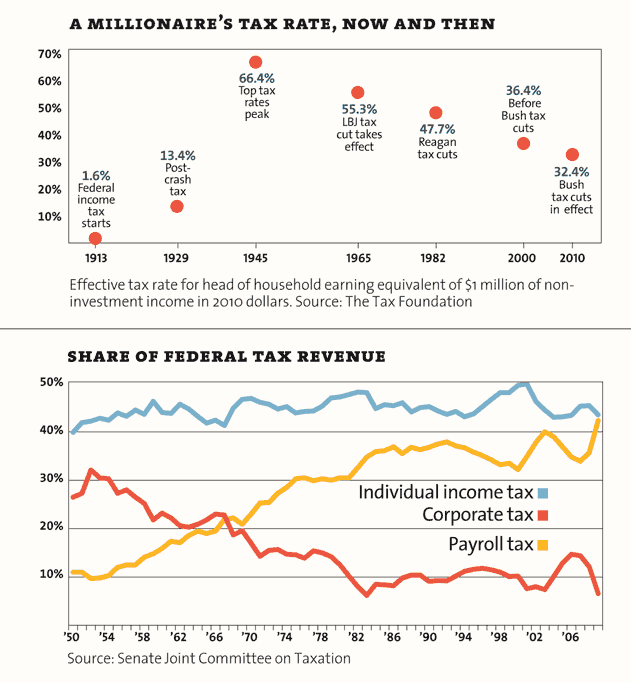
The article quotes Jim Duggan, a lawyer at the law firm of Duggan Bertsch: “High net-worth individuals are making decisions that having a U.S. passport just isn’t worth the cost anymore,” he said. “They’re able to do what they do from any place in the world, and they’re choosing to do it from places with much lower tax rates.” He fails to mention that federal income tax rates are lower than they’ve been in several decades.

So, whether these fat cats live in stately mansions within gated communities in the U.S., or in stately mansions within gated communities in Costa Rica, it’s not going to make any difference to them because they don’t “belong” to either community and never will belong. In truth, the very concept of belonging to a “community” (in the sense that most of us regard that term) is meaningless to them.

Duggan’s observation that wealthy people can now “do what they do from any place in the world” is actually quite chilling. Drones can kill people anywhere, satellites can spy on people anywhere, computer viruses can be sent from anywhere, and vast fortunes can be made from anywhere. Not to be morbid, but it’s worth noting that those philosophers who predicted that “abstraction” would eventually result in the disintegration of our here-and-now world, and lead to widespread alienation, may have been right.

When I mentioned this story to a Republican friend of mine, and went on a prolonged rant about the alarming greed and selfishness of these unpatriotic bastards, he instantly seized upon what he believed to be a brilliant counter-argument. He smugly asked if my scorn was reserved only for “very successful Americans” (his words) or if I were also willing to label “unpatriotic” those Mexicans who fled their home country to seek economic gain in the U.S.

Weak argument. People escaping grinding poverty by crossing national borders is one thing, but people who, literally, have more money than they know what to do with—who already have their yachts and cars and art and luxury homes, but who would rather relinquish their national identity than share a small fraction more of their wealth with their own government—is a whole other deal. Good riddance to them.

Tuesday, May 22, 2012

Beyond the Big, Bad Corporation

By Tara Lohan, AlterNet
Posted on May 21, 2012

As our political system sputters, a wave of innovative thinking and bold experimentation is quietly sweeping away outmoded economic models. In New Economic Visions, a special five-part AlterNet series edited by economics editor Lynn Parramore in partnership with political economist Gar Alperovitz of the Democracy Collaborative, creative thinkers come together to explore the exciting ideas and projects that are shaping the philosophical and political vision of the movement that could take our economy back.

In September 2011, two Appalachian women traveled to Delaware to deliver a petition to the state's Attorney General Beau Biden. Betty Harrah and Lorelei Scarbro represented thousands who believed that the business charter for coal-mining company Massey Energy should be repealed. The company, mostly operating in Appalachia but incorporated in Delaware, has violated the Clean Water Act 60,000 times. An investigation commissioned by the governor of West Virginia found Massey could have prevented the explosion that claimed the lives of 29 miners, among them Harrah's brother, at the Upper Big Branch Mine in 2010.

Massey, they contended, was simply too dangerous to be in business. But their pleas fell on deaf ears. The company plugs along, despite its shoddy environmental and safety records, churning out profits for its parent company, Alpha Natural Resources.

To many, Massey is not simply one bad apple, but part of an economic system heavy with rotten fruit. Companies like Lehman Brothers, Bank of America, Countrywide, BP, and Walmart epitomize the relentless drive of corporations to maximize profit above everything else, including safety, fair working conditions, clean air and water, healthy communities, and common decency. In doing so, the very word "corporation" has become a dirty word.

Forget bad apples, perhaps we should just raze the entire orchard, right?

Our economy, like our environment, is in trouble. Limitless growth that drives the profit-hungry corporate model today is ecologically impossible. We simply cannot sustain business as usual and the cracks in our system are showing.

"You look at the Arab Spring ... what looked like very stable regimes across the Arab world were suddenly shown to be completely vulnerable and brittle and I think that we may see the same kind of thing in our economy," said Marjorie Kelly, a fellow at the Tellus Institute and author of the new book Owning Our Future: The Emerging Ownership Revolution. "What looks massive and permanent and invulnerable, may show itself quite suddenly to be brittle."

Maybe this doesn't sound heartening but it should. The corporate model we have today hasn't always been around and it doesn't need to remain the dominant way we do business. There is no reason we should be swabbing the decks of a sinking ship -- alternatives already exist and they are flourishing.

"What's underway is an ownership revolution. It's about broadening economic power from the few to the many and about changing the mindset from social indifference to social benefit," Kelly writes. "We're schooled to fear this shift, to think there are only two choices for the design of an economy: capitalism and communism, private ownership and state ownership. But the alternatives being grown today defy those dusty 19th-century categories. They represent a new option of private ownership for the common good. This economic revolution is different from a political one. It's not about tearing down but about building up. It's about reconstructing the foundation of ownership on which the economy rests."

Better Business
A common complaint in today's world is one of disconnection. Our industrialized world has resulted in less contact with community -- we don't know our neighbors or who grows our food. In the same way that we've lost touch with a deeper sense of belonging and place, many of us have become disconnected from the soul of our work. The corporation-worker structure today is a master-servant relationship. We're slaves to the company, working longer hours for less wages.

"Now mass layoffs to boost profits are the norm, while the expectation of a career with one company is long gone," William Lazonick wrote. "This transformation happened because the U.S. business corporation has become in a (rather ugly) word 'financialized.' It means that executives began to base all their decisions on increasing corporate earnings for the sake of jacking up corporate stock prices. Other concerns -- economic, social and political -- took a backseat. From the 1980s, the talk in boardrooms and business schools changed. Instead of running corporations to create wealth for all, leaders should think only of 'maximizing shareholder value.'"

Our economy is dominated by a monoculture business model, Kelly says, driven largely by publicly traded corporations that have built in pressure from Wall Street for maximum short-term earnings. But a healthy, living economy needs biodiversity. We can find this if we begin to look around -- across the U.S. and the world -- where there are businesses designed not for maximum profit, but with a mission-driven social and economic architecture. One of these models is the "social enterprise."

The Social Enterprise Alliance defines these organizations as "businesses whose primary purpose is the common good. They use the methods and disciplines of business and the power of the marketplace to advance their social, environmental and human justice agendas." And one of the defining characteristics is that "The common good is its primary purpose, literally 'baked into' the organization's DNA, and trumping all others."

Here's an example. Remember Working Assets? Starting out as a progressive-minded credit card company in the '80s, it added phone service -- first long-distance in the '90s, then cellular in 2000 -- and now it has created the subsidiary CREDO Mobile. The company operates as a for-profit business, which is privately owned, with most of the employees owning the stock, so it doesn't have to bow to Wall Street pressures. They use their profits to help support causes they believe in -- so far the amount of money donated is $70 million and counting.

Social enterprises can also be nonprofits, like Goodwill Industries, which last year turned donations from 79 million people into revenue that provided job training to 4.2 million people. And by reselling donated clothing, furniture and household goods, they divert an estimated 2 billion pounds from landfills every year.

The idea of social enterprises is catching on in the business world in the U.S. with the emergence of Benefit Corporations, also known as B Corps, which are designed, "to create a new sector of the economy which uses the power of business to solve social and environmental problems." B Corps are all for-profit companies that have legal structures mandating that the company is designed to work not for maximum shareholder gain, but for the good of society and the environment.

Currently there are more than 500 companies that have become approved B Corps and legislation has been passed in seven states (Maryland, New Jersey, Vermont, Virginia, California, Hawaii and New York) making them official entities. Some are larger corporations, such as Method Products and Patagonia, but many are also smaller companies and business-to-business operations.

B Corps are similar in design to another kind of company called L3Cs. "The L3C is a hybrid between the nonprofit and for-profit models in that it is essentially a profit-generating entity with a socially beneficial mission," writes Ashley Holmes for GreenBlue. "Like an LLC corporation, L3Cs have the same liability protection and are not tax-exempt; however L3Cs have access to forms of capital that traditional corporations don't qualify for, all in order to further social and environmental goals. Americans for Community Development describe the L3C as a company that 'combines the best features of a for-profit LLC with the socially beneficial aspects of a nonprofit... the for-profit with a nonprofit soul.'"

It's About the Workers
B Corps and L3Cs create a legal foothold for a more sustainable kind of business. But other models get to the heart of the new economy as well and take up the important ideas of ownership and governance. Who gets to make decisions about how our companies are run and who gets to share in the wealth that's created?

The U.S. helped create a system in post-war Germany for works councils, where workers are elected from companies to help manage how the business is run. "That means the councils help determine core issues, like when to open and close the store or office, who gets what shift, and who gets laid off or fired," wrote Jeremy Gantz in a review of Thomas Geoghegan's book Were You Born on the Wrong Continent? How the European Model Can Help You Get a Life. Germany also has co-determined boards, which give workers a voice in governance -- companies with more than 2,000 employees have half of their boards composed of workers.

Empowering employees has proved a successful business model elsewhere. The John Lewis Partnership has been around in the UK since 1920 and has grown to over 30 department stores and more than 200 supermarkets, with a revenue of $13.4 billion. The business is employee-owned -- all workers get to share the profits and vote for the governing council and company's board.
"This firm has a written constitution, printed up and publicly available, which states that the company's purpose is to support 'the happiness of all its members,'" wrote Kelly. "Now, let me pause and note: this is the only major corporation I've found that declares its purpose is to serve employee happiness. This is so, at JLP, not because it boosts returns for shareholders. At the John Lewis Partnership, employee happiness isn't a path to some other goal. It is the goal."

Employee-owned companies aren't just a British anomaly. "In the United States, the National Center for Employee Ownership reports that there are 11,300 employee-owned firms, with some 14 million participants," Kelly found. "And in Europe, large companies have nearly 10 million employee-owners. Employee ownership has been increasing in such countries as Spain, Poland, France, Denmark, and Sweden."

Organizations can be run with employee owners or other kinds of members. The London Symphony is owned by the musicians who play in it. Barcelona FC soccer team and the Green Bay Packers football team are community-owned. Mutual insurance companies are owned by policy holders and credit unions are owned by depositors.

Employee-owned businesses and cooperatives have emerged in the green business world with great success, as well. Community-owned forests in Mexico support indigenous people, protect the environment and prevent illegal logging. In Denmark community-owned wind farms have jumpstarted wind energy, supplying 20 percent of country's power. In Minnesota, Minwind is a farmer-owned wind development company that's grown to 350 members.

A New Vision
There are different legal and social structures that can help to feed this growing new economy. In Quebec, a "solidarity" or "social economy" was created to help nonprofits and cooperatives, and it gets popular and government support. Spain is home to Mondragon Cooperative Corporation, which is a network of more than 100 cooperatives, employing 100,000 workers. This cooperative model helps support new business ventures. If a firm is struggling in its first few years, interest rates are lowered to help it instead of flagging the business as high risk and then jacking up interest rates like we do here, says Kelly.

Supporting these new ventures is important, but so is holding the companies accountable to their missions. For cooperatives and employee-owned companies, like the John Lewis Partnership, where members get a vote and can elect those who make governing decisions (or run for the positions themselves), there is more power to make sure the company is keeping its word. With privately held businesses, accountability can be much harder. The B Corp certification process is one way that helps get around the blind spots -- certified B Corps have to prove themselves to a third-party organization -- creating accountability and transparency.

So what can we do in the U.S. to spur the development of socially and ecologically conscious business? "I used to think we needed new federal legislation and corporate chartering and that we could drive change with state and federal law," Marjorie Kelly said. "And I do think we do need an articulation of what a company ought to be in law." But we have to go beyond that, she insists.

"A teacher at Schumacher College posed a question: What kind of economy is suited for living inside a living being?" Kelly said. "It's not an endlessly expanding economy, it's not an economy that's designed to serve the few, at the expense of the many, it is an economy that is generative; that is life-serving in its purposes. How do we generate the conditions for life to continue and to thrive?"

The answer will likely be not one thing, but a compilation and diversity of different business models that are consistent with supporting workers, protecting the environment, and serving the broader social good. 
 

Thursday, March 22, 2012

Voters Have Two Candidates, No Choice

Thursday, March 22, 2012 by TruthDig
by Robert Scheer

With Mitt Romney’s super-PAC limo now on cruise control to victory at the GOP convention, voters are left with only two reasons to vote against Barack Obama: Either they are desperate to return a white man to the White House or they feel strongly that it is time to break the glass ceiling denying Mormons the presidency.

Out of a sense of tolerance I could cotton to the latter—heck, why should the bizarre beliefs of Romney’s church be a deal breaker? I’m hoping for a strong Jewish contender someday and wouldn’t like her burdened with defending Old Testament claptrap.

The problem in this mind-numbing Republican primary season is that the campaign has exposed Romney as not just another white male Mormon like some of the fairly reasonable senators who have represented Utah. Or like Romney’s own father, George, at one time the governor of Michigan. No, this Romney is now widely regarded as the vulture capitalist he is, a politician who is a say-and-do-anything opportunist with no moral limits on his outsized ambitions.

Nothing is sacred to the former Massachusetts governor, not even his own signature health plan that he sold to that state’s voters as the standard for rational government decision-making as regards the deep problems faced by our economy. The weaknesses of what Romney and the GOP deride as Obamacare have been all too obvious in the plan Romney touted in Massachusetts—a mandate to sign up without the cost restraints that a single-payer government program would offer. Now, with a new national plan from Rep. Paul Ryan emerging from the U.S. House, Romney and the Republican Party generally seek to compound that error by undermining Medicare and Medicaid, two programs that offer at least a modicum of cost control. Instead, the candidate and his fellow Republicans would turn consumers over completely to the tender mercies of for-profit insurers.

The justification for gutting what little remains of enlightened government programs to aid the vulnerable is, of course, the dreaded federal deficit. (Lest we forget, seniors were foremost among the vulnerable until the arrival of the programs now under attack.) What is so outrageously hypocritical about the proposals from both Romney and Ryan is that they do not touch, and indeed would further open, the spending spigot that caused all of the red ink following President Bill Clinton’s budget-balancing act.

Both Romney and Ryan want to increase President George W. Bush’s tax breaks for the wealthy, which seriously cut revenues while treating as sacrosanct the Cold War levels in military spending that Bush put in place in a wildly irrational response to the 9/11 attacks. This week Ryan announced that defense spending is off-limits, and Romney has campaigned for an increase in what represents more than 40 percent of the non-mandated federal budget.

I can’t wait for the moment in a presidential debate when Romney talks about the need for even more advanced U.S. weaponry to counter the emerging military threat from Communist China and Obama ever so coolly points out that Bain Capital, the company that Romney co-founded, has been supplying those Red tyrants with surveillance equipment to better monitor their citizenry.

With Ron Paul’s fortunes as a presidential candidate declining, there is no pressure on GOP leaders to link a withdrawal from the imperial adventures in Iraq and Afghanistan with a reduced federal handout to the corporate military-industrial complex. Nor will the Republican leadership confront the party’s responsibility for the nation’s economic collapse, the subsequent loss in tax revenues, and the Fed and Treasury policies that bailed out the Wall Street charlatans who invented this meltdown.

Instead of reigning in Wall Street greed, the GOP is demanding a reversal of even the tepid efforts of the Obama administration to hold the financial industry accountable to honest business practices. And, at a time when the largest multinational companies have shifted jobs and profits abroad, the GOP stands for rewarding that betrayal of American workers by eliminating all taxes on overseas corporate profits.

The pity in all this is that a legitimate critique of the Obama recordpresent to some degree in the Ron Paul dissection of the president’s war policy and his continuation of the Bush Wall Street bailout strategy—will not be heard in the general election debate. Instead, on the one hand, we will have Obama offering clever-sounding arguments for establishment policies that fail to deal with high unemployment, a brutal level of housing foreclosures and sharpening income inequality. And on the other hand there will be a Republican Party so steeped in the ethos of greed, racism and war-mongering that it would leave even Ronald Reagan and Richard Nixon, were they alive, with no choice but to vote for Obama as the lesser evil.

Friday, January 13, 2012

America Isn’t a Corporation

Published: January 12, 2012
“And greed — you mark my words — will not only save Teldar Paper, but that other malfunctioning corporation called the U.S.A.”
Fred R. Conrad/The New York Times

That’s how the fictional Gordon Gekko finished his famous “Greed is good” speech in the 1987 film “Wall Street.” In the movie, Gekko got his comeuppance. But in real life, Gekkoism triumphed, and policy based on the notion that greed is good is a major reason why income has grown so much more rapidly for the richest 1 percent than for the middle class.

Today, however, let’s focus on the rest of that sentence, which compares America to a corporation. This, too, is an idea that has been widely accepted. And it’s the main plank of Mitt Romney’s case that he should be president: In effect, he is asserting that what we need to fix our ailing economy is someone who has been successful in business.

In so doing, he has, of course, invited close scrutiny of his business career. And it turns out that there is at least a whiff of Gordon Gekko in his time at Bain Capital, a private equity firm; he was a buyer and seller of businesses, often to the detriment of their employees, rather than someone who ran companies for the long haul. (Also, when will he release his tax returns?) Nor has he helped his credibility by making untenable claims about his role as a “job creator.”

But there’s a deeper problem in the whole notion that what this nation needs is a successful businessman as president: America is not, in fact, a corporation. Making good economic policy isn’t at all like maximizing corporate profits. And businessmen — even great businessmen — do not, in general, have any special insights into what it takes to achieve economic recovery.

Why isn’t a national economy like a corporation? For one thing, there’s no simple bottom line. For another, the economy is vastly more complex than even the largest private company.

Most relevant for our current situation, however, is the point that even giant corporations sell the great bulk of what they produce to other people, not to their own employees — whereas even small countries sell most of what they produce to themselves, and big countries like America are overwhelmingly their own main customers.

Yes, there’s a global economy. But six out of seven employed American workers are employed in service industries, which are largely insulated from international competition, and even our manufacturers sell much of their production to the domestic market.

And the fact that we mostly sell to ourselves makes an enormous difference when you think about policy.

Consider what happens when a business engages in ruthless cost-cutting. From the point of view of the firm’s owners (though not its workers), the more costs that are cut, the better. Any dollars taken off the cost side of the balance sheet are added to the bottom line.

But the story is very different when a government slashes spending in the face of a depressed economy. Look at Greece, Spain, and Ireland, all of which have adopted harsh austerity policies. In each case, unemployment soared, because cuts in government spending mainly hit domestic producers. And, in each case, the reduction in budget deficits was much less than expected, because tax receipts fell as output and employment collapsed.

Now, to be fair, being a career politician isn’t necessarily a better preparation for managing economic policy than being a businessman. But Mr. Romney is the one claiming that his career makes him especially suited for the presidency. Did I mention that the last businessman to live in the White House was a guy named Herbert Hoover? (Unless you count former President George W. Bush.)

And there’s also the question of whether Mr. Romney understands the difference between running a business and managing an economy.

Like many observers, I was somewhat startled by his latest defense of his record at Bain — namely, that he did the same thing the Obama administration did when it bailed out the auto industry, laying off workers in the process. One might think that Mr. Romney would rather not talk about a highly successful policy that just about everyone in the Republican Party, including him, denounced at the time.

But what really struck me was how Mr. Romney characterized President Obama’s actions: “He did it to try to save the business.” No, he didn’t; he did it to save the industry, and thereby to save jobs that would otherwise have been lost, deepening America’s slump. Does Mr. Romney understand the distinction?

America certainly needs better economic policies than it has right now — and while most of the blame for poor policies belongs to Republicans and their scorched-earth opposition to anything constructive, the president has made some important mistakes. But we’re not going to get better policies if the man sitting in the Oval Office next year sees his job as being that of engineering a leveraged buyout of America Inc.

Thursday, November 17, 2011

Occupy Protesters Prepare for Day of 'Solidarity' Across US


Series of events planned to support evicted Zuccotti Park activists by highlighting growing inequality and need for jobs
by Paul Harris in New York 
Supporters of the Occupy movement are gearing up for a national day of protest and direct action across America, taking in dozens of events from New York to Chicago to Los Angeles.

Thursday has been declared a day of "solidarity" with the Occupy Wall Street activists in New York after their camp in lower Manhattan's Zuccotti Park was raided and dismantled by police. But it is also aimed at highlighting several of the movement's broader aims in terms of income inequality and a desperate need for job creation in America's floundering economy.

The Occupy movement, which began two months ago with the occupation of Zuccotti Park, has since spread to scores of cities and towns across the country, with varying success. It has often rejuvenated left-leaning political activists but also brought down a heavy police response, frequently at the behest of city mayors.

In recent days, police evictions and crackdowns on protesters in New York, Seattle, Berkeley, Portland and other places have caused widespread condemnation of alleged heavy-handedness by police.

In New York, protesters are planning actions all day in each of the city's five boroughs. A potential early flashpoint will be a rally planned to begin at 7am that will target Wall Street itself, as the protesters seek to disrupt the operations of the New York Stock Exchange before the ringing of the opening bell that signals the start of trading at 9.30am.

Since the protests began, Wall Street has become a virtual permanent protest zone, ringed by steel fences and heavily policed. Later actions are planned to take place across the city's subway system, as marchers will enter at 16 different stations and begin protesting.

Finally, the day will end with a rally at Foley Square, near New York's Town Hall, and then a march to the Brooklyn Bridge, where hundreds of protesters were arrested in a previous headline-grabbing mass action.

Bridges will be the focus of some actions in other cities too. In Boston, Detroit, Washington DC, Portland and Seattle, protesters, some allied with union workers and community groups, will march on high-profile bridges in order to highlight the problem of America's crumbling and underfunded infrastructure.

"We don't want to make this about police and protesters," said Stephen Squibb, an organiser with Occupy Boston, whose group will target the city's North Washington Street bridge. "It is about jobs and other things. That has been our message for two months and we are going to keep saying it," he added.

The range of activities across America spans a spectrum from the dramatic to the small-scale, including teach-ins, rallies and direct actions aimed at banks and corporations. In Portland, Oregon, protesters plan to target a city bridge and then try to organise flashmobs to go to local banks. In Detroit, protesters are marching from their camp downtown to the city's municipal centre, where they aim to highlight the brutal impact of government cuts on ordinary citizens.

"Poor and middle-class people can't afford this. The rich are using austerity because they don't want to pay more in taxes," said Todd Brady, a Detroit organiser.

Elsewhere, protesters in Atlanta will hold events targeting two major corporations in the form of Home Depot and Verizon. In Las Vegas, protesters have vowed to set up an early morning encampment outside a federal building downtown and stay until police remove them. In Chicago, a major rally is planned with local union workers and community groups.

In Memphis, a "midnight march" is planned through the city centre. In Phoenix, local members of the movement are targeting the city's light rail network during the morning rush hour. They then plan to hold a flashmob that will protest at a secret target in the city's business district.

Occupy activists in Phoenix said that the action showed the movement was taking hold, even in conservative areas of the US. "There is a discontent that moves beyond party lines as more people get involved," said a local Phoenix organiser, Diane D'Angelo.

Occupy supporters across the country also believe that the recent crackdowns, especially in New York, have rejuvenated the movement despite the evictions and loss of equipment.

"It is just what the movement needed. It was like throwing rocks on a hornets' nest," Squibb said.

Tuesday, October 11, 2011

‘Bank Transfer Day’ Causes Credit Union Buzz


by Jim Rubenstein 
 
Even with most credit unions closed for Columbus Day there was plenty of online buzz, and uncertainty, about what the credit union industry role might be on “Bank Transfer Day,” the latest event surfacing from the “Occupy Wall Street” protests.

Industry sources, speaking off the record, suggested any wholesale switch from large banks to CUs on Nov. 5, the day designated by one Californian and carried atwitter Monday, could conceivably put net worth ratios out of whack.

The balance sheet problem was raised by several industry officials as a potential hazard as online articles focused on what “Occupy” supporters are calling now for a specific action to underscore their complaints against big banks and corporate “greed.”

For the record, Mark Wolff, CUNA senior vice president-communications, said only that the trade group welcomes the idea of “a viral 'Bank Transfer Day'” since it shows “just how angry consumers are becoming with their treatment by big banks” and will now look at CUs.

CUNA said its Facebook posts have already witnessed big jumps in traffic on www.asmarterhoice.org. There also have been big gains on www.findacreditunion.org.

Many consumers, said CUNA, are already “discovering” credit unions online and “many more no doubt will as a result of this Bank Transfer Day initiative.”

Wire service reports Monday identified the ringleader of “Bank Transfer Day” as Kristen Christian, a 27-year-old Los Angeles art gallery owner who said she is not affiliated with the Occupy Wall Street protest, but that demonstration organizers had reached out to her to express support.

Christian reportedly chose Nov. 5 because of its association with 17th century British folk hero Guy Fawkes, who tried to blow up the British House of Lords but was captured on that day.

A Facebook page for the event states that “”together we can ensure that these banking institutions will ALWAYS remember the 5th of November!! If the 99% removes our funds from the major banking institutions on or by this date, we will send a clear message and give the 1% a taste of the fear that we experience every day when we aren't able to pay for our rent, food, medication, utilities, student loans, etc."

The protests began in New York and have popped up around the country. A few hundred protesters gathered in Las Vegas, for instance, on Thursday night and were escorted by police for a march down the Strip. Among the calls for action on the flyers being distributed was to move banking accounts to credit unions.

Tuesday, October 4, 2011

We Are the 99%


Occupy Wall Street is a peaceful stand against the big American rip-off. Support it and regain your dignity
 
I have spent the last two days at the Occupy Wall Street gathering. It was a beautiful display of peaceful action: so much kindness and gentleness in the camp, so much belief in our world and democracy. And so many different kinds of people all looking for a chance at the dream that America had promised them.

America has been debased and degraded by greed. This has touched 99% of America's population. The other 1% is doing just fine – with more than a third of the wealth of this nation. 

When people critique this movement and say spurious things about the protesters' clothes or their jobs or the general way they look, they are showing how shallow we have become as a nation. They forget that these people have taken time out of their lives to stand up for values that are purely American and in the interest of our democracy. They forget that these people are encamped in an urban park, where they are not allowed to have tents or other normal camping gear. They are living far outside their comfort zone to protect and celebrate liberty, equality and the rule of law.

It is a thing of beauty to see so many people in love with the ideal of democracy, so alive with its promise, so committed to its continuity in the face of crony capitalism and corporate rule. That should be celebrated. It should be respected and admired.

Their message is very clear and simple: get money out of the political process; strive for equality in taxation and equal rights for all regardless of race, gender, social status, sexual preference or age. We must stop poisoning our food, air and water for corporate greed. The people on Wall Street and in the banking industrial complex that destroyed our economy must be investigated and brought to justice under the law for what they have done by stealing people's homes and savings.

Jobs can and must be created. Family farms must be saved. The oil and gas industry must be divested of its political power and cheap, reliable alternative energy must be made available.

This movement transcends political affiliations. America has been debased and degraded by greed. This has touched 99% of America's population. The other 1% is doing just fine – with more than a third of the wealth of this nation. We all know people who have been hurt by the big rip-off. We all know people who have lost their jobs or their homes. We all know people who have had to go and fight wars that seem to have no objective and no end – leaving families for years on end without fathers, mothers, sons and daughters.

The 99% of us have paid a dear price so that 1% could become the wealthiest people in the world. We all pay insanely high energy prices while we see energy companies making record profits, year after year. We live with great injustices in the land of justice. We live with great lawlessness in the land of the law.

It's time to check ourselves, to see if we still have that small part that believes in the values that America promises. Do we still have a shred of our decency intact in the face of debasement? If you do, then now is the time to give that forgotten part a voice. That is what this movement is ultimately about: giving voice to decency and fairness.

I invite anyone and all to participate in this people's movement to regain your dignity and what you have worked for in this capitalist society. Each of us is of great value to the whole. Do not forget your greatness. Even when the world around you is telling you you are nothing. You have a voice. You want a better life for your children and the people you love. You live in a democracy. You belong, and you deserve a world that is fair and equal. You have a right to take your place and be heard.

Show up at an Occupy Wall Street gathering in any major city in the US. Hit your social media outlets. Tweet it. Facebook it. Talk it up. It's easy to do nothing, but your heart breaks a little more every time you do.

Saturday, September 24, 2011

Global revolution - Live Video Feed from Occupy Wall Street RIGHT NOW

Global Revolution brings you live stream video coverage from independent journalists on the ground at nonviolent protests around the world. The team includes members of Mobile Broadcast News, Glassbead Collective, Twin Cities Indymedia and the alt.media ninjas that brought you Terrorizing Dissent and Democracy 101 documentaries. Currently broadcasting from #OccupyWallStreet protests in NYC that began on Saturday, Sept 17, 2011.

Tuesday, September 20, 2011

The Wall Street Occupation

 (A peaceful protest doesn't keep cops from being assholes. They live for that shit! Looks like a police state to me.--jef)


++++

Monday, September 19, 2011 by The Indypendent
A Sleep-In Protest in the Shadow of Power
by Manny Jalonschi


Surrounded by the headquarters of some of the world’s most powerful financial players, over two thousand protesters converged on Wall Street this Saturday. By the end of the second day, those occupying Liberty Park, formerly known as Zuccotti Park on Broadway and Liberty St., had settled in, partially helped by pizza, hot chocolate and blankets paid for and delivered by their supporters in New York City and across the country.

The Wall Street occupation began on Sept. 17 after months of planning and encouragement by Adbusters, who originally called for the occupation in response to a corporate-controlled political system that is no longer serving the needs of the majority of its people. They were soon joined by the hacktivist organization Anonymous in calling for a general people’s assembly. While the meetings leading up to the protest focused on dozens of smaller goals, Saturday morning, in the dozen or so people’s assemblies that broke down in Zuccotti Park now renamed Liberty Square, the protesters identified their key goals as liberating America from the death-grip of finance and creating a sustainable, just future for every member of the country. Specifics ranged from a progressive tax system, ending the wars and creating universal healthcare to more localized solutions like supporting and participating in a variety of worker owned cooperatives. Even with a heavy police presence, which included over 200 officers in the immediate area by Monday afternoon, protesters remained unmoved in their demands for a fairer political system.

The protest began around noon in Bowling Green Park with approximately 3,000 people filing in from various ad hoc rallies across the Financial District — including a crowd that swarmed around the Wall Street Bull earlier in the day. The crowd then began marching towards 1 Chase Manhattan Plaza. While the group’s original goal had been to occupy the sidewalk in front of the building, the area was cordoned off and surrounded by more than 40 police cars and 80 police officers. Instead, the crowd, which had decreased to less than 2,000 by 3 p.m., marched to Zuccotti Park on the Corner of Liberty St. and Broadway.

Once they were assembled, dozens of organizers stood on park benches and tables urging the general assembly, now numbering around 2,000, to break down into smaller assemblies. Within about ten minutes, a dozen or so general assemblies had broken out — but not without the drowning sound of a brass band, hired by an unknown group to disrupt the protesters. The brass band ended its performance within a half-hour, by which time most of the general assemblies had already progressed with their agenda.

The general assemblies, who began their meetings in circles, sitting on the concrete, broke down discussions into three general areas — problems, solutions and strategies. Most discussions began with an open session for assembly participants to vocalize what they viewed as the biggest challenges the country faces in freeing itself from the power of finance. While much discussion focused on the corruption and collusion between Wall Street and Washington, many assembly members  also noted that general apathy was also a problem of education.

The second part of the general assemblies focused on developing general solutions for the problems just identified. Regulation, transparency and again education became the hot talking points for this session. By the third session, assemblies were working on exchanging strategies for local, national and international action.

And in fact, those occupying Wall Street were not alone. News flooded in throughout the weekend of sister-rallies across the United States, including Seattle, San Francisco and Los Angeles. The international presence was heavy at the rally itself. Not only had protesters driven in from across the country, but activists we spoke to also arrived from as far as Mexico and Tunisia.

“This is my first protest, my first movement,” explained Kyle from Buffalo, New York, donning the Guy Fawkes mask symbolic of the Anon hacktivist collective. “A system that’s only focuses on rewarding greed should be challenged,” he said on Saturday, echoing the feelings of many protesters at the occupation who confessed the enormity of the problem requires an equally enormous series of solutions.

The open mic on the North side of the park gave air to many of the ideas. Sidney, a 50-year-old office worker from Connecticut, grabbed the microphone on Saturday and demanded an end to what he described as a “permanent tax holiday for the banks.”

While Saturday saw the most activity in terms of rallies, assemblies and marches, Sunday became a day of support for the occupation. Thousands of New Yorkers stopped in to either see or support the growing city of sleeping bags, signs and popular assemblies. The highlight of the day was when over $2,000 in pizza was ordered in less than an hour by supporters from around the world for the protesters in Zuccotti Plaza. By the second evening, the call went out for blankets as temperatures dipped into the 50’s.

By Monday afternoon reports of police interference were growing, as officers began arresting people who were using chalk to write goals and slogans on the concrete they occupied. But even with a heavy police presence, which included over 200 officers in the immediate area by Monday afternoon, protesters remained unmoved in their demands for a fairer political system. @Anon_support, a leading Twitter organizer of the event, even began organizing after-work parties in the vicinity to draw out more supporters from the New York City area.

Thursday, September 8, 2011

The Path to Real Prosperity


A new jobs plan is thinking too small. What we need is a new economy.
 
 
Like most white middle class Americans of my generation, I grew up believing that our strong market economy and democratic political institutions make us the world's greatest and most prosperous nation. The America of my youth was the product of a strong social contract that said we are all in this together—at least the white folks—and we all do best when we all do well. That contract made America the envy of the world. With the civil rights movement, many of us hoped we could expand the contract to truly include everyone.

Then Wall Street got greedy, abandoned the contract, and created a winner-take-all economy controlled by an oligarchy dedicated to growing its personal financial assets.

Contrary to what Wall Street propagandists would have us believe, Wall Street is a job killer, not a job creator. It prospers by depressing wages, eliminating and outsourcing American jobs, and extracting usurious interest rates from Americans forced to borrow to put food on the table or to maintain a middle class lifestyle. The result is an America in decline and out of work.

Wall Street flies the American flag when it is convenient. It relates to America, however, as an alien occupier, much like the British prior to the American Revolution. Tax breaks and deregulation for Wall Street will only strengthen the role of the occupier and destroy more jobs than they create. An effective jobs program will increase taxes on Wall Street corporations and billionaires and regulatory restraints on their destructive practices.

As I witness the devastation wrought by the Old Economy, my greatest source of sadness comes from an awareness of the profound gap between our human reality and our human possibility.
 
Main Street is the job creator. We rebuild America’s productive capacity through programs and institutions that support and invest in Main Street businesses, farms, and infrastructure owned by people who have a stake in being responsible citizens in their communities. These programs and institutions are properly funded, at least in part, by taxing the financial wealth expropriated by Wall Street corporations and billionaires through deception and unproductive financial manipulation.

To build a prosperous 21st century America we must declare our national independence from Wall Street and build a New Economy adapted to the realities of a finite planet and an interconnected 21st century world.

The underlying institutional structure of this New Economy will look a good deal like the Main Street economies of human-scale, locally rooted businesses that produced the American middle class, made America the world leader in industry and technology, and fulfilled the American Dream for millions of Americans. This economy was the product of rules put in place in response to the Great Depression of the 1930s to limit Wall Street power and hold it democratically accountable to Main Street needs and interests.

Shifting economic and political power from a predatory Wall Street economy to a generative Main Street economy is the common theme of most every initiative documented or recommended in my book, Agenda for a New Economy and this blog series.

Unlike the American economy either before or after the Wall Street takeover, America’s new 21st century economy will:
  • Bring America’s material consumption into balance with our ecological resources.
  • Secure for every American—irrespective of race or gender—the opportunity to achieve an adequate and dignified living.
  • Take a bold new step toward true democracy by creating a nation of owners who have a strong stake in the health and vitality of their local communities and natural environments.
We humans are a species of many possibilities. Wall Street has proven our ability to create a culture and institutions that cultivate, celebrate, and reward the pathologies of our lesser evolved reptilian capacities for ruthless individualism, greed, and violence. We can, if we choose, create a culture and institutions that nurture, celebrate, and reward the higher order capacities for creativity, sharing, and cooperation that make us distinctively human.

We can turn as a species from an economic system devoted to perfecting our capacity for violent exclusionary competition to one devoted to perfecting our capacity for caring, inclusive cooperation. We can turn from economic institutions that draw down Earth’s nonrenewable reserves of fossil energy to oppose, dominate, and mine Earth’s biosphere to institutions that work in integral partnership with the extraordinary generative capacity of Earth’s self-organizing living systems.

As I witness the devastation wrought by the Old Economy, my greatest source of sadness comes from an awareness of the profound gap between our human reality and our human possibility. My greatest source of joy and hope is my awareness of the vitality of the human spirit as demonstrated by the millions of people who are working to realize their shared vision of a just and sustainable world that works for all. My greatest source of motivation is the knowledge that it is within our collective means to unleash the positive creative potential of the human consciousness and make that vision a reality.

We are privileged to live at the most exciting moment of creative opportunity in the whole of the human experience. Now is the hour. We have the power to turn this world around for the sake of ourselves and our children for generations to come. We are the ones we have been waiting for.

Thursday, August 18, 2011

How Did Jesus Go From Being a Socialist in the New Testament to a Selfish Ayn Rand Anarcho-capitalist?


How did Jesus go from being a socialist in the New Testament to a selfish Ayn Rand anarcho-capitalist in modern-day America? After all, one of the most well-known bible verses is from Mark 10:25: "It is easier for a camel to go through the eye of a needle than for a rich man to enter the kingdom of God."

Sociologist Gregory Paul stated the paradox clearly in an August 12 Washington Post op-ed:
Many conservative Christians, mostly Protestant but also a number of Catholics, have come to believe and proudly proclaim that the creator of the universe favors free wheeling, deregulated, union busting, minimal taxes especially for wealthy investors, plutocrat-boosting capitalism as the ideal earthly scheme for his human creations. And many of these Christian capitalists are ardent followers of Ayn Rand, who was one of - and many of whose followers are - the most hard-line anti-Christian atheists you can get. Meanwhile many Christians who support the capitalist policies associated with social Darwinistic strenuously denounce Darwin's evolutionary science because it supposedly leads to, well, social Darwinism!
But Paul points out that the New Testament primarily promotes what would nowadays be called socialism:
But to understand just how non-capitalistic Christianity is supposed to be we turn to the first chapter after the gospels, Acts, which describes the events of the early church. Chapters 2 and 4 state that all "the believers were together and had everything in common. Selling their possessions and goods, they gave to anyone as he had need ... No one claimed that any of his possessions was his own, but they shared everything they had.... There were no needy persons among them. From time to time those who owned lands or houses sold them, brought the money from the sales and put it at the apostles' feet, and it was distributed to anyone as he had need."
Now folks, that's outright socialism of the type described millennia later by Marx - who likely got the general idea from the gospels.
Paul further notes that "we have Christian creationists like Jay Richards writing books titled Money, Greed, and God: Why Capitalism Is the Solution and Not the Problem. Can a stranger amalgam of opposing opinions be devised?"

In essence, the modern prosperity theologians who dominate the right wing of the Republican Party are essentially heretics. They've grafted on a post-industrial-age emphasis on the acquisition of capital and material goods to the alleged son of God, Jesus, who was himself essentially the father of socialism (as recounted in the bible).

At the next Republican debate, we would like to see a test of faith. All the candidates should be required to thread a camel through the eye of a needle.

If they can't do it, they have to shut up about Jesus, Christianity and the bible.

Now that would be refreshing.


Saturday, July 30, 2011

Age of Greed

When the Super-Rich Cry, "Class Warfare!"
By MICHAEL WINSHIP
I ran into my friend Jeff Madrick a few weeks ago. Like a rabbit out of a hat, or so it seemed, he whipped from his coat a copy of his new book, Age of Greed.

He gave the book to me and I'm grateful. It's a compelling and worthy read. Jeff's an able journalist; an excellent and cogent storyteller in a field that often defies the straightforward plot or easy explanation -- economics.

The book's subtitle says it all: "The Triumph of Finance and the Decline of America, 1970 to the Present;" an ongoing saga of avarice told through profiles of the men who confidently strode forth and marched us smack into the middle of our current fiscal nightmare.

Milton Friedman, Richard Nixon, Ivan Boesky, Ronald Reagan, Michael Milken, Alan Greenspan, Ken Lay, Walter Wriston of Citicorp and Sandy Weill of Citigroup, Lehman Brothers' Richard Fuld -- they're all here and more, presidents and economists, CEO's and masters of the universe, a veritable Murderers' Row of the rich and frequently reckless.

As Jeff writes in the introduction, the first part of Age of Greed "is mostly a story of business pioneers who fought government regulation or, through innovation, escaped government oversight," building on fear from punishing inflation in the seventies and a new post-Watergate distrust of government, "all the while diminishing the power of government and reinforcing the changing national attitudes."

In the second part, "Once government was no longer a counterweight and a new political ideology cleared their path, financiers led the way... Debts more than innovation and technological progress became the economy's driving force. Financial businesses doubled in size compared to the economy and profits grew still faster. Hundreds of billions of precious American savings were wasted."

I thought of all this last week when I read a report headlined "Fly on the Wall," on the website Politico.com:
"Fifty of the most prized donors in national politics, including several hedge-fund billionaires who are among the richest people in the world, schlepped to a Manhattan office or hovered around speakerphones Tuesday afternoon as their host, venture capitalist Ken Langone, a co-founder of The Home Depot, implored New Jersey Gov. Chris Christie to reconsider and seek the GOP presidential nomination."
Yikes. That prospect alone is enough to make sensible men and women weep. But wait, there's more.

Among those in attendance were at least three worthy of inclusion on Forbes' list of richest Americans -- Paul Tudor Jones (hedge funds; $3.3 billion), Stan Druckenmiller (hedge funds; $2.5 billion) and Bernie Marcus (Home Depot; $1.9 billion). According to Politico, "Several of them said: I'm Republican but I voted for President Obama, because I couldn't live with Sarah Palin. Many said they were severely disappointed in the president. The biggest complaint was what several called 'class warfare.' They said they didn't understand what they had done to deserve that: If you want to have a conversation about taxation, have a conversation. But a president shouldn't attack his constituents -- he's not the president of some people, he's president of all the people. Someone mentioned Huey Long populism."

Huey Long populism? Give me a break. Barack Obama's about as much like Huey Long as I am Huey Newton of the Black Panthers (or Huey Lewis and the News, come to that). And as for class warfare, give me a double break. Who the hell started it? "There's class warfare, all right," Warren Buffett told The New York Times two years before the 2008 crash, "but it's my class, the rich class, that's making war, and we're winning."

I'll say. Which makes the whining of the moneyed -- in addition to the winning -- all the more annoying. Especially after the Obama White House has bent over backwards for them -- simply remember the concessions on health care and financial reform, for two -- and all too often has vassaled itself to the knights of the Fortune 500, kowtowing all the way to the bank where they keep the big campaign contributions.

But I suppose in comparison to the Republicans' even lower groveling for the corporate table leavings, it's conceivable the President and his associates might seem to some of those residing in the economic stratosphere like wild-eyed populists. For one, that National Labor Relations Board of his is being too, too terribly annoying.

The NLRB has gone after Boeing, alleging that the aerospace giant decided to move an aircraft plant to South Carolina in retaliation against strikes by workers at its Puget Sound factory outside Seattle. And now the Teamsters have filed a charge with the labor board that the car company BMW of North America has failed to bargain in good faith, replacing union members by outsourcing a parts distribution center in Ontario, California. (The usual full disclosure: I'm president of a union affiliated with the AFL-CIO.)

In forty years of union representation, there has never been a labor stoppage at the center; in fact, its employers have received gold medals from BMW for efficiency. Average seniority is twenty years; five workers have been there thirty years or more.

As Michael Hiltzik wrote in the July 3 Los Angeles Times, "These employees exemplified the best qualities of the American worker. They devoted their working lives to BMW, at a time when it was building and solidifying its US beachhead. Their wages, with benefits, paid for a reasonable middle-class lifestyle if they managed it carefully. Throw in the job security they were encouraged to expect, and they had the confidence to make sacrifices and investments that contributed to the economy for the long term, like college education for the kids, an addition on the house, a new baby. Then one day they were handed a mass pink slip, effective in a matter of weeks."

You can argue that BMW, world's largest manufacturer of luxury cars, has the legal right to outsource. Yet by the same token, Hiltzik noted, "American taxpayers had a perfect legal right to tell BMW to drop dead when the firm's credit arm asked the Federal Reserve for a low-interest $3.6-billion loan during the 2008 financial crisis. BMW got the money then because US policymakers saw a larger issue at stake: saving the economy from going over a cliff. Just as there's a larger issue involved at Ontario, which is saving the American middle class from going over the same cliff."

Last year, BMW posted profits of $4.7 billion and bumped up shareholder dividends by $950 million. This year, they're predicting a ten percent increase in revenues. Will they be sharing with their American workers? Don't bet on it. Will they come running to the government for help next time they're in trouble? Count on it.

And as if Congress hasn't done corporate America enough favors, next week House Republicans will try to pass an anti-NLRB bill that will, in the words of California Democratic Congressman George Miller, "eviscerate the rights of workers, help ship more jobs overseas, undermine job creation in this country and kill opportunity for people who are working hard and playing by the rules."

HR 2587 takes away the NLRB's authority, says AFL-CIO Government Affairs Director Bill Samuel "to restore workers to their jobs when companies simply eliminate work in order to eliminate workers who are pro-union or when companies eliminate work in order to avoid their legal obligation to bargain.

"[The bill] will have dire unintended consequences as well. It will make it easier to ship jobs overseas because it legalizes the most despicable form of outsourcing -- the illegal kind -- by keeping the NLRB from being able to stop it. The bill will remove one of the only tools preventing work from leaving the US."

And still big business will whine and complain, as per Politico, not understanding what they have done to deserve approbation. Yet all the while, as Jeff Madrick writes in Age of Greed, they take our economy "along an unfortunate, tragic path for their own purposes from which it may not be possible to turn back."