FEBRUARY 21, 2012 | BY EVA GALPERIN | Electronic Frontier Foundation
[UPDATE 2/22/2012] It is important to note that disabling Web History in your Google account will not prevent Google from gathering and storing this information and using it for internal purposes. More information at the end of this post.
On March 1st, Google will implement its new, unified privacy policy, which will affect data Google has collected on you prior to March 1st as well as data it collects on you in the future. Until now, your Google Web History (your Google searches and sites visited) was cordoned off from Google's other products. This protection was especially important because search data can reveal particularly sensitive information about you, including facts about your location, interests, age, sexual orientation, religion, health concerns, and more. If you want to keep Google from combining your Web History with the data they have gathered about you in their other products, such as YouTube or Google Plus, you may want to remove all items from your Web History and stop your Web History from being recorded in the future.
Here's how you can do that:
1. Sign into your Google account.
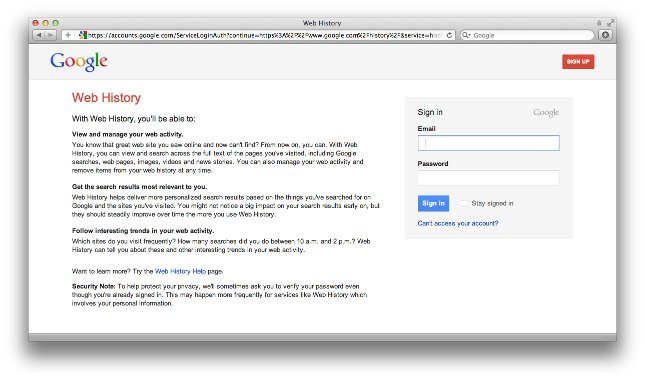
2. Go to https://www.google.com/history
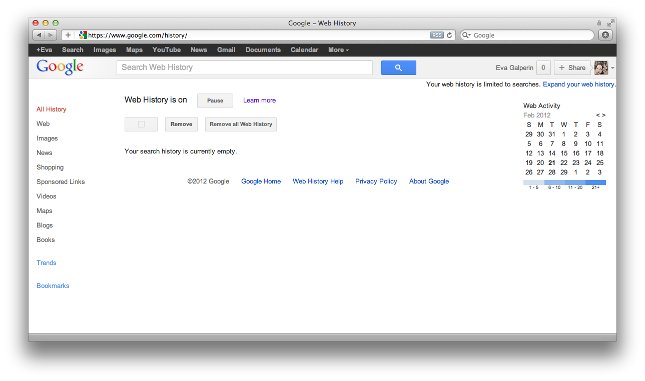
3. Click "remove all Web History."
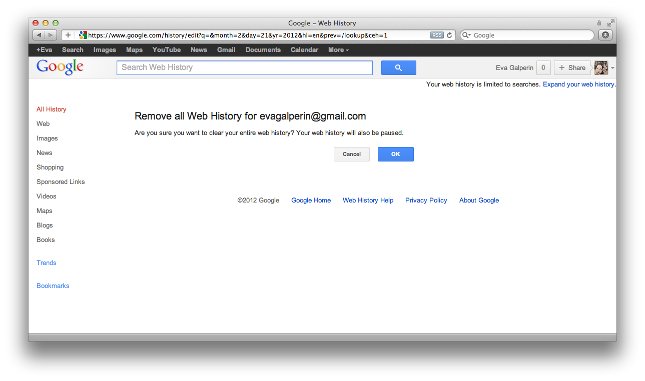
4. Click "ok."
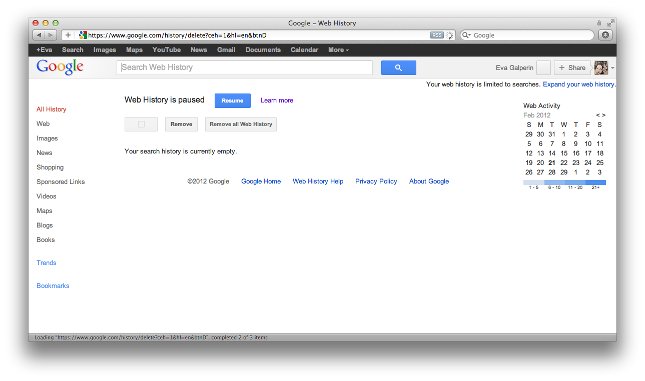
Note that removing your Web History also pauses it. Web History will remain off until you enable it again.
[UPDATE 2/22/2012]: Note that disabling Web History in your Google account will not prevent Google from gathering and storing this information and using it for internal purposes. It also does not change the fact that any information gathered and stored by Google could be sought by law enforcement.
With Web History enabled, Google will keep these records indefinitely; with it disabled, they will be partially anonymized after 18 months, and certain kinds of uses, including sending you customized search results, will be prevented. If you want to do more to reduce the records Google keeps, the advice in EFF's Six Tips to Protect Your Search Privacy white paper remains relevant.
If you have several Google accounts, you will need to do this for each of them.
[UPDATE 2/22/2012] It is important to note that disabling Web History in your Google account will not prevent Google from gathering and storing this information and using it for internal purposes. More information at the end of this post.
On March 1st, Google will implement its new, unified privacy policy, which will affect data Google has collected on you prior to March 1st as well as data it collects on you in the future. Until now, your Google Web History (your Google searches and sites visited) was cordoned off from Google's other products. This protection was especially important because search data can reveal particularly sensitive information about you, including facts about your location, interests, age, sexual orientation, religion, health concerns, and more. If you want to keep Google from combining your Web History with the data they have gathered about you in their other products, such as YouTube or Google Plus, you may want to remove all items from your Web History and stop your Web History from being recorded in the future.
Here's how you can do that:
1. Sign into your Google account.
2. Go to https://www.google.com/history
3. Click "remove all Web History."
4. Click "ok."
Note that removing your Web History also pauses it. Web History will remain off until you enable it again.
[UPDATE 2/22/2012]: Note that disabling Web History in your Google account will not prevent Google from gathering and storing this information and using it for internal purposes. It also does not change the fact that any information gathered and stored by Google could be sought by law enforcement.
With Web History enabled, Google will keep these records indefinitely; with it disabled, they will be partially anonymized after 18 months, and certain kinds of uses, including sending you customized search results, will be prevented. If you want to do more to reduce the records Google keeps, the advice in EFF's Six Tips to Protect Your Search Privacy white paper remains relevant.
If you have several Google accounts, you will need to do this for each of them.

