Saturday, 02 February 2013
By Robert Reich, Robert Reich's Blog | Op-Ed
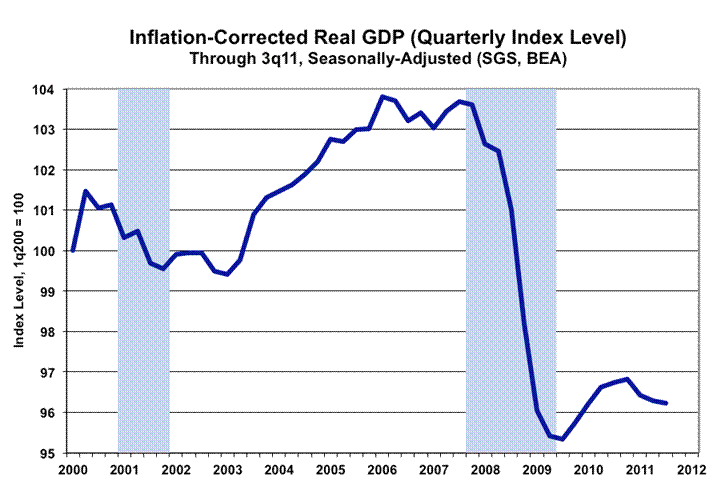
We are in the most anemic recovery in modern history, yet our political leaders in Washington aren’t doing squat about it.
In fact, apart from the Fed – which continues to hold interest rates down in the quixotic hope that banks will begin lending again to average people – the government is heading in exactly the wrong direction: raising taxes on the middle class, and cutting spending.
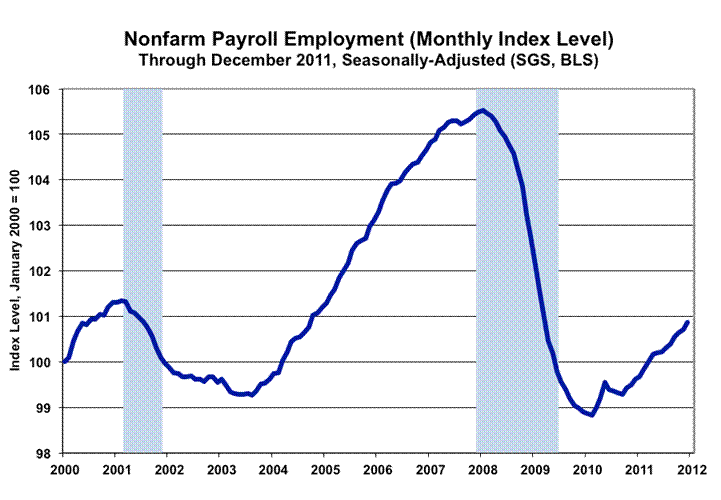
The Bureau of Labor Statistics reported Friday that American employers added only 157,000 jobs in January (150,000 jobs just cover the amount of new workers entering the economy each month, so that's a net of only +7000 new jobs created--jef). That’s fewer than they added in December (196,000 jobs, as revised by the Bureau of Labor Statistics). The overall (U-3) unemployment rate remains stuck at 7.9 percent, just about where it’s been since September.
The share of people of working age either who are working or looking for jobs also remains dismal – close to a 30-year low. (Yes, older boomers are retiring, but the major cause for this near-record low is simply the lack of jobs.)
And the long-term unemployed, about 40 percent of all jobless workers, remain trapped. Most have few if any job prospects, and their unemployment benefits have run out, or will run out shortly.
20 million Americans remain unemployed or underemployed.
It would be one thing if we didn’t know what to do about all this. But we do know. It’s not rocket science.
The only reason for employers to hire more workers is if they have more customers. But American employers have not had enough customers to justify much new hiring.
There are essentially two sources of customers: individual consumers, and the government. (Forget exports for now; Europe is contracting, Japan is a basket case, China is slowing, and the rest of the world is in economic limbo.)
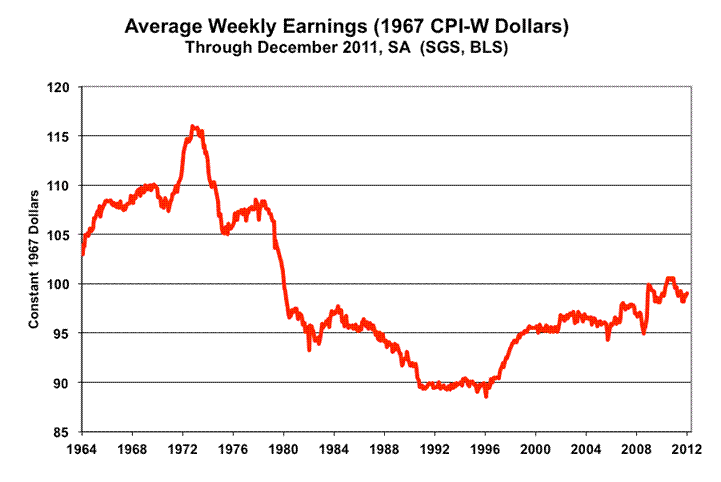
American consumers – whose purchases constitute about 70 percent of all economic activity – still can’t buy much, and their purchasing power is declining. The median wage continues to drop, adjusted for inflation. Most can’t borrow because they don’t have a credit record sufficient to allow them to borrow much.
And now their Social Security taxes have increased, leaving the typical worker with about $1,000 less this year than last.
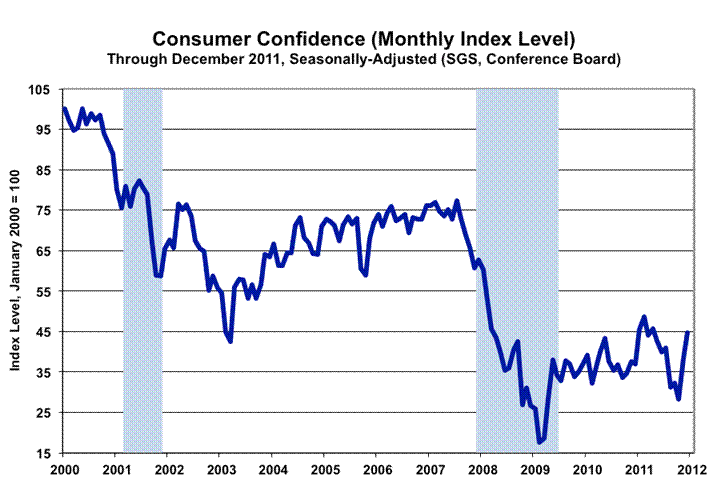
The Conference Board reported last Tuesday consumer confidence in January fell its lowest level in more than a year. The last time consumers were this glum was October 2011, when there was widespread talk of a double-dip recession.
The only people doing well are at the top – but they save a large part of what they earn instead of spending it.
Overall personal income soared by 8 percent in the final three months of 2012 compared to an increase of just over 2 percent in the third quarter, but this income didn’t go into the pockets of the middle class. It went into the pockets of people at the top.
Wages and salaries grew a measly six-tenths of one percent.
Most of the rise in personal income in the last quarter was from companies rushing to pay dividends before taxes were hiked in 2013, and from an upturn in personal interest income. Both these sources of income went mostly to the well-to-do.
This explains why consumer spending is dropping. The Commerce Department said Thursday consumers’ spending rose 0.2 percent last month. That’s slower than the 0.4 percent increase in November.
So if we can’t rely on consumers to stoke the economy, what about government? No chance. Government spending is dropping, too.
The major reason the economy contracted between the start of October and end of December 2012 was a major reduction in government spending in the fourth quarter.
Government spending has declined in nine of the last ten quarters, but it took a precipitous drop in the last quarter. This was mainly because military spending fell 22.2 percent. That’s the largest fall-off since 1972 (mainly due to reduced spending on the war in Afghanistan, and worries by military contractors about further pending cuts). State and local spending also continued to fall.
Personally, I’m glad we’re spending less on the military. It’s the most bloated part of the government. Major cuts are long overdue. But the military is America’s only major jobs program. Cutting the military without increasing spending on roads, bridges, schools, and everything else we need to do simply means fewer jobs.
What’s ahead? More of the same. So what possible reason do we have to suspect the recovery will pick up speed? None.
Don’t count on consumer spending. Wages and benefits continue to drop for most people, adjusted for inflation. States are hiking sales taxes, which will hit the middle class and the poor hardest. Deficit hawks in Washington are contemplating additional tax hikes on the middle class.
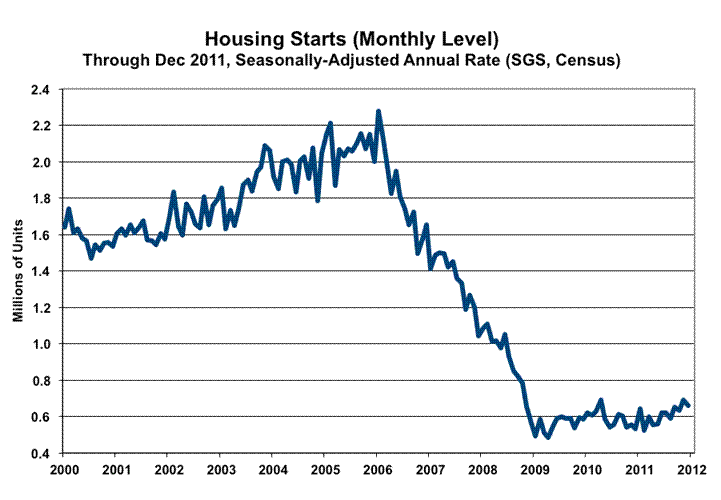
Housing prices are stabilizing, thankfully. But one out of five homeowners is still underwater, and the ranks of people renting rather than owning are rising. Health-care costs are also rising for most people in the form of higher co-payments, deductibles, and premiums.
Don’t count on government, either. Government spending continues to head downward. The White House has already agreed to major spending cuts, some to go into effect this year. Coming showdowns over the next fiscal cliff, appropriations to fund government operations, and the debt ceiling will likely result in more cuts.
More jobs and faster growth should be the most important objectives now. With them, everything else will be easier to achieve – protection against climate change, immigration reform, long-term budget reform. Without them, everything will be harder.
Yet we’re moving in the opposite direction — following Europe’s sorry example of failed austerity economics.
By Robert Reich, Robert Reich's Blog | Op-Ed
We are in the most anemic recovery in modern history, yet our political leaders in Washington aren’t doing squat about it.
In fact, apart from the Fed – which continues to hold interest rates down in the quixotic hope that banks will begin lending again to average people – the government is heading in exactly the wrong direction: raising taxes on the middle class, and cutting spending.
The Bureau of Labor Statistics reported Friday that American employers added only 157,000 jobs in January (150,000 jobs just cover the amount of new workers entering the economy each month, so that's a net of only +7000 new jobs created--jef). That’s fewer than they added in December (196,000 jobs, as revised by the Bureau of Labor Statistics). The overall (U-3) unemployment rate remains stuck at 7.9 percent, just about where it’s been since September.
The share of people of working age either who are working or looking for jobs also remains dismal – close to a 30-year low. (Yes, older boomers are retiring, but the major cause for this near-record low is simply the lack of jobs.)
And the long-term unemployed, about 40 percent of all jobless workers, remain trapped. Most have few if any job prospects, and their unemployment benefits have run out, or will run out shortly.
20 million Americans remain unemployed or underemployed.
It would be one thing if we didn’t know what to do about all this. But we do know. It’s not rocket science.
The only reason for employers to hire more workers is if they have more customers. But American employers have not had enough customers to justify much new hiring.
There are essentially two sources of customers: individual consumers, and the government. (Forget exports for now; Europe is contracting, Japan is a basket case, China is slowing, and the rest of the world is in economic limbo.)
American consumers – whose purchases constitute about 70 percent of all economic activity – still can’t buy much, and their purchasing power is declining. The median wage continues to drop, adjusted for inflation. Most can’t borrow because they don’t have a credit record sufficient to allow them to borrow much.
And now their Social Security taxes have increased, leaving the typical worker with about $1,000 less this year than last.
The Conference Board reported last Tuesday consumer confidence in January fell its lowest level in more than a year. The last time consumers were this glum was October 2011, when there was widespread talk of a double-dip recession.
The only people doing well are at the top – but they save a large part of what they earn instead of spending it.
Overall personal income soared by 8 percent in the final three months of 2012 compared to an increase of just over 2 percent in the third quarter, but this income didn’t go into the pockets of the middle class. It went into the pockets of people at the top.
Wages and salaries grew a measly six-tenths of one percent.
Most of the rise in personal income in the last quarter was from companies rushing to pay dividends before taxes were hiked in 2013, and from an upturn in personal interest income. Both these sources of income went mostly to the well-to-do.
This explains why consumer spending is dropping. The Commerce Department said Thursday consumers’ spending rose 0.2 percent last month. That’s slower than the 0.4 percent increase in November.
So if we can’t rely on consumers to stoke the economy, what about government? No chance. Government spending is dropping, too.
The major reason the economy contracted between the start of October and end of December 2012 was a major reduction in government spending in the fourth quarter.
Government spending has declined in nine of the last ten quarters, but it took a precipitous drop in the last quarter. This was mainly because military spending fell 22.2 percent. That’s the largest fall-off since 1972 (mainly due to reduced spending on the war in Afghanistan, and worries by military contractors about further pending cuts). State and local spending also continued to fall.
Personally, I’m glad we’re spending less on the military. It’s the most bloated part of the government. Major cuts are long overdue. But the military is America’s only major jobs program. Cutting the military without increasing spending on roads, bridges, schools, and everything else we need to do simply means fewer jobs.
What’s ahead? More of the same. So what possible reason do we have to suspect the recovery will pick up speed? None.
Don’t count on consumer spending. Wages and benefits continue to drop for most people, adjusted for inflation. States are hiking sales taxes, which will hit the middle class and the poor hardest. Deficit hawks in Washington are contemplating additional tax hikes on the middle class.
Housing prices are stabilizing, thankfully. But one out of five homeowners is still underwater, and the ranks of people renting rather than owning are rising. Health-care costs are also rising for most people in the form of higher co-payments, deductibles, and premiums.
Don’t count on government, either. Government spending continues to head downward. The White House has already agreed to major spending cuts, some to go into effect this year. Coming showdowns over the next fiscal cliff, appropriations to fund government operations, and the debt ceiling will likely result in more cuts.
More jobs and faster growth should be the most important objectives now. With them, everything else will be easier to achieve – protection against climate change, immigration reform, long-term budget reform. Without them, everything will be harder.
Yet we’re moving in the opposite direction — following Europe’s sorry example of failed austerity economics.