Tuesday, May 3, 2011

Obama's Broken Guantánamo Promise

Betraying the Constitution
By SHELDON RICHMAN

IThe latest leaks of classified documents, which show that the U.S. government imprisoned hundreds of men at Guantánamo Bay on the most dubious "evidence," brings to mind the question, Why hasn't President Obama kept his promise to close the infamous prison that will forever stain America's honor?

As the UK Guardian, one of the newspapers that disclosed the documents, reported, "The U.S. military dossiers ... reveal how, alongside the so-called 'worst of the worst', many prisoners were flown to the Guantánamo cages and held captive for years on the flimsiest grounds, or on the basis of lurid confessions extracted by maltreatment.... More than two years after President Obama ordered the closure of the prison, 172 are still held there.... The files depict a system often focused less on containing dangerous terrorists or enemy fighters, than on extracting intelligence."

Many men were detained on the basis of hearsay after the U.S. government paid bounties for information. Some detainees had traveled to Afghanistan to fight for the Taliban in the civil war, then were declared enemies of the United States after its invasion in October 2001. After years in custody hundreds of men whom the Bush administration had branded as the monsters were released, indicating they were no threat at all. For this reason Guantánamo is an international symbol of American criminality.

In March Obama signed an executive order permitting him to hold detainees indefinitely without charge or trial. The administration wishes to keep some prisoners in custody even though the supposed evidence against them would not be admissible in a court or even in a military tribunal, which has far less protection for defendants. Some of that evidence was obtained by methods most would regard as torture.

More than a year after Guantánamo was to be closed it remains open. Why, and why has Obama largely escaped criticism for breaking such an important pledge?

Previously the president's defenders have claimed that his efforts to close the prison were thwarted by members of Congress, mostly Republicans. Is that true?

Obama signed an executive order calling for the closure two days after he was inaugurated in 2009, when the facilities held 241 prisoners. But "the fanfare never translated into the kind of political push necessary to sustain the policy," reports the Washington Post. "The White House, often without much internal deliberation, retreated time and again in the face of political opposition."

Obama did not want to risk political capital on the matter, and no leader in Congress was willing to go out on a limb without presidential backing.

The Post reports that Obama was shocked to learn that only 20–36 of the detainees could be brought to trial: "White House officials were in such disbelief that they asked Justice Department participants to write up a memo explaining exactly why they couldn't bring more of the men to trial. In many cases, the intelligence gathered on the men was not court-worthy evidence."

Administration officials claim to be surprised that in May 2009 the Senate voted overwhelmingly against an appropriation to close Guantánamo. But how could they really have been surprised when they did little or nothing to support the objective? The Post makes clear that public opinion polls running against closure also played a role in Obama's retreat. His advisors warned that the issue would imperil his larger agenda.

Thus President Obama, the man heralded as a new kind of politician, is revealed as just another officeholder looking out for his own political fortunes. The United States had betrayed its commitment to due process and the rule of law, but rectifying that shameful record could not be allowed to impede the president's political objectives. That demonstrates a perverse set of priorities.

It's par for the course with Obama. Since taking office he has escalated the covert wars in Pakistan, Yemen, and Somalia and has doubled down on Afghanistan. The resulting casualties and destruction have fueled further anti-American resentment. Now he is using drones over Libya, recklessly endangering the innocent. He has done what few once thought possible: out-war-mongered the Bush-Cheney gang.

And for the most part, the phony anti-war activists of the Bush years have lost their voices.

Eternal Life Through Robots?

The Bizarre Theory That Humans Will Meld With Machines
Scientists like roboticist Hans Moravec and inventor Ray Kurzweil advocate uploading our minds into robots or virtual reality so that we can live forever.
By Robert Geraci, Religion Dispatches
Posted on  May 3, 2011

Last month a computer -- IBM's famous "Watson" -- trounced the greatest human Jeopardy players of all time, and effectively inaugurated a new era in human-computer relations.

After decades of difficulty -- in which all of the problems that seemed easiest turned out to be the most difficult -- artificial intelligence (AI) experts are now well (or at least better) positioned to tout the potential of computers. Although robots still cannot walk, talk, and chew gum at the same time, enthusiasts hope they will soon equal our intelligence and, perhaps, even provide us with scientific alternatives to the traditional religious promises of salvation.

The AI Apocalypse

Scientists like roboticist Hans Moravec and inventor Ray Kurzweil advocate uploading our minds into robots or virtual reality so that we can live forever. They believe that our minds can be replicated outside of our brains if we simply copy the pattern of neuro-chemical activity taking place in our bodies. That pattern, rather than the brains in which the pattern takes shape, “is” the personality. If it can be transferred to a digital medium, it can be made immortal. Both Moravec and Kurzweil predict that this technological transcendence is rapidly approaching. In the near future, our essential selves will be digital information, capable of infinite replication, rapid learning, and regular backup in case of an accident. Surpassingly intelligent robots -- our Mind Children, according to Moravec -- will populate the universe, converting physical reality into a cosmic interweb of thinking machines.

In the years since these claims were first made in the late 1970s and 1980s, their cultural credibility has grown at an astounding (some would say alarming) rate, and sightings of these Apocalyptic AI authors and their religious ideas have become commonplace in the popular press. In particular, faith in what is called the "Singularity" -- the moment when robots become transcendently intelligent and we, as a consequence, upload our minds into machines -- finds a home in the news, in science fiction, in film festivals, and in prime time television shows.

Even the IEEE Spectrum, the flagship publication for the eminently professional Institute for Electrical and Electronics Engineers, devoted an entire special edition to discussing the Singularity in June of 2008 (a fact which one roboticist told me that he found “a little disturbing”).

Perhaps because journalists think they’re throwing Kurzweil to the wolves when they profile him in their pages or perhaps because they are, themselves, true believers, major news media online and in print have rushed to interview Kurzweil and profile his ideas over the past few years. Most recently, Time magazine has labeled the Singularity a “serious hypothesis…an idea that rewards sober, careful evaluation.” Where once Kurzweil was listed among the fringe and suspected of being just a bit off-balance, in the past few years (especially since founding his own for-profit school, Singularity University) he has become a legitimate prophet.

Saint Kurzweil

Perhaps calling Kurzweil a prophet actually undersells his current popularity; if popular media can make a man into a saint, then Kurzweil has been beatified. Transcendent Man, a biographical documentary about Kurzweil, cruised into film festivals in 2009 and received wide accolades around the time of its 2011 digital release.

Like any good hagiography, the film revels in Kurzweil’s genius as well as his eccentricity: one moment we see blind people praising him for changing their lives with his reading machines and the next moment we hear Kurzweil promising that he will resurrect his father from the dead -- or watch him swallow hundreds of vitamin supplements out of a hope that these will keep him alive until he can upload his mind. Perhaps it is because Kurzweil appeals as both genius inventor and spiritual savior that the film garnered considerable attention. Thanks to the film, Kurzweil and the director, Barry Ptolemy, were able to evangelize in print and in interviews, such as in their recent conversation with PBS's Charlie Rose.

The reviewer for the ever-hip Film School Rejects claims that “every moment of Transcendent Man is about as compelling as it gets,” the Associate Editor of the International Documentary Association’s webpage lists the film as one of her top ten documentary film picks of 2009 and the film’s press releases cite a rave from Ain’t It Cool News that says, “not only is Transcendent Man the must-see film of 2011 but it just might change your life forever”. Whether or not the film accurately prophecies the future, it certainly looks likely to profit the filmmakers. Upon its initial iTunes release in Canada, the film shot into to the top ten in popularity, which was followed by immediate success in the United States.

One Singular Salvation?

It is, of course, totally unclear whether Moravec, Kurzweil, and their supporters are correct. Will robots become massively intelligent? Will human beings become highly intelligent cyborgs or upload our minds fully into machines and thereby live forever? Whether they are correct is probably less important than the fact that the faithful who believe they are has a growing membership. Singularity University had more than 1200 applications for its first nine-week graduate class in 2009 (40 students were accepted). Public policy leaders and corporate officers have attended executive classes and funding has come from major tech companies such as Google and Nokia. Press surrounding the university has been positive, including even an encouraging review from the Chronicle of Higher Education, which suggests that traditional universities have much to learn from SU’s curriculum.

What we see is the emergence of a genuine religious tradition. Is it new? Not exactly: faith in technology to produce transcendent human conditions is centuries old. But this manifestation, whether it be under the label of transhumanism, Singularitarianism, or (as I’ve called it) Apocalyptic AI, has a cultural cachet that goes far and allows it to separate itself from other religious visions. Sacred books such as Moravec’s Mind Children (1988) and Kurzweil’s The Singularity Is Near (2005) and documentary films like Transcendent Man establish a textual tradition that forms the core of an entire belief system promising salvation, encouraging embodied practices (most of which are designed to keep an individual alive until the coming day of upload), and establishing a worldview through which all of science, religion, and politics may be judged.

The more that Kurzweil or others in the Apocalyptic AI movement receive attention or accolades from the New York Times or Time the more we can expect their movement to grow. This will present a serious challenge to traditional religious communities, whose own promises of salvation may appear weak in comparison to the “scientific” soteriology offered by Kurzweil.

If Moravec was right in proposing that we will upload our minds into machines, then traditional offers of heavenly afterlives will struggle indeed! In the meantime, Singularity advocates will continue to encourage others to join them in a rational and scientific quest for salvation.

Cheering a Monster's Death Is Not the Same as Patriotism

Patriotism is truest when it is quiet, the acceptance of civic duty -- never with childish glee.
By Richard Rodriguez, New America Media
Posted on May 3, 2011

There was something unseemly about that gathering of college-age Americans outside the White House just before midnight on Sunday, cheering at the news of Osama bin Laden’s death. Some of the kids had draped flags over their shoulders; they chanted “USA, USA, USA.” I doubt there was a true patriot in the bunch.

Patriotism is not the same thing as cheering in the streets when your side wins the Super Bowl. Patriotism is truest and best when it is quiet, the acceptance of civic duty, as a kind of fate—never with childish glee, but with mature resolution. I think of Pat Tillman, sitting alone in a football stadium after September 11th, deciding that he needed to abandon the boyish game that he loved and instead enlist as a soldier.

In the great novels, as in the great American Westerns, the moment when the tyrant or town bully is killed by the townspeople is a solemn moment. Victory over evil requires also a moral compromise. In order to destroy evil, the townspeople must bloody their own hands.

I doubt that the Navy Seal (whose identity we must certainly never know) is prancing around today with a flag draped over his shoulders, gloating over the fact that he shot the monster in the head. I could be wrong. But my guess is that the act of bringing down such a grotesque figure as Osama bin Laden does not provoke a skilled warrior to laughter. This is a solemn business. And the true patriot knows it.

The business of war—actually killing one’s enemy--is an inglorious enterprise. It is never what the parade crowd imagines in the shower of confetti when the war is over. Warfare is muddy and bloody and heart pounding scary. Patriots return from battle often sad and heart-broken, lame, blind, or haunted.

In the 10 years since Osama bin Laden had his terrible victory, politicians have dressed up as warriors and patriot-for-profit talk radio hosts have ranted about why we should send the young to war. But, in truth, America has not been a nation at war. A relatively small number of military families, disproportionately working class, has endured the war, and paid the price of battle.

Those college students outside the White House with flags draped over their shoulders—how many of them, do you suppose, have imagined themselves enlisting, actually being shipped to Afghanistan? How many of them understand that the act of fighting evil is nothing at all like making it to the finals of March Madness?

Osama bin Laden was a bit like us—those of us who have never thought of going to war. Osama bin Laden was an aristocrat warrior. He loved to be photographed alongside his rifles. But for much of his life he sent others to battle--many men, women, even children to die. In the end, he was a sickly parody of a warrior.

He played at being the great Islamic patriot. But, as President Obama rightly observed, he killed Muslims as freely as he killed the rest of us—infidels.

In the end, the grunts in bin Laden’s army slept under trees and died in the dust or strapped bombs around their childish waists Osama bin Laden wasn't even--as legend had it—holed up in a cave. He lived in a villa on a pleasing street of sunlight. He spent his day at his computer, fighting by fax. When he died—his wound inflicted by the Navy Seal—there was blood on his hands. But he died with soft, boyish hands.

Those adolescent patriots who trudged all the way from their dormitories at Georgetown or George Washington Univeristy to cheer the monster’s death at the gates of the White House would have done better to remember the thousands, no millions, of lives that Osama bin Laden injured with his diabolic vanity—in the name of God.

And now we are bound to see more parades in America, the celebrations by the false patriots in red, white and blue t-shirts, the flags, the chants. The patriotism for profit talk show hosts, the college students with soft hands will cheer our national victory. America has had its victory against evil.

But those men who achieved that victory are of a different sort altogether than the ready street patriots. We would do well to remember the true American patriots today--think of Pat Tillman and his compatriots--rather than gloat over the monster whose corpse has been cast to the bottom of the sea.

The Earthers


This Modern World (from the Archives) - Uncle Sam Says...

 from 2001

Colbert's Long Awaited "We Got bin Laden" Party

(Oh, please watch this. It's one of the funniest/most clever things I've seen in a long time. I don't know much, but I DO know funny. I would willfully steer no one wrong. Trust me.--jef)


Monday, May 2, 2011

Images Today


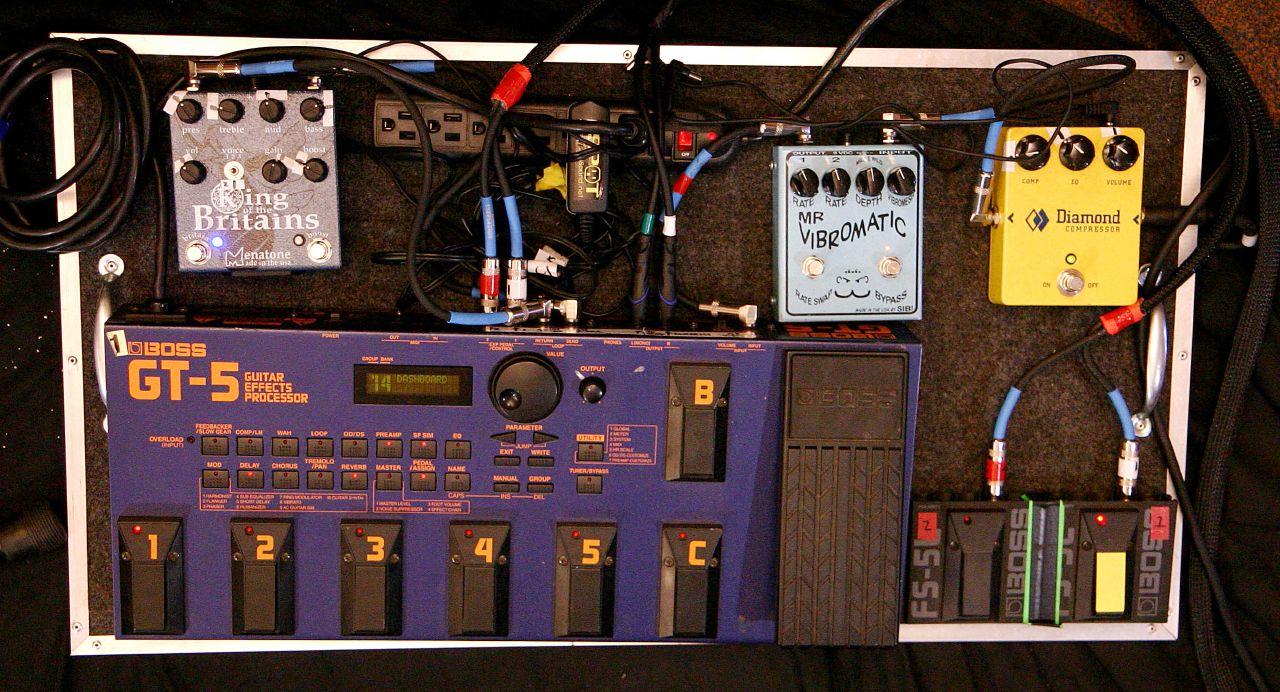
Johnny Marr's (Modest Mouse, former Smiths guitarist) pedal setup
I watched Wacky Racers all the time as a kid, now they have real versions.

Treebeard? 


Two Guys Standing on an Incline


The Budget Mess: A Crisis in Legitimacy

by Sheldon Richman, April 26, 2011 - The Future of Freedom Foundation

Reality has finally caught up with the ruling elite, and its members inside and outside government are in a panic. They have freely spent the taxpayers’ money for generations building a corporatist warfare-welfare state, and when that wasn’t enough to finance their projects, they borrowed just as freely. For a long while it paid off handsomely in power and wealth, but now even they realize things can’t go on as they have for so long.

This fiscal year the government will spend $3.8 trillion, more than 40 percent of which will be borrowed. In the last full year before the current administration came to power, outlays were just under $3 trillion. Earlier this year, the Office of Management and Budget estimated that under President Obama’s budget, spending in 2016 will rise to $4.5 trillion. The FY 2008 deficit stood at less than half a trillion dollars — an astounding amount in its day. It hit a record $1.88 trillion in 2009. According to administration estimates, the deficit won’t fall below a trillion dollars until 2013, then will begin rising again 2016.

Deficit projections of course depend on assumptions about economic growth. When the public is clamoring for action on the deficit, officials have an incentive be unrealistically optimistic.

Also, budget discussions overflow with opportunities for deceit. As we saw with the recent compromise over the 2011 continuing resolution, in Orwellian Washington a spending cut is really an increase.

Deficit spending has had a deep structural effect on America’s political economy. In mid April the national debt was $14.3 trillion, about 98 percent of GDP. Last year the administration’s Mid-Session Budget Review projected the debt would hit 100 percent of GDP by 2012, and would double by 2020, exceeding 100 percent of GDP for the rest of the decade.

To see the yearly budget impact of that, in 2010 the U.S. government paid more than $400 billion in interest, a little less than the Medicare budget — the fourth largest budget item. This year the government is on track to exceed that amount. It is estimated that in 2019 the government will pay $700 billion in interest.

Obama’s profligate spending should not lead us to think he succeeded a budget hawk in office. On the contrary, the eight years of George W. Bush saw outlays go from $1.9 trillion to nearly $3 trillion and the debt go from $5.7 trillion to $10.7 trillion.

Virtually everyone agrees that the current situation is unsustainable. It’s easy to see why the ruling elite think so. They are concerned that if some control is not achieved over spending, by 2025 all revenues collected by the national government will be swallowed up by Medicare, Medicaid, Social Security, and interest on the debt. But then how will the politicians do all the other things they do: subsidizing pet projects (many of which are carried on by well-connected businesses); policing the globe for political and economic reasons (fighting overt and covert wars and channeling billions to the military-industrial complex); and generally centralizing power in Washington, D.C.?


The regime faces a double crisis. The first is fiscal: Unless it does something, it won’t have the money to maintain the gravy train. The other is a crisis in legitimacy. People are catching on that the borrowing power hides the cost of government, imposing burdens on future generations. If politicians don’t appear to fix things their careers are in jeopardy.

Hence, Budget Chairman Paul Ryan’s House-backed meager “Path to Prosperity” and Obama’s expression of support for modest budget cuts (plus tax increases on the wealthy). But both approaches, whatever their differences in detail and style, have one overriding feature in common: Both aim to preserve the corporatist warfare-welfare state. Neither represents a serious rethinking of the role of government. In the end, there will be little change, no matter who prevails.

New CA Bill Would Fine Banks $20,000 for Each Forclosure

Wall Street's predatory lending practices are responsible for the mess we're now in. Why make severe cuts to state budgets even as Wall Street keeps making bank?
By Peter Dreier, AlterNet
Posted on May 2, 2011

The epidemic of foreclosures that began in 2008 has been devastating America’s families, communities and the state economy.

Nowhere is this more true than in California, where one in five U.S. foreclosures has taken place. Since 2008, more than 1.2 million Californians have lost their homes, and the number is expected to exceed 2 million by the end of next year. More than a third of California homeowners with a mortgage already owe more on their mortgages than their homes are worth.

As a result, home values in the state are estimated to plummet by $632 billion. That translates into a loss of more than $3.8 billion in property taxes. One foreclosed home in a neighborhood can reduce property values for the rest of the houses in the neighborhood, and a cluster of foreclosed houses compounds the physical, economic, and social devastation.

And just as local governments are starving for revenues, they are asked to deal with the increased costs - estimated at $17.4 billion over four years - caused by the foreclosure mess. These include public safety, maintenance of abandoned and blighted properties, inspections, trash removal, sheriff evictions, unpaid water and sewer charges, and the provision of emergency shelter.

We can't solve California's fiscal disaster without addressing the foreclosure crisis. It doesn't make sense to make severe cuts to state and local budgets only to allow Wall Street banks and their overpaid CEOs to drain billions more from our states. The banks created the housing crisis with toxic lending practices and they need to be part of this solution.

A bill sponsored by Assemblyman Bob Blumenfield (Democrat, Los Angeles) -- the Foreclosure Mitigation Fee (AB 935), which is currently going through legislative hearings - would require banks to pay their share of foreclosure costs. Backed by a broad coalition of consumer, community and labor groups, the bill would impose a $20,000 fine on banks for each foreclosure.

The $12 billion revenue over next two years would go entirely to local communities in order offset the multiple costs borne by our neighborhoods because of foreclosures and shared between public safety, public education, local governments, redevelopment activities and small businesses.

Los Angeles County alone will face an estimated 381,461 foreclosures through 2012, costing local governments $918 million in lost property taxes and $2.8 billion to pay for the problems. Riverside and San Bernardino counties have been particularly hard hit by the foreclosure earthquake. But no county, city, or small town in California has been spared the devastation.

Indeed, the foreclosure tsunami and the housing market crash are the primary causes of the severe budget crisis facing California's municipalities and counties, forcing local officials to slash services and lay off tens of thousands of employees.

But many Californians are asking, why should taxpayers and communities have to pick up the tab, and face such hard times, for a crisis they didn't cause? They - and the families caught in the maelstrom - are the victims of this human-made disaster.

And let's be frank. Wall Street's reckless and predatory lending practices were responsible for the mess we're now in. Bankers pushed homeowners into high-cost loans they couldn't afford. They engaged in deceptive and often illegal activities, like not informing consumers that they qualified for conventional loans, tricking them into more costly and risky subprime mortgages.

Wall Street banks bundled these risky loans into "mortgage backed securities" that were given the seal-of-approval of ratings agencies (Moody's and Standard & Poor), and then sold them to foreign governments, pension funds and other unwitting investors.

When the scam imploded and Wall Street's bets went sour, the bankers were bailed out by the taxpayers. Goldman Sachs got $53 billion in bailout funds; Bank of America received $230 billion; Wells Fargo pocketed $43 billion. Meanwhile, the top executives got outrageous compensation packages. Last year, for example, Wells Fargo CEO John Stumpf received $17.1 million in salary and bonuses.

But California residents lost billions in savings in their homes, neighborhoods were devastated, businesses crashed and laid off employees, and local governments spiraled downward into fiscal hell.

The largest banks - the Bank of America, JP Morgan Chase, Wells Fargo, and Citigroup - are among the top lenders foreclosing on California families. Not surprisingly, these are among the banks that have been flooding Sacramento with political cash in order to thwart legislation designed to make them - the real culprits of the foreclosure massacre - pay for the suffering they've caused.

Since 2007, the financial industry has spent $70 million to buy political influence in the state Capitol - that's nearly $50,000 per day. Almost $46 million went for campaign contributions to candidates and elected officials, while more than $23 million went for lobbying expenses.

Six banks alone – B of A, JP Morgan Chase, Citigroup, Wells Fargo, Goldman Sachs and Morgan Stanley -- have invested more than $9 million in political cash. Lobbyists and industry associations, like the California Bankers Association, the California Independent Bankers Association, and the California Mortgage Bankers Association, have doled out $4.5 million in what some call our system of legalized bribery.

The key organizations behind this pro-consumer bill include the Alliance of Californians for Community Empowerment, the Service Employees International Union, the California Reinvestment Coalition, the community organizing group PICO California as well as the California Council of Churches, California Association of Retired Americans, California Labor Federation, California Nurses Association, the Center for Responsible Lending, and the State Building and Construction Trades Council. They correctly believe that California's economy can't recover without addressing the cost of the foreclosure crisis.

AB 935 doesn't solve the entire foreclosure calamity. But it does have several very positive aspects. First, it may create an added incentive for banks to modify more loans so that families can remain in their houses. So far, most banks have pushed the pause button when it comes to renegotiating troubled mortgages with owners who could lose their homes through no fault of their own. Second, the revenues collected from the foreclosure fee will reimburse local governments for some (though certainly not all) of the costs our communities are now facing from foreclosures.

Until we make the banks pony up for the devastation they've caused, the taxpayers are left holding the bag, subsidizing the reckless behavior of excessively paid top bank officers, who threw a huge party for themselves and are making the rest of us clean up their mess. That’s not shared sacrifice.

Right now, Californians are bearing the full expense of the foreclosure mess. Shouldn’t the big banks be part of solution to the problem they helped create?

Delusion and Denial Part 1: Work, Jobs, Careerism, Charity

Sunday, May 1, 2011 by CommonDreams.org
by Kristine Mattis
By the way, if anyone here is in advertising or marketing – kill yourself.
---Bill Hicks
I am no aficionado of Superman, but I must admit, I am one of “Seinfeld.” With reference to the latter and by default, the former: Everything around me these days makes me feel like I am living in Bizarro World. Everything is exactly the opposite of what it should be. To quote fictional Jerry, “…In the backwards Bizarro World….Up is down. Down is up. He says hello when he leaves, goodbye when he arrives.” The only problem is that unlike in “Seinfeld” this Bizarro World is far from hilarious.

I find nothing much less bizarre than our notions of jobs and work. Because we westerners premise every aspect of our lives on money and the economy, we are all (but a very select elite few) wage slaves who have become totally and utterly dependent on working for an income in order to pay for our basic necessities of life. Part of the problem is that we have (purposefully) lost most of our previously held skills. Renaissance men and women and people who possess wide-ranging abilities are less valued than those who focus on a particular specialization. And of course, by specializing, we become more reliant upon the corporate-controlled structure of production to acquire our basic needs.

Yet, as we can readily know from non-western, indigenous cultures, these basic necessities are not predicated on money. In reality, human beings as a particular animal species do not need money to live. So, why do we rely on this monetary system, dominated by corporate capitalism? We can give excuses like this way of life enables technological, intellectual, and creative “progress” that could not be accomplished otherwise. That is a nice conceit. The premise is based on the false assumption that our modern way of life has led to more leisure time during which we do not have to work for basic necessities and can accomplish feats of intellectual, creative, and technological marvel. The truth is we have less leisure time than we used to, and most of it is spent observing and imbibing the spectacle of bread and circuses.

We can also pretend that we all have very valuable roles to play in our society, and that working hard in these roles is virtuous. But our jobs are no longer (if they ever were) for the benefit of us, our communities, our society; they are for the benefit of the corporate elite. We are merely their dutiful servants, and for the most part, the more success we have in our job, the more likely we are to be an unethical, immoral drone, generating widespread damage to our world.

In my youth, many children aspired to pretty altruistic professions like firefighting or teaching. They recognized, however unconsciously, the moral imperative to mix productivity with service. Yet, by the time we reached high school, pragmatism and careerism reigned supreme.

Most people do not bother with the “service” aspect of their careers. And who could blame them? From a very young age, what is presented as of principal concern is making a good living to provide for you and your family - or better yet, making lots and lots of money as fast as possible. How that is accomplished, and what harm may be done to other people, communities, or society in doing so is wholly and utterly neglected.

Of course, many people have fewer career choices than others. They have no opportunities in terms of attending college, let alone graduate/professional schools. In some cases, these marginalized peoples turn to crime because they see it as their only means of making that decent living. But in reality, the crimes of the marginalized members of society, such as the drug gangs in inner cities throughout the U.S., differ little from the crimes committed by people who work for multinational corporations in the U.S. The only subtle differences are that gangs kill far fewer people directly while corporations kill far more people indirectly, and that gang crimes are prosecutable while corporate crimes are completely legal. (David Simon beautifully, poignantly, and realistically portrays this parallel yet inequitable work structure in his magnificent series “The Wire.”) In both instances, concern about self trumps concern about community and others.

This self-concern is the primary objective given to work today. We are constantly reminded about the virtues and rewards of hard work. We work mainly to amass wealth for ourselves and our families – or, more likely nowadays, to try to maintain the basics needed to survive. However, not only is this self-concern an illusion promulgated by corporate interests to feed our egos and make us feel empowered as indentured servants, the value of work in and of itself is a fallacy. Jobs do not have inherent value; indeed many, if not most, do much more harm than good.

When I was an undergraduate at a Roman Catholic university, the Jesuit influence in our education held both academics and service in high esteem. Ironically, while the majority of undergraduates at my university were on pre-professional tracks – going into law, medicine, or business – no one thought to ponder the service of these professions. Careerism there, and on every college campus dominates. What service meant to our school was charity and volunteerism. But what good is charity when your career necessitates the need for the charity in the first place? This idea is rarely thought, much less spoken. Hard work, goal-setting, and dedication to a successful outcome is viewed as worthy of honor, even if that outcome is unethical, immoral, or of little to no qualitative value whatsoever.

To rationalize our self-absorption and selfishness, we engage in charity/volunteering. So what we are left with is one step up, two steps back for society. Charity merely signifies an excuse for injustice and demonstrates the failure of a society as a whole.

In graduate school, this careerism flourishes as well. Few conversations are had about the value and worthiness of research. What are more often discussed are the criteria necessary to gain prominent positions in the future. Time spent conducting studies of quality geared toward the betterment of our society or of our environment is secondary to time spent just getting a study – any study – done. Quantity of research and publication is far more important than quality, and success is measured in terms of how much is accomplished, not how valuable those accomplishments are.

In Hollywood, for actors and film/television crews, being booked on a job is seen as a success. Nearly everyone in these fields takes whatever jobs they land, as these jobs are scarce and competition is fierce. Until you have “made a name for yourself” or made certain connections, it is all the same to land work on a creatively innovative movie or an offensive reality show, a cerebral satirical program or a broad mindless comedy, a politically and culturally educational film or a porn flick. (The latter is sometimes the sole criterion for turning down a job.). Not too much is different in other fields, either.

While people fortunate enough to have college educations frown upon working at places like McDonalds because of the lack of prestige, non-living wage, repetitive mindless work, and lack of benefits, few mention problems with McDonalds’ direct connection to the proliferation of agribusiness and destruction of family farms, of factory farming and torture of livestock animals, or of environmentally destructive farming practices and commodification/monopolization of seeds.

The fact that corporate business models are revered as the lone models to emulate in each and every career field now only aggravates the problem with work. For example, when I (not proudly) worked for a short time at a large bookstore chain, I was paid barely over minimum wage and had no benefits. The company attempted to spew propaganda about being a work “family,” but did not even attempt to pay a livable salary. When their quarterly profits turned out to be less than anticipated, they fired a third to half the workforce and had the rest of us fill in - i.e., take on more responsibilities – for no more pay. Mind you, profits were garnered handily by the corporation, but the yield was not high enough.

Contrast that job with the time I spent working for a local sandwich shop. This business had limited hours, not because it wouldn’t have profited from being open longer, but because the owners preferred time spent at home with family to time spent making more money. They did not advertise and relied only on word of mouth, so that they could keep their business at a manageable scale to enable their modest but comfortable lifestyle. Despite the popularity of their business, they did not want unlimited growth and unlimited wealth for its own sake. They paid me almost twice the minimum wage to be a cashier, order assembler, and delivery person because they valued me as worker and did not feel the need to pocket the extra cash they could have taken for themselves. They even respected my vegetarianism and allowed me to stay clear of the meat in their sandwiches! Indeed, theirs was a vastly successful and useful business following an anti-corporate model, which exemplified how you can make a very good living, treat your workers well, and remain successful on your own terms rather than society’s.

But that sandwich business remains a huge anomaly. And though I could probably find small ethical quandaries in that job as well, they were minimal compared to most other jobs that currently exist.

The Hippocratic Oath taken by physicians, commonly translated as “do no harm,” rarely enters into the careerist picture for any workers – not even for doctors. There is a reason that we experience a decrease in deaths when hospitals temporarily shut down, and why environmental conditions tend to improve when the economy is bad. Our work – even in those professions that purport to be of service - is often harmful (at the very least) in the way it is currently conceived and conducted according to corporate principles.

The fact remains that we seldom question the corporate model of efficiency in work, in which the most amount for the least cost and/or least amount of time is the only value. Nor do we question the qualitative, ethical, or moral value of the work we do. Occasionally, people quit or refuse to participate when direct effects of harm are obvious in their job, but more often than not, our jobs produce tremendous amounts of indirect harm for which we remain complacent and complicit.

So, while unions currently remain one of the few means of protecting us workers from completely being enslaved, they are but an interim piece in the sustainability of working in general.

We need to rethink all the jobs we do, and look toward creating alternate paradigms of “making a living.” We should stop rationalizing our jobs with excuses that we are “just earning a living,” and “just paying the bills”; we should make the ethical and moral implications of our work of paramount importance. Furthermore, we need to reinvigorate local connections, renew sharing and bartering, and relearn basic skills to help us become less reliant on corporations to provide the necessities we need in life. We need vibrant local communities to help one another outside of the corporate structure, rather than compete for the scraps that corporations throw our way as if we are vermin.

And while we vigorously fight the austerity measures being forwarded by our governments - which do nothing more than redistribute wealth from the people with the least to the people with the most – we should reconsider voluntary austerity in our own personal lives.

My partner’s beloved uncle, may he rest in peace, was an icon to emulate in this regard. Not only was he a vibrant member of the community at large, giving and sharing with his neighbors, he was a college professor who voluntarily worked part-time to enable the hiring of another worthy employee. His austerity allowed for another’s prosperity.

Through a qualitative reassessment of our work values and our jobs, in addition to a reinvigoration of local communities and camaraderie, and a re-education in basic life skills, we may help allow for the prosperity of both people and the planet. Through the rationalization of careerism, corporate efficiency, and self-concern in work, we foster individualization in our society and ensure its inevitable collapse.

Medicare and the Usual Suspects

Hatchet Jobs By the Washington Policy Gang
By DEAN BAKER

The film Casablanca features one of the greatest moments in movie history. With Humphrey Bogart standing with a smoking pistol over the body of the dead Gestapo major, Claude Rains, in the role of the French colonel tells his troops: "the major has been shot, round up the usual suspects."

Unfortunately the Washington policy gang is busy following Claude Rains' instructions. The nation is drowning in endless accounts of how the huge deficit will sink the economy and the country. These accounts invariably feature stories of a Congress addicted to spending and a nation that wants government benefits that it doesn't want to pay for.

This story has nothing to do with reality as all budget analysts know. The explosion of the budget deficit in the last three years is a response to the plunge in private sector demand following the collapse of the housing bubble. If the budget deficit were smaller, we would simply have less demand and fewer jobs.

Paul Ryan did his best to lay out the long-term story as clearly as possible with his plan to privatize Medicare. The analysis by the non-partisan Congressional Budget Office (CBO) shows that Ryan's plan would hugely increase the cost of health care to seniors. Under the Ryan plan a Medicare equivalent policy is projected to cost almost half of a median 65-year old retiree's income by 2030. It would soon exceed the income of most retirees as health care costs outpace income growth.

However most of the additional burden projected for retirees is not the result of cost shifting from the government. The vast majority of the additional burden that the CBO projected for retirees comes from the higher cost of private insurance compared with the government-run Medicare system. The additional cost as a result of adopting Ryan's privatized system is more than $30 trillion over Medicare's 75-year planning horizon.

To put this in perspective, CBO's projected increase in the cost of buying Medicare equivalent insurance policies through the private sector is roughly six times the size of the projected Social Security shortfall. The projected shortfall in Social Security has sent thousands of politicians screaming about devastating burden on our children. How would we describe something that is six times as large as this devastating burden, a sum that is just under $100,000 for every man, woman, and child in the country?

The CBO analysis should have led every budget reporter in the country to point out the enormous cost savings that Medicare provides relative to private insurers. They should have been pointing out that the country will face an enormous burden from exploding health care costs if it does not fix its health care system. And, that the Medicare system is an important part of the solution.

However it seems that no budget reporters – not a single reporter at the New York Times, Washington Post, Wall Street Journal or any other major news outlet – picked up on this central point in the analysis from the CBO. Instead they talked about the plan as a question of whether people preferred a government guarantee or would rather have individuals rely on themselves and the market to obtain health care in their old age. The $30 trillion price tag in the form of added waste was altogether missing in the reporting.

Perhaps this should not be surprising. After all, reporters at major news outlets are better known for what they miss than what they catch. The vast majority of them bought President Bush's nonsense about Saddam Hussein's weapons of mass destruction in the period leading up to the Iraq War. While the Bush administration's accounts were presented with due solemnity, the voice of skeptics was rarely heard.

Similarly, there was almost no reporting on the $8 trillion housing bubble, the collapse of which has given us the worst economic downturn since the Great Depression. Instead we were given the assurance from Alan Greenspan, Ben Bernanke and the rest that everything was OK. Instead the news outlets told us to worry about the budget deficit – back when it was just 1.0 percent of GDP.

Incredible as it may seem, the national press corps is almost completely ignoring a report from the government's main source of budget projections. Rather than telling people that the Ryan plan to privatize Medicare means transferring tens of trillions of dollars from taxpayers and Medicare beneficiaries to private insurers and the health care industry, they spread drivel about the issue being a matter of whether people like the government or the market.

This fits the usual suspects story. The choices are between those who prefer the government and those who prefer the market. But as every viewer of Casablanca knows, the real choice is between those who want to redistribute tens of trillions of dollars to insurance and health care industry and those who don't. Preferences for the government or the market have nothing to do with it.

We're in a Depression--Economic Terror Wins the Day

Meanwhile, Back in the Homeland
By MIKE WHITNEY

On Thursday, Gallup reported that "More than half of Americans say the U.S. economy is in a recession or a depression despite official data that show a moderate recovery.....The April 20-23 Gallup survey... found that only 27 percent said the economy is growing. 29 per cent said the economy is in a depression and 26 per cent said it is in a recession, with another 16 per cent saying it is "slowing down," Gallup said." 

55 percent of Americans believe we are in a depression or a recession a full 5 years after the housing bubble burst (2006) and 3 years after Lehman Brothers collapsed. (2008)  Gallup's findings jibe with other surveys that indicate growing desperation among the public. For example,  Globescan found that a large number of Americans have given up on free-market capitalism altogether, while other polls show dwindling confidence in government institutions, the Federal Reserve, the Congress, the judicial system and the media.

This is from the New York Times:
"Americans are more pessimistic about the nation’s economic outlook and overall direction than they have been at any time since President Obama’s first two months in office, when the country was still officially ensnared in the Great Recession, according to the latest New York Times/CBS News poll....
Capturing what appears to be an abrupt change in attitude, the survey shows that the number of Americans who think the economy is getting worse has jumped 13 percentage points in just one month.....
Frustration with the pace of economic growth has grown since, with 28 percent of respondents in a New York Times/CBS poll in late October saying the economy was getting worse, and 39 percent saying so in the latest poll.  ("Nation’s Mood at Lowest Level in Two Years", Poll Shows, New York Times)
No amount of "Sunny Jim" propaganda has been able to change the public's belief that things are getting worse. And things are getting worse, although not if one happens to be a hedge fund manager or one the lucky few at Goldman Sachs. Then, things have never been better. The Fed has flooded the market with low interest jet-fuel and All's Well in Wall Street's Bubbleworld. But if you're one of the 3 million  less fortunate working slobs; you're probably hanging on by your fingernails hoping like hell that you  haven't hit your credit card limit when you reach the checkstand at the grocery store or you'll have to slither red-faced for the exit.  Here's a quote from the Wall Street Journal which explains what the Fed's been up to:
"Starting essentially last year on Aug. 27—the day Fed Chairman Ben Bernanke laid the groundwork for QE2—investors have flocked to riskier investments. Since Aug. 26 the Standard & Poor's 500-stock index has gained 28 per cent. Smaller, generally riskier stocks have done even better, with the small-company Russell 2000 Index gaining 41 per cent. ...
“Corporate bonds have rallied and commodity prices have risen sharply, too. Gold is up 22 per cent since Aug. 26 and silver is up 143 per cent, both hitting nominal record highs. Even subprime mortgage securities, which were largely blamed for causing the financial crisis, are back in demand." ("Fed Searches for Next Step", Wall Street Journal)
Up, up and away. Everything's up. The S&P's up 28 per cent, the Russell's up 41 per cent, and there's even goldrush on mortgage-backed securities.   Thanks to  Bernanke loosey-goosey monetary policies, the markets are soaring while workers languish in a protracted slump barely able to make ends meet. The disparity between rich and poor is greater now than anytime since the Gilded Age and there's no sign of a reversal. The rich get richer while everyone else slides further into pauperism. 

Meanwhile, the dollar continues its downward trek eroding consumers’ buying power and forcing working people to decide between filling the gas-tank or fixing little Jenny's overbite. Most folks opt for the gas, at least then they can totter off to the factory on Monday for another week hump-busting drudgery. Here's more from the Wall Street Journal:
"The dollar fell to multi-year lows against most major currencies Thursday, undermined by an unpalatable mix of loose U.S. monetary policy and a fiscal imbalance that made investors reluctant to hold the battered greenback.....the primary negative for the dollar has been the Federal Reserve's loose monetary policy. In a market where investors are gravitating to higher-yielding assets, the dollar has been jettisoned by traders who appear more comfortable holding euros--even though Europe is struggling to contain a debt crisis that has raged on for nearly two years.
"The driver is (U.S.) monetary policy and the subtext is fiscal policy. We know there's a train-wreck coming and it makes people uneasy," said Andrew Busch, global currency strategist at BMO Capital Markets." ("Dollar Tumbles With US Monetary, Fiscal Policy In Focus", Wall Street Journal)
"Train-wreck"; that's aptly put. The flagging greenback is causing some real pain for households that find themselves less able to save or pay-down the debts they inherited when the bubble burst and their housing equity dropped into the red. Now they're paying steeper prices at the pump and the grocery store, leaving zero discretionary income for anything else, including medical emergencies. If Sammy falls off the jungle gym at school and snaps his clavicle, it all gets piled onto the VISA, that is, unless you're over your limit. Then you're outta luck.

But the real problem is jobs. There just aren't any, and no one in Washington wants to do a damn thing about it. Here's a clip from Friday's column by Paul Krugman:
"Last month more than 14 million Americans were unemployed by the official definition... Millions more were stuck in part-time work because they couldn’t find full-time jobs. And we’re not talking about temporary hardship. Long-term unemployment, once rare in this country, has become all too normal: More than four million Americans have been out of work for a year or more. ...
“It all adds up to a clear case for more action. Yet Mr. Bernanke indicated that he has done all he’s likely to do. Why?" ("The Intimidated Fed", Paul Krugman, New York Times)
Yes, why? If Bernanke's bond buying program (QE2) was such a rousing success, as Bernanke claims, then why not crank 'er up  one more time and put people back to work? Is that too much to ask? There are 14 million people unemployed, 42 million on food stamps, the homeless shelters are bulging, foreclosures are tipping 2 million per year, and the majority of people believe we're still in a Depression. Do you think we can get a hand here, Benny?

Do you have any idea how bad unemployment really is? Take a look at this from Calculated Risk:
"There are currently 130,738 million payroll jobs in the U.S. (as of March 2011). There were 130,781 million payroll jobs in January 2000. So that is over eleven years with no increase in total payroll jobs.
“And the median household income in constant dollars was $49,777 in 2009. That is barely above the $49,309 in 1997, and below the $51,100 in 1998......
“There are currently 7.25 million fewer payroll jobs than before the recession started in 2007, with 13.5 million Americans currently unemployed. Another 8.4 million are working part time for economic reasons, and about 4 million more workers have left the labor force. Of those unemployed, 6.1 million have been unemployed for six months or more." ("More than a Lost Decade", Calculated Risk)
No new jobs in a decade!  No one is hiring, wages are frozen, and the mushrooming current account deficit provides $500 billion per year to create new jobs overseas. And all Obama wants to do is talk about is slashing the deficits. 

But what about the jobs that are left? At least those are good paying jobs, right? I mean, at least a guy can put food on the table and pay the bills, right?

Not so.

Right now, roughly 65 million of the 130 million jobs in the country pay between $55,000 to $60,000 per year. In other words, they provide a "living wage", so that families don't have to scrape by in abject poverty. The other 65 million people are muddling by with part-time jobs or low-wage donkeywork that pays a lousy  $20,000 to 25,000 per year.

So, here's the deal:  (According to David Stockman) Since 2007, we've lost 6.5 million of these good paying jobs, but added zero during that same period. All the growth has been in low wage jobs.

Stockman says, "For the last decade we have lost 10 per cent of the middle income economy and, so far in this alleged recovery, we've not replaced one of the 6.5 million middle class jobs we've lost..... We've got a real income distribution problem in this economy, and it's getting worse, not better." (David Stockman: Lack of Middle Class Jobs plus Low Growth equals "Alleged Recovery", Yahoo Finance)

A former Reaganite talking about "income distribution"?!?  Now there's a shocker. 

Bottom line: The good-paying jobs are being shipped overseas pushing the middle class to the breaking point.  And the situation is getting worse, because now even the low paying jobs are getting harder to find. Take a look at this, from Bloomberg:
"McDonald’s and its franchisees hired 62,000 people in the U.S. after receiving more than one million applications, the Oak Brook, Illinois-based company said today in an e-mailed statement....." (Bloomberg News)
One million applications to flip burgers. That says it all.

So, even the most servile, demeaning jobs are getting scarcer, which is more proof that we're in a Depression. At the same time, unemployment claims have started inching higher again casting more doubt on the so-called "recovery". New unemployment filings  jumped 25,000 in the third week of April. Businesses are cutting costs to offset the rise in commodities prices which is hurting profits. Once again, claims have tipped the benchmark 400,000 for three weeks straight signaling more softness in the economy.

This from the Wall Street Journal:
"Roughly 1 million people in the U.S. were unable to find work after exhausting their unemployment benefits over the past year, Labor Department data released Thursday suggest....
“About 8.2 million idled workers were receiving unemployment benefits as of the week ended April 9, the Labor Department said in its weekly jobless claims report. This compares with about 10.5 million individuals at the same time last year, resulting in a decline of roughly 2.3 million people." ("One Million exhausted jobless benefits in past year", Wall Street Journal)
This is the cruelest blow of all, and also the most misleading. On the one hand, people who lost their jobs through no fault of their own are being tossed off the unemployment rolls and into a world of grinding poverty. While, on the other hand, their loss of benefits lowers the unemployment numbers, which makes it look like Obama's "do nothing" policy is actually working. So, it's a double whammy.

Finally, this last note on wages from Clinton-era Labor Secretary Robert Reich:
"The most significant economic news from the first quarter of 2011 is the decline in real wages..... In order to keep the jobs they have, millions of Americans are accepting shrinking paychecks. If they’ve been fired, the only way they can land a new job is to accept even smaller ones.
The wage squeeze is putting most households in a double bind. Before the recession, they’d been able to pay the bills because they had two paychecks. Now, they’re likely to have one-and-a half, or just one, and it’s shrinking.....
America’s jobless recovery is becoming a wageless recovery. That puts the odds of another recession greater than the risk of inflation." ("The wageless recovery", Robert Reich's blog)
Did someone say "Double dip"?

Wages are shrinking, jobs are scarce, unemployment benefits are running out, and the greenback is plunging. Is there really any doubt that we're in a Depression?

Sunday, May 1, 2011

"Bin Laden Dead," declares President Obama

 (Trivia note: on this date in 1945, Hitler was found dead of an apparent suicide in Berlin.)

Osama bin Laden, Al-Qaeda Leader & Mastermind of 9-11, Killed by US Forces in Pakistan
By PETER BAKER and HELENE COOPER/May 1, 2011/New York Times

WASHINGTON — Osama bin Laden, the mastermind of the most devastating attack on American soil in modern times and the most hunted man in the world, was killed in a firefight with United States forces in Pakistan on Sunday, President Obama announced.

In a dramatic late-night appearance in the East Room of the White House, Mr. Obama declared that “justice has been done” as he disclosed that American military and C.I.A. operatives had finally cornered the Al Qaeda leader who had eluded them for nearly a decade and shot him to death at a compound in Pakistan.

“For over two decades, Bin Laden has been Al Qaeda’s leader and symbol,” the president said in a statement carried on television around the world. “The death of bin Laden marks the most significant achievement to date in our nation’s effort to defeat Al Qaeda. But his death does not mark the end of our effort.” He added: “We must and we will remain vigilant at home and abroad.”

The death of Mr. Bin Laden is a defining moment in the American-led war on terrorism. What remains to be seen is whether the death of the leader of Al Qaeda galvanizes his followers by turning him into a martyr, or whether it serves as a turning of the page in the war in Afghanistan and gives further impetus to the Obama administration to bring American troops home.

The death of Mr. bin Laden came nearly 10 years after Al Qaeda terrorists hijacked four American passenger jets and crashed them into the World Trade Center in New York, the Pentagon outside Washington and the countryside of Pennsylvania. Late Sunday night, as the president was speaking, cheering crowds gathered outside the gates of the White House shortly before midnight as word of his death began trickling out, waving United States flags, shouting in happiness and chanting “USA! USA!”

“This is important news for us, and for the world,” said Gordon Felt, president of the Families of Flight 93, the airliner that crashed into the Pennsylvania countryside after passengers fought with hijackers. “It cannot ease our pain, or bring back our loved ones. It does bring a measure of comfort that the mastermind of the September 11th tragedy and the face of global terror can no longer spread his evil.”

Mr. bin Laden escaped from American troops in the mountains of Tora Bora, Afghanistan, back in 2001 and although he was widely believed to be in Pakistan, American intelligence had largely lost his trail for most of the years that followed until picking up a fresh trail last August. Mr. Obama said in his national address on Sunday night that it took months to firm up that information and last week he determined it was clear enough to authorize a secret operation in Pakistan.

The forces attacked the compound in what Mr. Obama called a “targeted operation” that left Mr. bin Laden dead. “No Americans were harmed,” Mr. Obama said. “They took care to avoid civilian casualties. After a firefight they killed Osama bin Laden and took custody of his body.”

President Obama noted that the operation that killed Mr. Bin Laden was launched with the cooperation of Pakistani officials, but the fact that Mr. Bin Laden killed in an deep inside Pakistan was bound once again to raise questions about just how much Pakistan is willing to work with the United States, since Pakistani officials denied for years that Mr. Bin Laden was in their country.

The capture of Mr. Bin Laden comes as relations between the United States and Pakistan have fallen to their lowest point in memory as differences over how to fight al Qaeda linked militants became clearer.

The chairman of the joint chiefs of staff, Adm. Mike Mullen, publicly criticized the Pakistani military two weeks ago for failing to act against extremists allied to al Qaeda who shelter in the Pakistani tribal areas of North Waziristan.

The United States has supported the Pakistani military with nearly $20 billion since 9/11 for counter terrorism campaigns but American officials have complained that the Pakistanis were unable to quell the militancy.

Last week, the head of the Pakistani army, Gen. Ashfaq Pervez Kayani told a Pakistanis that Pakistan had broken the back of terrorism in Pakistan, a statement that was received with high skepticism by American officials.

++++++

THE PRESIDENT: Good evening. Tonight, I can report to the American people and to the world that the United States has conducted an operation that killed Osama bin Laden, the leader of al Qaeda, and a terrorist who's responsible for the murder of thousands of innocent men, women, and children.

It was nearly 10 years ago that a bright September day was darkened by the worst attack on the American people in our history. The images of 9/11 are seared into our national memory -- hijacked planes cutting through a cloudless September sky; the Twin Towers collapsing to the ground; black smoke billowing up from the Pentagon; the wreckage of Flight 93 in Shanksville, Pennsylvania, where the actions of heroic citizens saved even more heartbreak and destruction.

And yet we know that the worst images are those that were unseen to the world. The empty seat at the dinner table. Children who were forced to grow up without their mother or their father. Parents who would never know the feeling of their child's embrace. Nearly 3,000 citizens taken from us, leaving a gaping hole in our hearts.

On September 11, 2001, in our time of grief, the American people came together. We offered our neighbors a hand, and we offered the wounded our blood. We reaffirmed our ties to each other, and our love of community and country. On that day, no matter where we came from, what God we prayed to, or what race or ethnicity we were, we were united as one American family.

We were also united in our resolve to protect our nation and to bring those who committed this vicious attack to justice. We quickly learned that the 9/11 attacks were carried out by al Qaeda -- an organization headed by Osama bin Laden, which had openly declared war on the United States and was committed to killing innocents in our country and around the globe. And so we went to war against al Qaeda to protect our citizens, our friends, and our allies.

Over the last 10 years, thanks to the tireless and heroic work of our military and our counterterrorism professionals, we've made great strides in that effort. We've disrupted terrorist attacks and strengthened our homeland defense. In Afghanistan, we removed the Taliban government, which had given bin Laden and al Qaeda safe haven and support. And around the globe, we worked with our friends and allies to capture or kill scores of al Qaeda terrorists, including several who were a part of the 9/11 plot.

Yet Osama bin Laden avoided capture and escaped across the Afghan border into Pakistan. Meanwhile, al Qaeda continued to operate from along that border and operate through its affiliates across the world.

And so shortly after taking office, I directed Leon Panetta, the director of the CIA, to make the killing or capture of bin Laden the top priority of our war against al Qaeda, even as we continued our broader efforts to disrupt, dismantle, and defeat his network.

Then, last August, after years of painstaking work by our intelligence community, I was briefed on a possible lead to bin Laden. It was far from certain, and it took many months to run this thread to ground. I met repeatedly with my national security team as we developed more information about the possibility that we had located bin Laden hiding within a compound deep inside of Pakistan. And finally, last week, I determined that we had enough intelligence to take action, and authorized an operation to get Osama bin Laden and bring him to justice.

Today, at my direction, the United States launched a targeted operation against that compound in Abbottabad, Pakistan. A small team of Americans carried out the operation with extraordinary courage and capability. No Americans were harmed. They took care to avoid civilian casualties. After a firefight, they killed Osama bin Laden and took custody of his body.

For over two decades, bin Laden has been al Qaeda's leader and symbol, and has continued to plot attacks against our country and our friends and allies. The death of bin Laden marks the most significant achievement to date in our nation's effort to defeat al Qaeda.

Help fight ignorance. Click here for free Truthout email updates.
Yet his death does not mark the end of our effort. There's no doubt that al Qaeda will continue to pursue attacks against us. We must –- and we will -- remain vigilant at home and abroad.

As we do, we must also reaffirm that the United States is not –- and never will be -– at war with Islam. I've made clear, just as President Bush did shortly after 9/11, that our war is not against Islam. Bin Laden was not a Muslim leader; he was a mass murderer of Muslims. Indeed, al Qaeda has slaughtered scores of Muslims in many countries, including our own. So his demise should be welcomed by all who believe in peace and human dignity.

Over the years, I've repeatedly made clear that we would take action within Pakistan if we knew where bin Laden was. That is what we've done. But it's important to note that our counterterrorism cooperation with Pakistan helped lead us to bin Laden and the compound where he was hiding. Indeed, bin Laden had declared war against Pakistan as well, and ordered attacks against the Pakistani people.

Tonight, I called President Zardari, and my team has also spoken with their Pakistani counterparts. They agree that this is a good and historic day for both of our nations. And going forward, it is essential that Pakistan continue to join us in the fight against al Qaeda and its affiliates.

The American people did not choose this fight. It came to our shores, and started with the senseless slaughter of our citizens. After nearly 10 years of service, struggle, and sacrifice, we know well the costs of war. These efforts weigh on me every time I, as Commander-in-Chief, have to sign a letter to a family that has lost a loved one, or look into the eyes of a service member who's been gravely wounded.

So Americans understand the costs of war. Yet as a country, we will never tolerate our security being threatened, nor stand idly by when our people have been killed. We will be relentless in defense of our citizens and our friends and allies. We will be true to the values that make us who we are. And on nights like this one, we can say to those families who have lost loved ones to al Qaeda's terror: Justice has been done.

Tonight, we give thanks to the countless intelligence and counterterrorism professionals who've worked tirelessly to achieve this outcome. The American people do not see their work, nor know their names. But tonight, they feel the satisfaction of their work and the result of their pursuit of justice.

We give thanks for the men who carried out this operation, for they exemplify the professionalism, patriotism, and unparalleled courage of those who serve our country. And they are part of a generation that has borne the heaviest share of the burden since that September day.

Finally, let me say to the families who lost loved ones on 9/11 that we have never forgotten your loss, nor wavered in our commitment to see that we do whatever it takes to prevent another attack on our shores.

And tonight, let us think back to the sense of unity that prevailed on 9/11. I know that it has, at times, frayed. Yet today's achievement is a testament to the greatness of our country and the determination of the American people.

The cause of securing our country is not complete. But tonight, we are once again reminded that America can do whatever we set our mind to. That is the story of our history, whether it's the pursuit of prosperity for our people, or the struggle for equality for all our citizens; our commitment to stand up for our values abroad, and our sacrifices to make the world a safer place.

Let us remember that we can do these things not just because of wealth or power, but because of who we are: one nation, under God, indivisible, with liberty and justice for all.

Thank you. May God bless you. And may God bless the United States of America.

THE PRESIDENT: Good evening. Tonight, I can report to the American people and to the world that the United States has conducted an operation that killed Osama bin Laden, the leader of al Qaeda, and a terrorist who's responsible for the murder of thousands of innocent men, women, and children.
It was nearly 10 years ago that a bright September day was darkened by the worst attack on the American people in our history. The images of 9/11 are seared into our national memory -- hijacked planes cutting through a cloudless September sky; the Twin Towers collapsing to the ground; black smoke billowing up from the Pentagon; the wreckage of Flight 93 in Shanksville, Pennsylvania, where the actions of heroic citizens saved even more heartbreak and destruction.
And yet we know that the worst images are those that were unseen to the world. The empty seat at the dinner table. Children who were forced to grow up without their mother or their father. Parents who would never know the feeling of their child's embrace. Nearly 3,000 citizens taken from us, leaving a gaping hole in our hearts.
On September 11, 2001, in our time of grief, the American people came together. We offered our neighbors a hand, and we offered the wounded our blood. We reaffirmed our ties to each other, and our love of community and country. On that day, no matter where we came from, what God we prayed to, or what race or ethnicity we were, we were united as one American family.
We were also united in our resolve to protect our nation and to bring those who committed this vicious attack to justice. We quickly learned that the 9/11 attacks were carried out by al Qaeda -- an organization headed by Osama bin Laden, which had openly declared war on the United States and was committed to killing innocents in our country and around the globe. And so we went to war against al Qaeda to protect our citizens, our friends, and our allies.
Over the last 10 years, thanks to the tireless and heroic work of our military and our counterterrorism professionals, we've made great strides in that effort. We've disrupted terrorist attacks and strengthened our homeland defense. In Afghanistan, we removed the Taliban government, which had given bin Laden and al Qaeda safe haven and support. And around the globe, we worked with our friends and allies to capture or kill scores of al Qaeda terrorists, including several who were a part of the 9/11 plot.
Yet Osama bin Laden avoided capture and escaped across the Afghan border into Pakistan. Meanwhile, al Qaeda continued to operate from along that border and operate through its affiliates across the world.
And so shortly after taking office, I directed Leon Panetta, the director of the CIA, to make the killing or capture of bin Laden the top priority of our war against al Qaeda, even as we continued our broader efforts to disrupt, dismantle, and defeat his network.
Then, last August, after years of painstaking work by our intelligence community, I was briefed on a possible lead to bin Laden. It was far from certain, and it took many months to run this thread to ground. I met repeatedly with my national security team as we developed more information about the possibility that we had located bin Laden hiding within a compound deep inside of Pakistan. And finally, last week, I determined that we had enough intelligence to take action, and authorized an operation to get Osama bin Laden and bring him to justice.
Today, at my direction, the United States launched a targeted operation against that compound in Abbottabad, Pakistan. A small team of Americans carried out the operation with extraordinary courage and capability. No Americans were harmed. They took care to avoid civilian casualties. After a firefight, they killed Osama bin Laden and took custody of his body.
For over two decades, bin Laden has been al Qaeda's leader and symbol, and has continued to plot attacks against our country and our friends and allies. The death of bin Laden marks the most significant achievement to date in our nation's effort to defeat al Qaeda.
Yet his death does not mark the end of our effort. There's no doubt that al Qaeda will continue to pursue attacks against us. We must –- and we will -- remain vigilant at home and abroad.
As we do, we must also reaffirm that the United States is not –- and never will be -– at war with Islam. I've made clear, just as President Bush did shortly after 9/11, that our war is not against Islam. Bin Laden was not a Muslim leader; he was a mass murderer of Muslims. Indeed, al Qaeda has slaughtered scores of Muslims in many countries, including our own. So his demise should be welcomed by all who believe in peace and human dignity.
Over the years, I've repeatedly made clear that we would take action within Pakistan if we knew where bin Laden was. That is what we've done. But it's important to note that our counterterrorism cooperation with Pakistan helped lead us to bin Laden and the compound where he was hiding. Indeed, bin Laden had declared war against Pakistan as well, and ordered attacks against the Pakistani people.
Tonight, I called President Zardari, and my team has also spoken with their Pakistani counterparts. They agree that this is a good and historic day for both of our nations. And going forward, it is essential that Pakistan continue to join us in the fight against al Qaeda and its affiliates.
The American people did not choose this fight. It came to our shores, and started with the senseless slaughter of our citizens. After nearly 10 years of service, struggle, and sacrifice, we know well the costs of war. These efforts weigh on me every time I, as Commander-in-Chief, have to sign a letter to a family that has lost a loved one, or look into the eyes of a service member who's been gravely wounded.
So Americans understand the costs of war. Yet as a country, we will never tolerate our security being threatened, nor stand idly by when our people have been killed. We will be relentless in defense of our citizens and our friends and allies. We will be true to the values that make us who we are. And on nights like this one, we can say to those families who have lost loved ones to al Qaeda's terror: Justice has been done.
Tonight, we give thanks to the countless intelligence and counterterrorism professionals who've worked tirelessly to achieve this outcome. The American people do not see their work, nor know their names. But tonight, they feel the satisfaction of their work and the result of their pursuit of justice.
We give thanks for the men who carried out this operation, for they exemplify the professionalism, patriotism, and unparalleled courage of those who serve our country. And they are part of a generation that has borne the heaviest share of the burden since that September day.
Finally, let me say to the families who lost loved ones on 9/11 that we have never forgotten your loss, nor wavered in our commitment to see that we do whatever it takes to prevent another attack on our shores.
And tonight, let us think back to the sense of unity that prevailed on 9/11. I know that it has, at times, frayed. Yet today's achievement is a testament to the greatness of our country and the determination of the American people.
The cause of securing our country is not complete. But tonight, we are once again reminded that America can do whatever we set our mind to. That is the story of our history, whether it's the pursuit of prosperity for our people, or the struggle for equality for all our citizens; our commitment to stand up for our values abroad, and our sacrifices to make the world a safer place.
Let us remember that we can do these things not just because of wealth or power, but because of who we are: one nation, under God, indivisible, with liberty and justice for all.
Thank you. May God bless you. And may God bless the United States of America.
THE PRESIDENT: Good evening. Tonight, I can report to the American people and to the world that the United States has conducted an operation that killed Osama bin Laden, the leader of al Qaeda, and a terrorist who's responsible for the murder of thousands of innocent men, women, and children.
It was nearly 10 years ago that a bright September day was darkened by the worst attack on the American people in our history. The images of 9/11 are seared into our national memory -- hijacked planes cutting through a cloudless September sky; the Twin Towers collapsing to the ground; black smoke billowing up from the Pentagon; the wreckage of Flight 93 in Shanksville, Pennsylvania, where the actions of heroic citizens saved even more heartbreak and destruction.
And yet we know that the worst images are those that were unseen to the world. The empty seat at the dinner table. Children who were forced to grow up without their mother or their father. Parents who would never know the feeling of their child's embrace. Nearly 3,000 citizens taken from us, leaving a gaping hole in our hearts.
On September 11, 2001, in our time of grief, the American people came together. We offered our neighbors a hand, and we offered the wounded our blood. We reaffirmed our ties to each other, and our love of community and country. On that day, no matter where we came from, what God we prayed to, or what race or ethnicity we were, we were united as one American family.
We were also united in our resolve to protect our nation and to bring those who committed this vicious attack to justice. We quickly learned that the 9/11 attacks were carried out by al Qaeda -- an organization headed by Osama bin Laden, which had openly declared war on the United States and was committed to killing innocents in our country and around the globe. And so we went to war against al Qaeda to protect our citizens, our friends, and our allies.
Over the last 10 years, thanks to the tireless and heroic work of our military and our counterterrorism professionals, we've made great strides in that effort. We've disrupted terrorist attacks and strengthened our homeland defense. In Afghanistan, we removed the Taliban government, which had given bin Laden and al Qaeda safe haven and support. And around the globe, we worked with our friends and allies to capture or kill scores of al Qaeda terrorists, including several who were a part of the 9/11 plot.
Yet Osama bin Laden avoided capture and escaped across the Afghan border into Pakistan. Meanwhile, al Qaeda continued to operate from along that border and operate through its affiliates across the world.
And so shortly after taking office, I directed Leon Panetta, the director of the CIA, to make the killing or capture of bin Laden the top priority of our war against al Qaeda, even as we continued our broader efforts to disrupt, dismantle, and defeat his network.
Then, last August, after years of painstaking work by our intelligence community, I was briefed on a possible lead to bin Laden. It was far from certain, and it took many months to run this thread to ground. I met repeatedly with my national security team as we developed more information about the possibility that we had located bin Laden hiding within a compound deep inside of Pakistan. And finally, last week, I determined that we had enough intelligence to take action, and authorized an operation to get Osama bin Laden and bring him to justice.
Today, at my direction, the United States launched a targeted operation against that compound in Abbottabad, Pakistan. A small team of Americans carried out the operation with extraordinary courage and capability. No Americans were harmed. They took care to avoid civilian casualties. After a firefight, they killed Osama bin Laden and took custody of his body.
For over two decades, bin Laden has been al Qaeda's leader and symbol, and has continued to plot attacks against our country and our friends and allies. The death of bin Laden marks the most significant achievement to date in our nation's effort to defeat al Qaeda.
Yet his death does not mark the end of our effort. There's no doubt that al Qaeda will continue to pursue attacks against us. We must –- and we will -- remain vigilant at home and abroad.
As we do, we must also reaffirm that the United States is not –- and never will be -– at war with Islam. I've made clear, just as President Bush did shortly after 9/11, that our war is not against Islam. Bin Laden was not a Muslim leader; he was a mass murderer of Muslims. Indeed, al Qaeda has slaughtered scores of Muslims in many countries, including our own. So his demise should be welcomed by all who believe in peace and human dignity.
Over the years, I've repeatedly made clear that we would take action within Pakistan if we knew where bin Laden was. That is what we've done. But it's important to note that our counterterrorism cooperation with Pakistan helped lead us to bin Laden and the compound where he was hiding. Indeed, bin Laden had declared war against Pakistan as well, and ordered attacks against the Pakistani people.
Tonight, I called President Zardari, and my team has also spoken with their Pakistani counterparts. They agree that this is a good and historic day for both of our nations. And going forward, it is essential that Pakistan continue to join us in the fight against al Qaeda and its affiliates.
The American people did not choose this fight. It came to our shores, and started with the senseless slaughter of our citizens. After nearly 10 years of service, struggle, and sacrifice, we know well the costs of war. These efforts weigh on me every time I, as Commander-in-Chief, have to sign a letter to a family that has lost a loved one, or look into the eyes of a service member who's been gravely wounded.
So Americans understand the costs of war. Yet as a country, we will never tolerate our security being threatened, nor stand idly by when our people have been killed. We will be relentless in defense of our citizens and our friends and allies. We will be true to the values that make us who we are. And on nights like this one, we can say to those families who have lost loved ones to al Qaeda's terror: Justice has been done.
Tonight, we give thanks to the countless intelligence and counterterrorism professionals who've worked tirelessly to achieve this outcome. The American people do not see their work, nor know their names. But tonight, they feel the satisfaction of their work and the result of their pursuit of justice.
We give thanks for the men who carried out this operation, for they exemplify the professionalism, patriotism, and unparalleled courage of those who serve our country. And they are part of a generation that has borne the heaviest share of the burden since that September day.
Finally, let me say to the families who lost loved ones on 9/11 that we have never forgotten your loss, nor wavered in our commitment to see that we do whatever it takes to prevent another attack on our shores.
And tonight, let us think back to the sense of unity that prevailed on 9/11. I know that it has, at times, frayed. Yet today's achievement is a testament to the greatness of our country and the determination of the American people.
The cause of securing our country is not complete. But tonight, we are once again reminded that America can do whatever we set our mind to. That is the story of our history, whether it's the pursuit of prosperity for our people, or the struggle for equality for all our citizens; our commitment to stand up for our values abroad, and our sacrifices to make the world a safer place.
Let us remember that we can do these things not just because of wealth or power, but because of who we are: one nation, under God, indivisible, with liberty and justice for all.
Thank you. May God bless you. And may God bless the United States of America.